
Indiana admitted to the Union as the 19th state
On December 11, 1816, the Indiana Territory was formally admitted to the United States as the nineteenth state during James Madison's presidency.
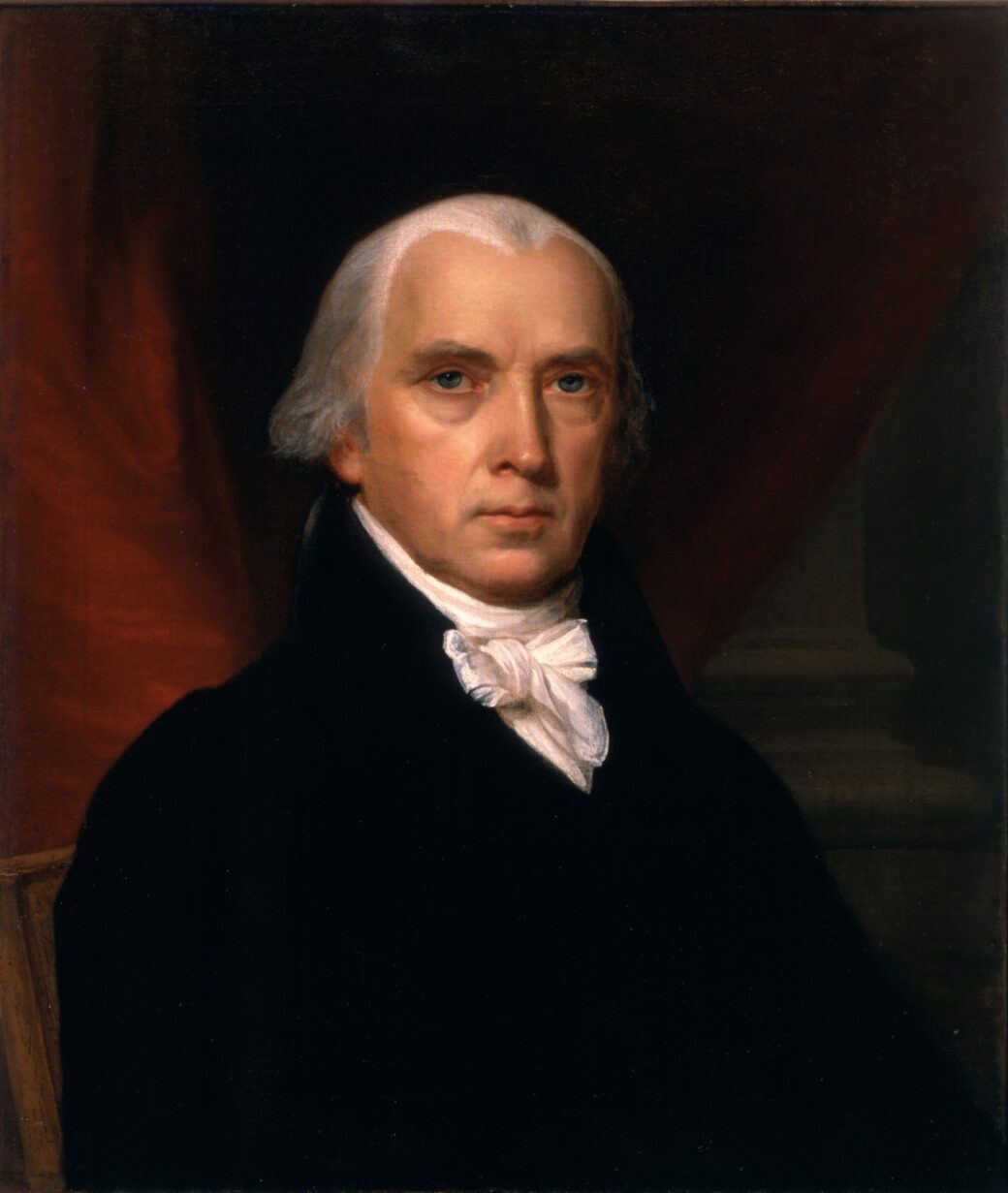
James Madison (1751–1836) was the fourth president of the United States, serving from 1809 to 1817 as a leader of the Democratic-Republican Party. A principal architect of the Constitution and the Bill of Rights, he later guided the nation through the War of 1812.
Madison is remembered as the "Father of the Constitution" for his central role at the Constitutional Convention and for helping draft the Federalist Papers and the Bill of Rights. His emphasis on checks and balances and a balanced federal system shaped American constitutional order.
As president, he navigated intense partisan conflict and led the United States through the War of 1812, a test of American sovereignty that fostered renewed national identity despite military and financial strains. His presidency reinforced federal authority and left a lasting, if mixed, legacy on the practice of republican government.
Principal architect of the Constitution; Principal author of the Bill of Rights; Co-author of the Federalist Papers; Secretary of State under Thomas Jefferson (1801–1809); President during the War of 1812
Key highlights and dated events associated with this presidency.
Showing 12 of 137 entries.
On December 11, 1816, the Indiana Territory was formally admitted to the United States as the nineteenth state during James Madison's presidency.

On December 4, 1816, the state electors met and cast their electoral ballots, selecting James Monroe as President and Daniel D. Tompkins as Vice President.
Voting for the 1816 U.S. presidential election commenced on November 1, beginning the month-long electoral period that culminated in James Monroe's victory.
On April 27, 1816 Madison signed the Tariff of 1816, a congressional act imposing duties aimed at protecting emerging American manufacturers.
Madison signed the Tariff of 1816 into law, the first U.S. tariff enacted primarily to protect emerging American manufacturers.
President James Madison signed the legislation creating the Second Bank of the United States, granting it a 20-year federal charter and establishing its role as a national depository and regulator of credit.
President James Madison signed the federal act chartering the Second Bank of the United States on April 10, 1816.
President James Madison signed the congressional act chartering the Second Bank of the United States, creating a national bank with a 20-year charter.
President James Madison signed legislation chartering the Second Bank of the United States, creating a national bank with a 20-year charter.
Madison transmitted his annual message to Congress recommending the establishment of a national bank, a moderate protective tariff, and federal support for roads and harbors.
On June 30, 1815, U.S. negotiators concluded a treaty with the Dey of Algiers after recent American naval successes, securing the release of American captives and an end to tribute demands.
Commodore Stephen Decatur's squadron captured the Algerine frigate Mashouda in the Mediterranean on June 19, 1815.