Great White Fleet returns to Hampton Roads, completing world cruise
The U.S. Navy's Great White Fleet arrived at Hampton Roads, Virginia, completing the global circumnavigation ordered by President Theodore Roosevelt that began in December 1907.

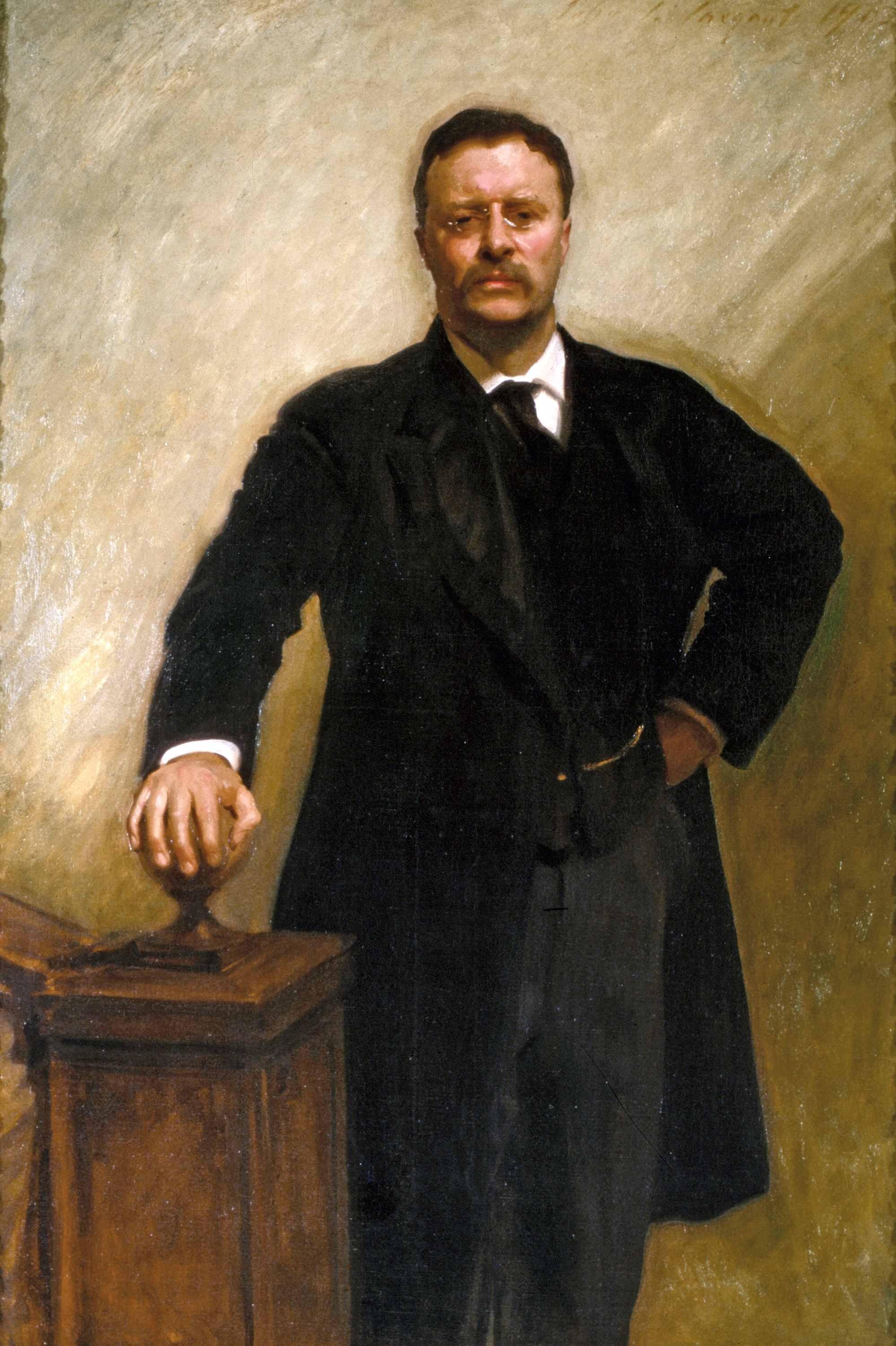
Theodore Roosevelt was the 26th president of the United States, serving from 1901 to 1909 after succeeding William McKinley. A Republican reformer and conservationist, he expanded federal regulation, trust-busting, and American influence abroad.
Roosevelt broadened the role of the federal government in regulating business and protecting consumers. His "Square Deal" policies included antitrust actions, the Pure Food and Drug Act, and major conservation initiatives that created national parks, forests, and monuments.
He transformed the presidency into a more active office and pursued an assertive foreign policy summarized by "speak softly and carry a big stick." He mediated the end of the Russo-Japanese War, advanced construction of the Panama Canal, and left a lasting impact on American institutions and global presence.
Assumed the presidency after William McKinley’s assassination (1901); Launched the "Square Deal" with trust-busting and regulatory reforms; Enacted the Pure Food and Drug Act and Meat Inspection Act (1906); Established national parks, forests, and monuments through expanded conservation policy; Brokered peace in the Russo-Japanese War, receiving the 1906 Nobel Peace Prize; Supported Panama Canal construction and demonstrated U.S. naval power (Great White Fleet).
Key highlights and dated events associated with this presidency.
Showing 12 of 136 entries.
The U.S. Navy's Great White Fleet arrived at Hampton Roads, Virginia, completing the global circumnavigation ordered by President Theodore Roosevelt that began in December 1907.

President Theodore Roosevelt delivered his annual message to Congress, reviewing his administration's record and urging continued attention to conservation, regulation of trusts, and national preparedness.
U.S. Secretary of State Elihu Root and Japanese Ambassador Takahira Kogorō signed the Root–Takahira Agreement, pledging to respect each nation's Pacific possessions and to uphold the Open Door policy in China.
President Theodore Roosevelt issued a presidential proclamation designating Thursday, November 26, 1908, as a national day of Thanksgiving and prayer.
Following the Nov. 3 election, President Theodore Roosevelt issued a public congratulatory statement to William Howard Taft and offered his cooperation during the transition.
On November 3, 1908, Republican William Howard Taft won the U.S. presidential election, defeating Democrat William Jennings Bryan and becoming president-elect while Theodore Roosevelt remained in office.
The Republican National Convention in Chicago nominated William Howard Taft for president, a choice publicly and politically backed by President Theodore Roosevelt.
Delegates from across the country convened in Chicago on June 16 for the Republican National Convention to begin four days of proceedings that would determine the party's 1908 presidential nominee.
President Theodore Roosevelt signed the Aldrich–Vreeland Act on May 30, 1908, authorizing emergency currency issuance and creating the National Monetary Commission.
On February 14, 1908, President Theodore Roosevelt publicly announced that he would not be a candidate for re-election in 1908.
President Theodore Roosevelt formally announced on February 14, 1908, that he would not be a candidate for re-election to a third full term.
On February 14, 1908, President Theodore Roosevelt issued a public statement declaring he would not be a candidate for reelection in 1908 and would not accept the nomination at the Republican convention.