Second Presidential Debate — George W. Bush vs. John Kerry
George W. Bush and John Kerry met in the second 2004 presidential debate, directly debating key domestic and foreign policy issues ahead of Election Day.
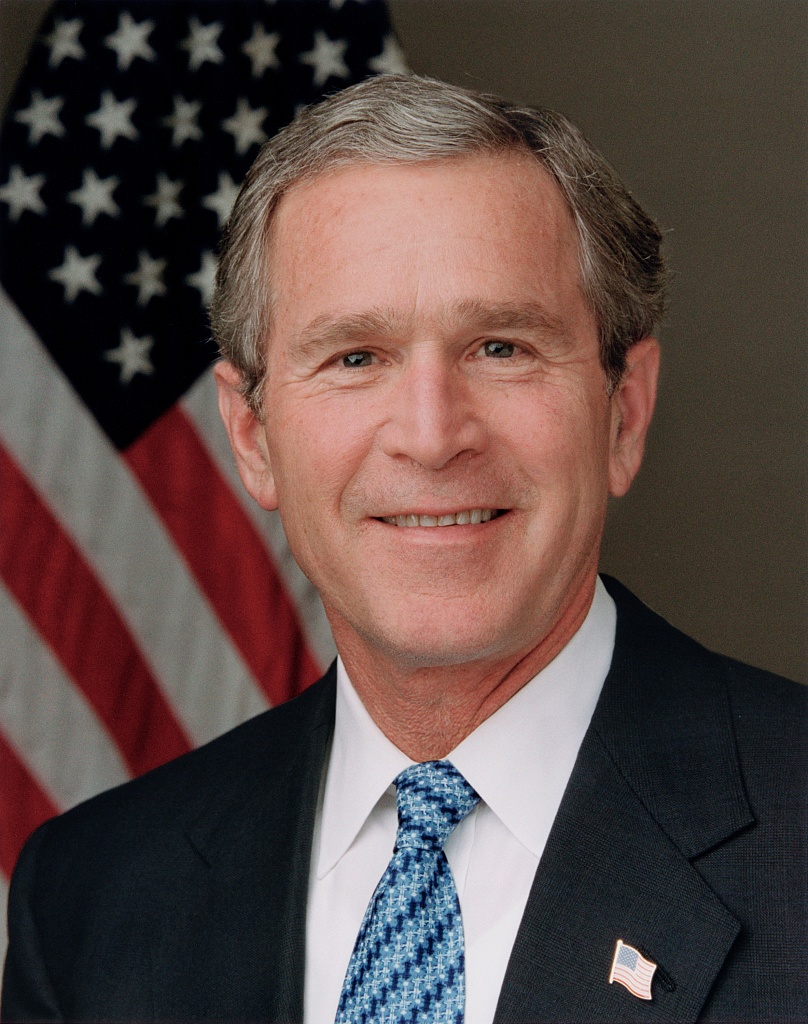
George W. Bush served as the 43rd President of the United States from January 20, 2001 to January 20, 2009. A Republican and former governor of Texas, his presidency was shaped by the response to the September 11, 2001 attacks and consequential domestic policies.
Bush's presidency is most widely remembered for the response to the September 11 attacks, the launch of the global War on Terror, and military campaigns in Afghanistan and Iraq. Decisions on intelligence, national security, and counterterrorism had long-lasting international and political effects.
On the domestic front, his administration passed major laws including the No Child Left Behind education reform and the Medicare Part D prescription drug benefit, and he appointed two Supreme Court justices. The 2008 financial crisis and emergency responses also significantly influenced assessments of his record.
Led U.S. response to 9/11 and launched the War on Terror; Ordered U.S. invasions of Afghanistan (2001) and Iraq (2003); Enacted No Child Left Behind education reform (2001); Created Medicare Part D prescription drug benefit (2003); Appointed Chief Justice John Roberts and Justice Samuel Alito; Responded to the 2008 financial crisis, including signing the TARP bailout
Key highlights and dated events associated with this presidency.
Showing 12 of 307 entries.
George W. Bush and John Kerry met in the second 2004 presidential debate, directly debating key domestic and foreign policy issues ahead of Election Day.

Vice President Dick Cheney and Senator John Edwards met in the only vice-presidential debate of the 2004 campaign, moderated by Gwen Ifill.
President Bush and Senator John Kerry met for the first of three presidential debates at the University of Miami in Coral Gables, Florida.
Hurricane Jeanne made landfall in eastern Florida on September 26, 2004, causing severe flooding and property damage and leading to further federal disaster declarations and relief efforts.
CBS and anchor Dan Rather publicly acknowledged significant questions about the authenticity of the 'Killian' memos used in the September 8 60 Minutes II segment about George W. Bush's National Guard service and issued an apology for the reporting errors.
Hurricane Ivan struck the U.S. Gulf Coast around September 16, 2004, producing severe damage in Alabama, Florida and neighboring states and triggering federal emergency declarations and expanded FEMA operations.
President George W. Bush delivered a speech to the U.N. General Assembly in New York urging the spread of democracy and warning about threats from Iran and North Korea’s weapons programs.
President Bush participated in commemorative events and delivered remarks marking the third anniversary of the September 11, 2001 attacks, honoring victims and first responders.
CBS's 60 Minutes II broadcast a report that presented memoranda allegedly written by Lt. Col. Jerry Killian questioning George W. Bush's service in the Texas Air National Guard.
Hurricane Frances made landfall in Florida on September 5, 2004, causing widespread wind damage and power outages across the state and prompting federal emergency assistance and FEMA mobilization under the Bush administration.
President George W. Bush delivered his acceptance speech at the Republican National Convention, formally accepting the party’s nomination for reelection and outlining his campaign themes.
The Republican National Convention wrapped up in New York City, formally closing the party's week of events around President George W. Bush's renomination campaign.