Soviet authorities announce end of Berlin land blockade
On May 12, 1949, Soviet authorities announced they would lift the blockade of land access to West Berlin that had begun in June 1948.
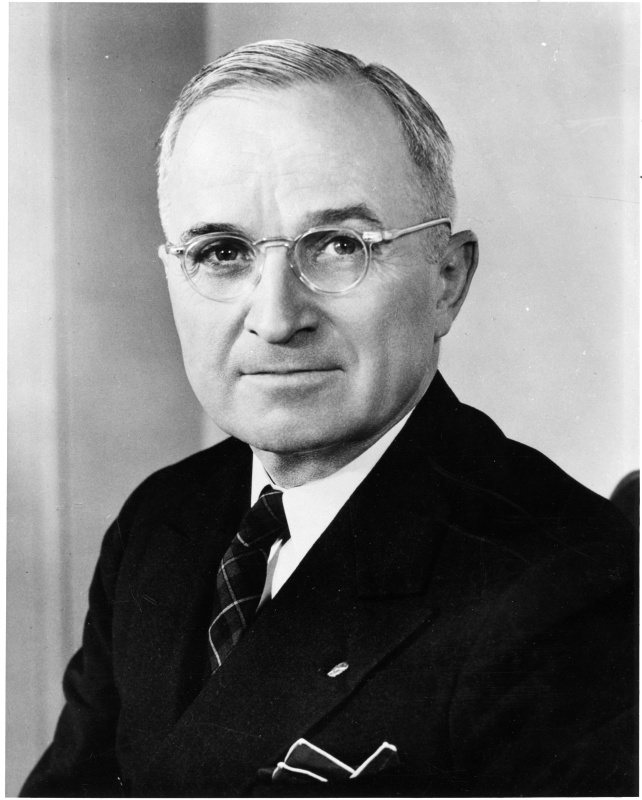
Harry S. Truman (1884–1972) was the 33rd President of the United States, serving from April 12, 1945 to January 20, 1953. A Democrat, he assumed the presidency after Franklin D. Roosevelt's death and guided the nation through the end of World War II and the early Cold War.
Truman reshaped America's postwar role, moving the nation from global war to Cold War leadership through the Marshall Plan, the Truman Doctrine, the Berlin Airlift, and the creation of NATO while confronting crises such as the Korean War.
On the domestic front he promoted the Fair Deal and took historic steps on civil rights, notably issuing Executive Order 9981 to desegregate the armed forces; his plainspoken leadership and decisive choices left a complex but enduring legacy that gained greater respect over time.
Assumed the presidency in 1945 and guided the transition from World War II to peacetime; Authorized use of atomic weapons against Japan (Hiroshima and Nagasaki); Articulated the Truman Doctrine and enacted the Marshall Plan to contain Soviet expansion; Supported the Berlin Airlift and helped establish NATO; Recognized the State of Israel in 1948; Issued Executive Order 9981 to desegregate the armed forces and led the U.S. during the Korean War (1950–1953)
Key highlights and dated events associated with this presidency.
Showing 12 of 276 entries.
On May 12, 1949, Soviet authorities announced they would lift the blockade of land access to West Berlin that had begun in June 1948.
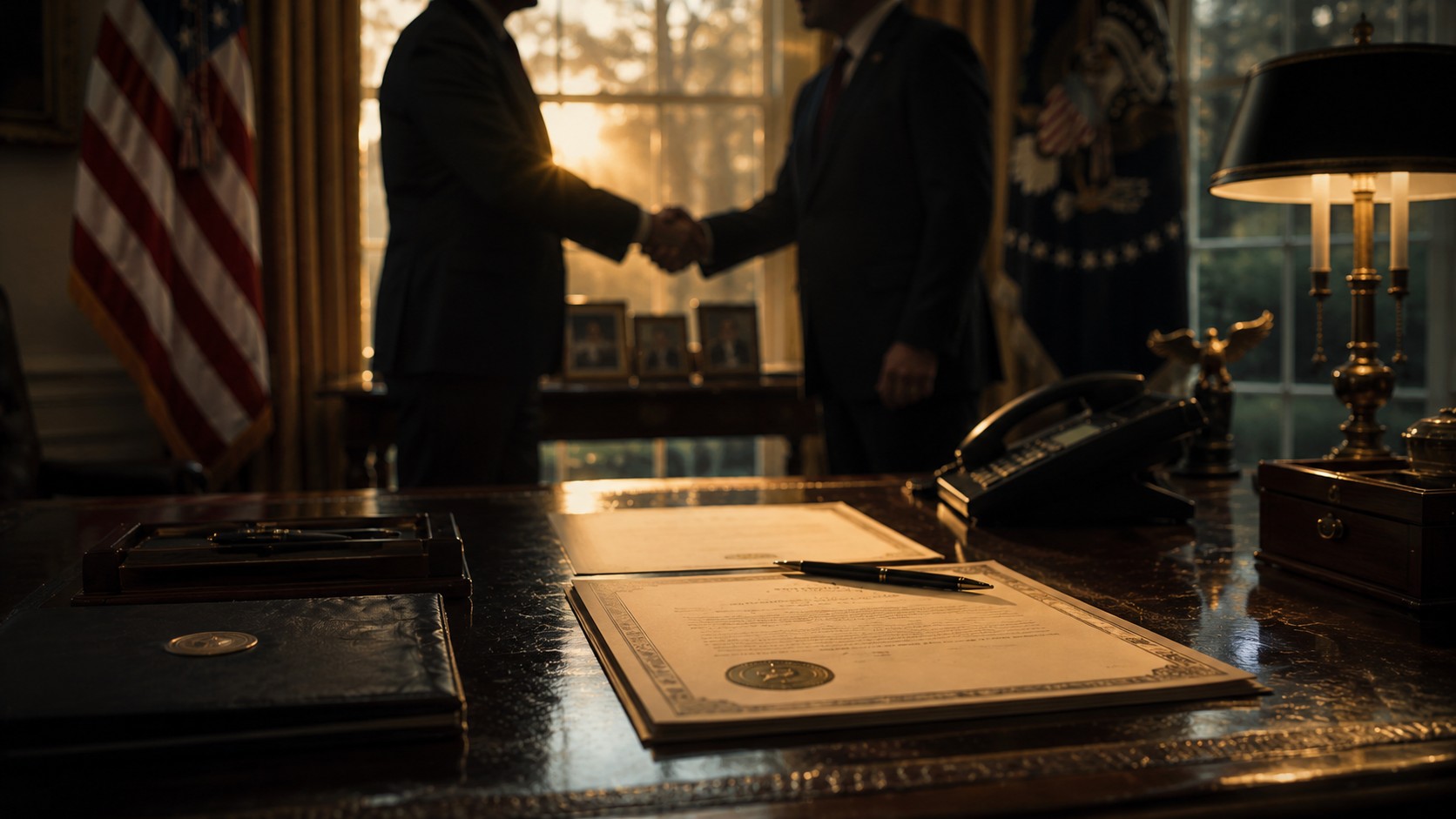
Delegates from 12 countries met in Washington, D.C., and signed the North Atlantic Treaty on April 4, 1949, with the United States as a founding signatory.
Dean Acheson was sworn in as Secretary of State on Jan 21, 1949, succeeding George C. Marshall in Truman's Cabinet.
Alben W. Barkley took the oath of office as Vice President of the United States during President Truman's second inauguration.
Harry S. Truman was sworn in for a full elected term as President and delivered his second inaugural address on Jan 20, 1949.
A joint session of Congress met to count and officially certify the Electoral College votes from the 1948 presidential election, confirming Harry S. Truman's victory.
President Truman delivered his 1949 State of the Union message to Congress, outlining his 'Fair Deal' domestic agenda including proposals for national health insurance, federal aid to education, expanded Social Security, and a higher minimum wage.
On January 3, 1949, Senate Democrats selected Senator Scott W. Lucas (D–IL) to serve as Majority Leader for the 81st Congress.
At the opening of the 81st Congress on January 3, 1949, the Democratic majority in the House elected Sam Rayburn (D–TX) as Speaker.
The newly elected 81st Congress convened in Washington, with Democrats holding majorities in both the House and Senate after the 1948 elections.
On December 24, 1948 U.S. Air Force pilot Lt. Gail Halvorsen began dropping candy to children in blockaded West Berlin, an improvised humanitarian gesture that became known as 'Operation Little Vittles.'
Members of the Electoral College met and cast their ballots, awarding Harry S. Truman 303 electoral votes to Thomas E. Dewey's 189 and Strom Thurmond's 39.