Louisiana admitted as the 18th state
On April 30, 1812, Louisiana was admitted to the United States as the 18th state.
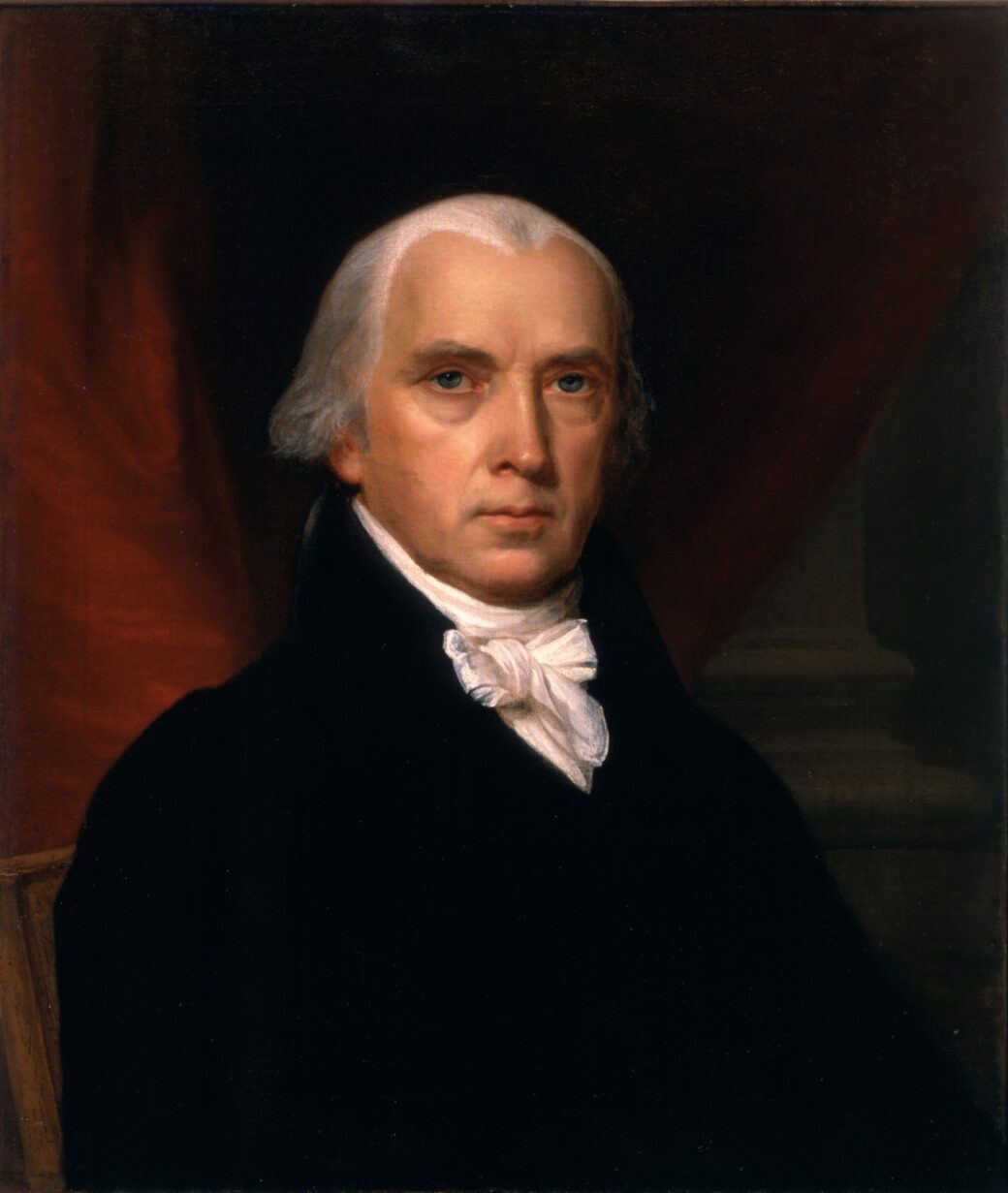
James Madison (1751–1836) was the fourth president of the United States, serving from 1809 to 1817 as a leader of the Democratic-Republican Party. A principal architect of the Constitution and the Bill of Rights, he later guided the nation through the War of 1812.
Madison is remembered as the "Father of the Constitution" for his central role at the Constitutional Convention and for helping draft the Federalist Papers and the Bill of Rights. His emphasis on checks and balances and a balanced federal system shaped American constitutional order.
As president, he navigated intense partisan conflict and led the United States through the War of 1812, a test of American sovereignty that fostered renewed national identity despite military and financial strains. His presidency reinforced federal authority and left a lasting, if mixed, legacy on the practice of republican government.
Principal architect of the Constitution; Principal author of the Bill of Rights; Co-author of the Federalist Papers; Secretary of State under Thomas Jefferson (1801–1809); President during the War of 1812
Key highlights and dated events associated with this presidency.
Showing 12 of 137 entries.
On April 30, 1812, Louisiana was admitted to the United States as the 18th state.
Vice President George Clinton died in Washington, D.C., on April 20, 1812, leaving the vice presidency vacant.
A powerful earthquake struck near New Madrid (in present-day Missouri) on March 7, 1812, producing strong shaking felt across much of the central United States and causing damage to frontier settlements and riverbanks.
On January 23, 1812, a powerful earthquake centered near New Madrid (present-day Missouri) produced violent shaking across the Mississippi Valley, following strong shocks that began in December 1811.
Delegates at the Louisiana constitutional convention in New Orleans adopted a state constitution on January 22, 1812.
A powerful earthquake near New Madrid (present-day Missouri) struck on December 16, 1811, producing intense shaking felt across much of the eastern United States.
President James Madison delivered his annual message to the 12th Congress, summarizing foreign provocations and urging measures to protect American maritime rights and commerce.
On November 7, 1811, forces led by Territorial Governor William Henry Harrison attacked and defeated a Native confederacy under Tecumseh's brother Tenskwatawa at Prophetstown (the Battle of Tippecanoe).
At the opening of the 12th Congress on November 4, 1811, Representative Henry Clay of Kentucky was elected Speaker of the House.
The 12th U.S. Congress met for its first session in Washington, D.C., beginning legislative business on November 4, 1811.
On May 16, 1811, the American warship President, commanded by Captain John Rodgers, engaged the British sloop HMS Little Belt off the Atlantic coast in a disputed firefight that caused damage and casualties.
The two-year term of the 12th United States Congress legally began on March 4, 1811, seating members elected in the 1810 midterm elections.