
Arthur J. Goldberg sworn in as Secretary of Labor
Arthur J. Goldberg was sworn in as Secretary of Labor in the new Kennedy administration.
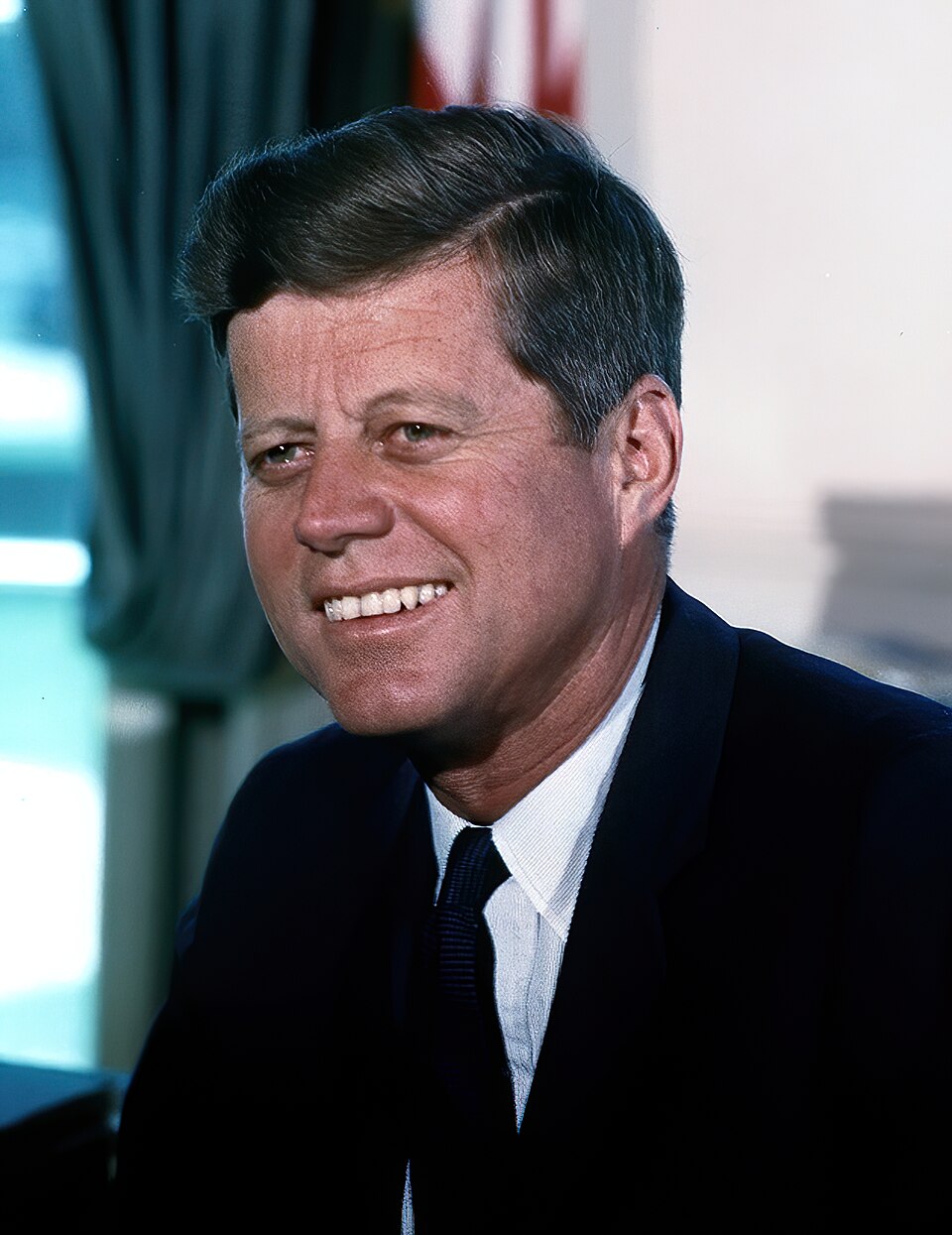
John F. Kennedy was the 35th President of the United States, serving from January 20, 1961, until his assassination on November 22, 1963. A Democrat and former U.S. senator from Massachusetts, he is remembered for his Cold War leadership and ambitious domestic and space initiatives.
Kennedy's presidency was defined by Cold War confrontations and high-stakes diplomacy. He navigated crises such as the Bay of Pigs invasion and the Cuban Missile Crisis, pursued arms-control agreements like the 1963 Partial Nuclear Test Ban Treaty, and worked to maintain U.S. credibility abroad.
On the domestic front, Kennedy advanced a program called the New Frontier that promoted economic stimulus, education, and social programs, established the Peace Corps, and used federal authority to press for civil rights. His pledge to land a man on the Moon and his assassination in 1963 left a lasting cultural and political legacy.
Managed the Cuban Missile Crisis, averting nuclear escalation; Oversaw the failed Bay of Pigs invasion; Created the Peace Corps to support international development; Committed the U.S. to a Moon landing and boosted NASA funding; Advanced civil rights through federal actions and public appeals; Negotiated the 1963 Partial Nuclear Test Ban Treaty
Key highlights and dated events associated with this presidency.
Showing 12 of 120 entries.
Arthur J. Goldberg was sworn in as Secretary of Labor in the new Kennedy administration.
Orville L. Freeman was sworn in as Secretary of Agriculture under President Kennedy.
Stewart Udall took office as Secretary of the Interior in Kennedy's cabinet.
C. Douglas Dillon was sworn in as Secretary of the Treasury in the new Kennedy cabinet.
Robert F. Kennedy was sworn in as U.S. Attorney General on January 21, 1961, joining his brother's Cabinet.
Dean Rusk was sworn in as Secretary of State under President Kennedy on January 21, 1961.
President Kennedy's nominee Robert S. McNamara was sworn in as Secretary of Defense on January 21, 1961.
John F. Kennedy appointed McGeorge Bundy to serve as his National Security Advisor at the start of the administration.
Lyndon B. Johnson took the oath of office as Vice President at John F. Kennedy's inauguration.
John F. Kennedy took the oath of office as President and delivered his inaugural address, famously urging Americans, 'Ask not what your country can do for you—ask what you can do for your country.'
Outgoing President Eisenhower delivered a televised farewell address to the nation, cautioning about the growing influence of the 'military–industrial complex.'
A joint session of the 87th Congress counted and certified the Electoral College votes, formally confirming Kennedy as President-elect.