1984 Republican National Convention opens in Dallas
The Republican National Convention convened in Dallas on August 20, 1984, beginning a four-day gathering that formally nominated President Ronald Reagan and set the party's campaign agenda.
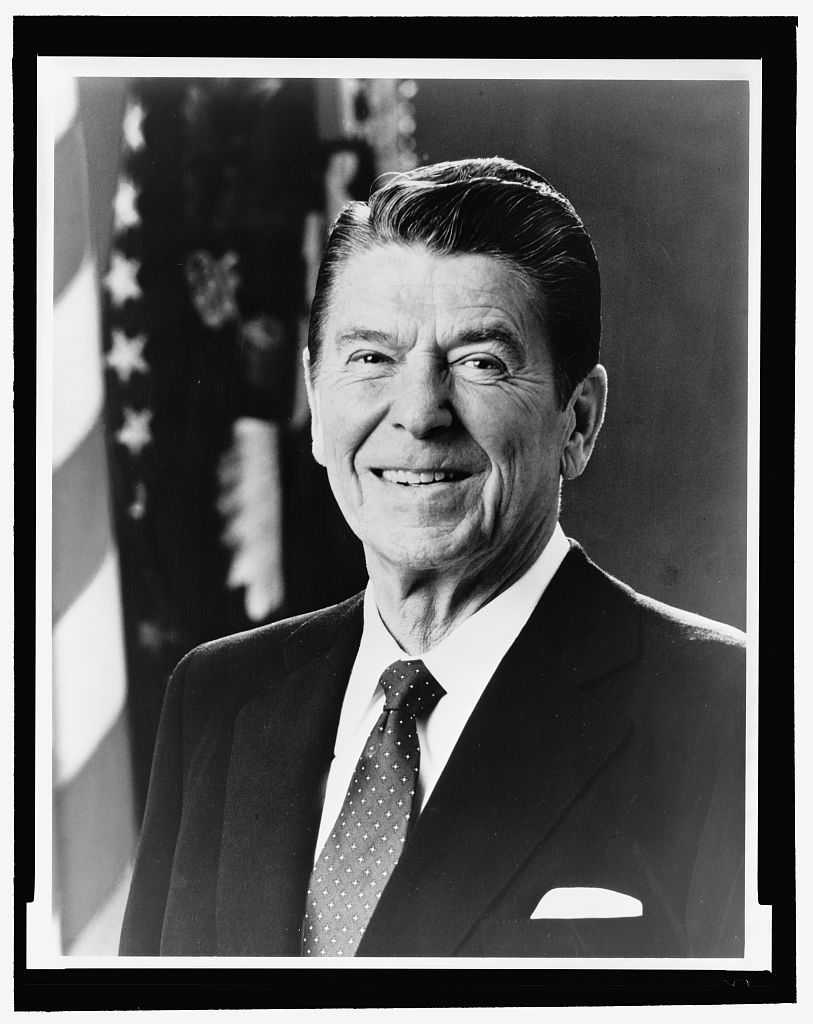
Ronald Reagan was the 40th president of the United States, serving two terms from January 1981 to January 1989. A former actor and governor of California, he promoted conservative economic policies and a firm stance against the Soviet Union.
Reagan pursued supply-side economic policies—large tax cuts, deregulation, and shifts in spending—that helped lower inflation and stimulate growth but also coincided with rising federal deficits and greater income inequality.
On foreign policy he combined a military buildup and tough rhetoric toward the USSR with later diplomacy with Mikhail Gorbachev that advanced arms-control agreements; his presidency was also marred by the Iran–Contra affair.
Enacted major tax cuts with the Economic Recovery Tax Act of 1981; Pursued deregulation and conservative judicial appointments; Increased defense spending and advanced the Strategic Defense Initiative; Negotiated with Mikhail Gorbachev, contributing to U.S.–Soviet arms reductions; Re-elected in a 1984 landslide victory; Administration tarnished by the Iran–Contra affair
Key highlights and dated events associated with this presidency.
Showing 12 of 189 entries.
The Republican National Convention convened in Dallas on August 20, 1984, beginning a four-day gathering that formally nominated President Ronald Reagan and set the party's campaign agenda.
Delegates at the Republican National Convention in Dallas formally adopted the Republican Party platform for 1984, laying out the party's policy positions for the upcoming presidential campaign.
On August 20, 1984, the Republican National Convention in Dallas formally nominated incumbent Vice President George H. W. Bush as Ronald Reagan’s running mate for the 1984 election.
The Republican National Convention opened in Dallas and delegates formally nominated President Ronald Reagan as the party's candidate for a second term.
Former Vice President Walter Mondale announced Rep. Geraldine A. Ferraro as his vice-presidential running mate, the first woman named to a major-party U.S. presidential ticket.
President Ronald Reagan delivered Independence Day remarks from the White House, celebrating national history and highlighting themes of economic recovery and American strength.
The Supreme Court ruled that the NCAA's television plan violated antitrust law, significantly limiting the NCAA's control over college football broadcasting rights.
On June 25, 1984, the U.S. Supreme Court ruled in Chevron v. NRDC, holding that courts should defer to reasonable agency interpretations of ambiguous statutes governing their authority.
President Ronald Reagan traveled to Normandy, France to mark the 40th anniversary of D‑Day and delivered remarks honoring fallen and surviving World War II servicemembers at the Normandy American Cemetery and other commemorative sites.
U.S. Marines completed their withdrawal from Beirut, Lebanon, ending the multinational peacekeeping presence that had been deployed after the 1982 conflict and the 1983 barracks bombing.
Reagan transmitted his administration's Fiscal Year 1985 federal budget to Congress, proposing higher defense spending alongside cuts to many domestic programs.
President Ronald Reagan delivered the annual State of the Union address to a joint session of Congress, laying out his administration's priorities on defense, the economy, and domestic policy heading into the election year.