Electoral College formally casts votes confirming Clinton–Gore re-election
Electors met in state capitals and cast their Electoral College ballots confirming Bill Clinton and Al Gore as winners of the November 1996 presidential election.
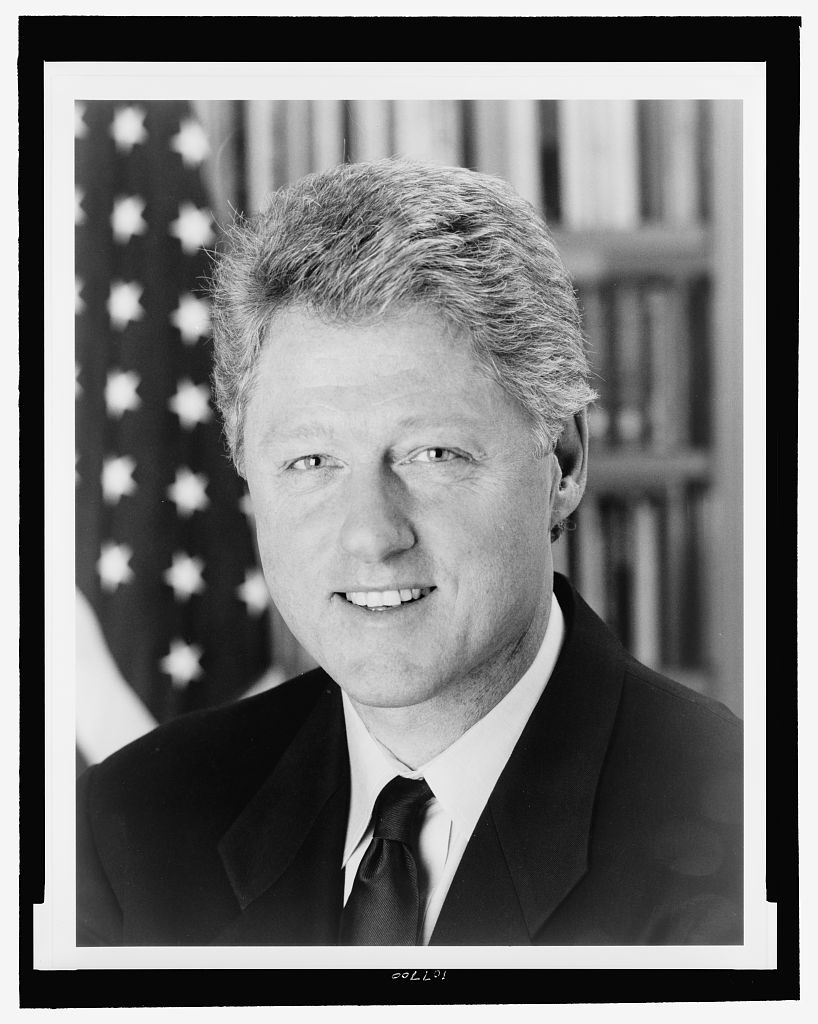
Bill Clinton served as the 42nd President of the United States from January 20, 1993, to January 20, 2001. His two-term administration oversaw strong economic growth and budget surpluses while also facing major political controversies, including impeachment and acquittal in 1998–1999.
Domestically, Clinton presided over a period of sustained economic expansion, reduced unemployment, and several major policy initiatives—most notably passage of NAFTA, welfare reform in 1996, and balanced budgets that produced federal surpluses in the late 1990s. His administration also advanced legislation on crime, gun control, and family leave while benefiting from the technology-driven boom of the decade.
Clinton’s presidency is also marked by controversy: a personal scandal led to his impeachment by the House in 1998 and acquittal by the Senate in 1999, which shaped public debate about character and accountability. On foreign policy he expanded U.S. engagement, including NATO interventions in Bosnia and Kosovo, leaving a mixed legacy of increased international involvement and contested domestic politics.
Signed NAFTA (1993); Enacted 1996 Welfare Reform (Personal Responsibility and Work Opportunity Act); Achieved federal budget surpluses in the late 1990s; Led NATO interventions in Bosnia (1995) and Kosovo (1999); Impeached by the House (1998) and acquitted by the Senate (1999); Signed key domestic laws including the Brady Bill and Family and Medical Leave Act
Key highlights and dated events associated with this presidency.
Showing 12 of 279 entries.
Electors met in state capitals and cast their Electoral College ballots confirming Bill Clinton and Al Gore as winners of the November 1996 presidential election.
President Clinton nominated U.S. Ambassador to the United Nations Madeleine K. Albright to serve as Secretary of State.
After networks projected his re-election, President Bill Clinton gave a victory/acceptance speech in Little Rock, Arkansas, the evening of November 5, 1996.
On November 5, 1996, incumbent President Bill Clinton won a second term, defeating Republican nominee Bob Dole and winning 379 electoral votes to Dole's 159.
President Bill Clinton and Republican nominee Bob Dole met for the third and final presidential debate ahead of the 1996 election.
President Clinton and Bob Dole held their second and final televised debate in the closing weeks of the 1996 presidential campaign.
Vice President Al Gore and Republican vice-presidential nominee Jack Kemp faced each other in the televised vice presidential debate.
President Bill Clinton and Republican nominee Bob Dole met in the first of two televised presidential debates during the final month of the 1996 campaign.
President Clinton signed IIRIRA into law, enacting sweeping changes to U.S. immigration enforcement, deportation grounds, and asylum procedures.
On September 27, 1996, Taliban forces seized Kabul, ousting the existing government and signaling control over Afghanistan's capital.
On September 24, 1996, President Clinton signed the Comprehensive Nuclear-Test-Ban Treaty at the United Nations, endorsing an international prohibition on nuclear explosive testing.
President Clinton delivered a major speech to the UN General Assembly outlining U.S. priorities on global security, nonproliferation, and international cooperation.