
George Clinton sworn in as Vice President of the United States
George Clinton took the oath of office as Vice President on March 4, 1809, alongside President James Madison's inauguration.

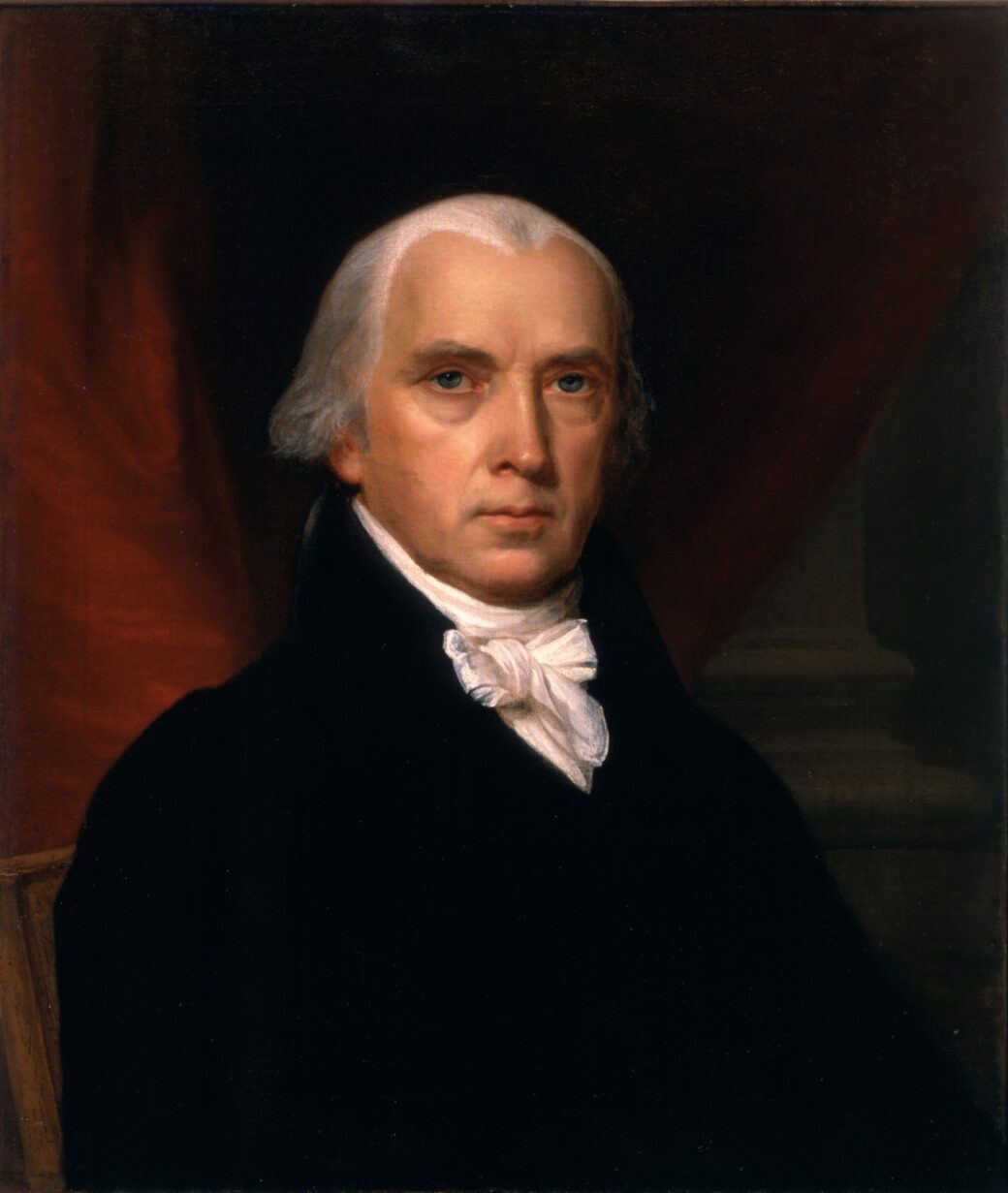
James Madison (1751–1836) was the fourth president of the United States, serving from 1809 to 1817 as a leader of the Democratic-Republican Party. A principal architect of the Constitution and the Bill of Rights, he later guided the nation through the War of 1812.
Madison is remembered as the "Father of the Constitution" for his central role at the Constitutional Convention and for helping draft the Federalist Papers and the Bill of Rights. His emphasis on checks and balances and a balanced federal system shaped American constitutional order.
As president, he navigated intense partisan conflict and led the United States through the War of 1812, a test of American sovereignty that fostered renewed national identity despite military and financial strains. His presidency reinforced federal authority and left a lasting, if mixed, legacy on the practice of republican government.
Principal architect of the Constitution; Principal author of the Bill of Rights; Co-author of the Federalist Papers; Secretary of State under Thomas Jefferson (1801–1809); President during the War of 1812
Key highlights and dated events associated with this presidency.
Showing 5 of 137 entries.
George Clinton took the oath of office as Vice President on March 4, 1809, alongside President James Madison's inauguration.
At the opening of the 11th Congress, the House of Representatives elected Joseph B. Varnum as Speaker.
The 11th U.S. Congress met for the first session on March 4, 1809, the same day as James Madison's inauguration.
James Madison was sworn in as the fourth President of the United States in Washington, D.C., and delivered his First Inaugural Address.
On March 1, 1809 Congress passed and President Thomas Jefferson signed the Non-Intercourse Act, replacing the Embargo Act and reopening commerce with all nations except Britain and France.