Clinton addresses the United Nations General Assembly in New York
President Clinton delivered remarks to the UN General Assembly emphasizing nonproliferation, international cooperation, and support for the Comprehensive Nuclear-Test-Ban Treaty.
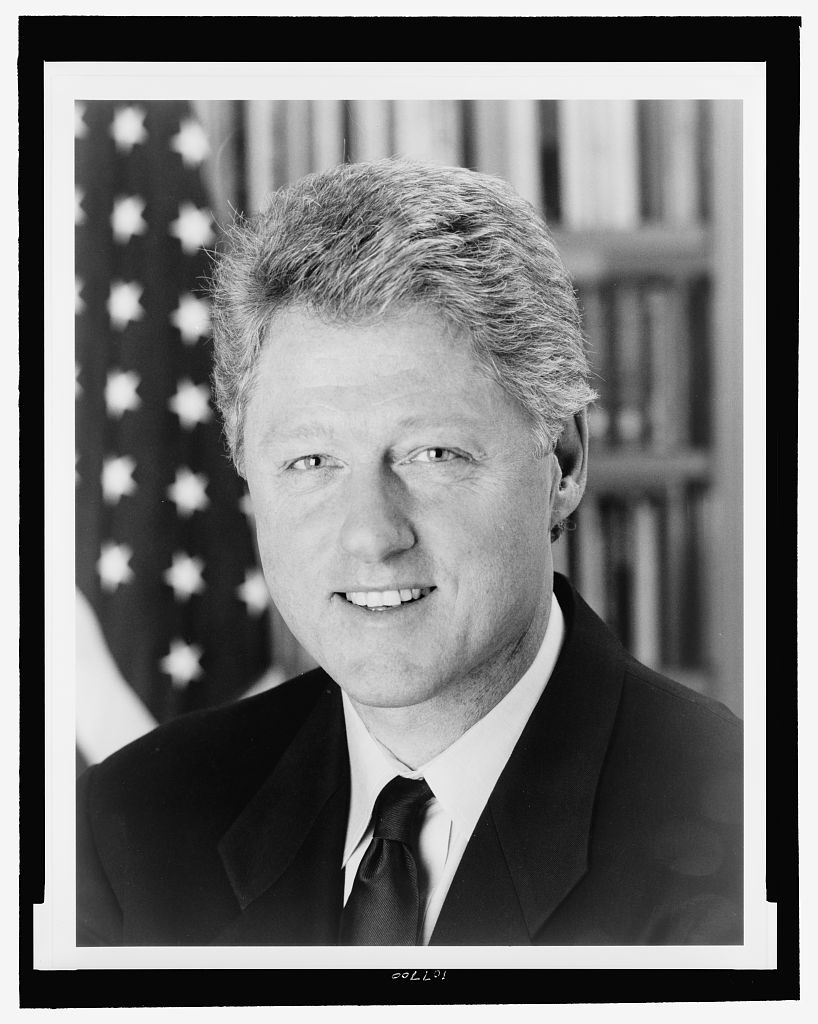
Bill Clinton served as the 42nd President of the United States from January 20, 1993, to January 20, 2001. His two-term administration oversaw strong economic growth and budget surpluses while also facing major political controversies, including impeachment and acquittal in 1998–1999.
Domestically, Clinton presided over a period of sustained economic expansion, reduced unemployment, and several major policy initiatives—most notably passage of NAFTA, welfare reform in 1996, and balanced budgets that produced federal surpluses in the late 1990s. His administration also advanced legislation on crime, gun control, and family leave while benefiting from the technology-driven boom of the decade.
Clinton’s presidency is also marked by controversy: a personal scandal led to his impeachment by the House in 1998 and acquittal by the Senate in 1999, which shaped public debate about character and accountability. On foreign policy he expanded U.S. engagement, including NATO interventions in Bosnia and Kosovo, leaving a mixed legacy of increased international involvement and contested domestic politics.
Signed NAFTA (1993); Enacted 1996 Welfare Reform (Personal Responsibility and Work Opportunity Act); Achieved federal budget surpluses in the late 1990s; Led NATO interventions in Bosnia (1995) and Kosovo (1999); Impeached by the House (1998) and acquitted by the Senate (1999); Signed key domestic laws including the Brady Bill and Family and Medical Leave Act
Key highlights and dated events associated with this presidency.
Showing 12 of 279 entries.
President Clinton delivered remarks to the UN General Assembly emphasizing nonproliferation, international cooperation, and support for the Comprehensive Nuclear-Test-Ban Treaty.
At the United Nations in New York, President Clinton signed the Comprehensive Nuclear‑Test‑Ban Treaty on behalf of the United States as the treaty was opened for signature.
President Clinton ordered U.S. cruise-missile strikes against Iraqi air-defense sites on September 3, 1996, in retaliation for an Iraqi attack on a U.S. aircraft and violations of the no-fly zone over northern Iraq.
President Clinton ordered U.S. Tomahawk cruise‑missile strikes against Iraqi air‑defense targets in response to Iraqi attacks on Kurdish areas and threats to coalition aircraft enforcement of no‑fly zones.
On September 3, 1996, President Bill Clinton ordered U.S. cruise-missile strikes against Iraqi military and air-defense targets to punish Baghdad for recent attacks on Kurdish areas and violations of the no-fly zones.
President Clinton formally accepted the Democratic Party’s nomination for reelection at the Chicago convention, reviewing his administration’s record and laying out themes for his 1996 campaign.
Delegates at the Democratic National Convention in Chicago officially nominated President Bill Clinton and Vice President Al Gore as the Democratic ticket for the 1996 presidential election.
The Democratic National Convention convened in Chicago to formally begin the party's four-day gathering to renominate President Bill Clinton and Vice President Al Gore.
President Clinton signed landmark welfare-reform legislation that replaced Aid to Families with Dependent Children (AFDC) with Temporary Assistance for Needy Families (TANF), imposing work requirements and time limits on federal assistance.
President Clinton signed the Iran and Libya Sanctions Act, imposing U.S. sanctions on foreign firms investing in Iran's and Libya's energy sectors.
President Clinton traveled to Atlanta on July 28 to visit victims of the Centennial Olympic Park bombing, meet with local officials and law enforcement, and pledge federal assistance for the investigation and recovery.
A bomb exploded at Centennial Olympic Park during the Atlanta Summer Olympics, killing one person and injuring more than a hundred, leading to a major law-enforcement investigation and federal support for the response.