1996 Democratic National Convention adjourns after adopting party platform
The Democratic National Convention in Chicago concluded with delegates adopting the party platform and wrapping up convention business ahead of the general election campaign.
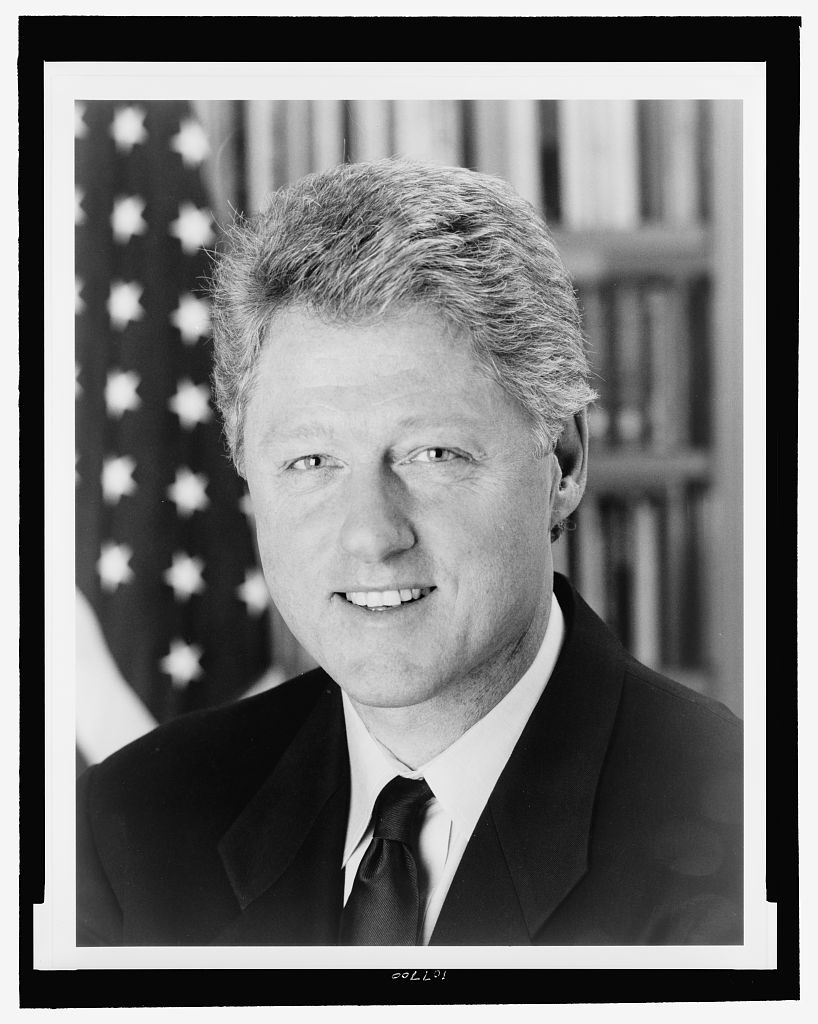
Bill Clinton served as the 42nd President of the United States from January 20, 1993, to January 20, 2001. His two-term administration oversaw strong economic growth and budget surpluses while also facing major political controversies, including impeachment and acquittal in 1998–1999.
Domestically, Clinton presided over a period of sustained economic expansion, reduced unemployment, and several major policy initiatives—most notably passage of NAFTA, welfare reform in 1996, and balanced budgets that produced federal surpluses in the late 1990s. His administration also advanced legislation on crime, gun control, and family leave while benefiting from the technology-driven boom of the decade.
Clinton’s presidency is also marked by controversy: a personal scandal led to his impeachment by the House in 1998 and acquittal by the Senate in 1999, which shaped public debate about character and accountability. On foreign policy he expanded U.S. engagement, including NATO interventions in Bosnia and Kosovo, leaving a mixed legacy of increased international involvement and contested domestic politics.
Signed NAFTA (1993); Enacted 1996 Welfare Reform (Personal Responsibility and Work Opportunity Act); Achieved federal budget surpluses in the late 1990s; Led NATO interventions in Bosnia (1995) and Kosovo (1999); Impeached by the House (1998) and acquitted by the Senate (1999); Signed key domestic laws including the Brady Bill and Family and Medical Leave Act
Key highlights and dated events associated with this presidency.
Showing 12 of 279 entries.
The Democratic National Convention in Chicago concluded with delegates adopting the party platform and wrapping up convention business ahead of the general election campaign.
TWA Flight 800 exploded and crashed off the coast of Long Island, killing all aboard and triggering an extensive FBI and NTSB investigation and federal response.
President Bill Clinton formally accepted the Democratic nomination for a second term with a prime-time speech at the party's convention in Chicago.
Delegates and party leaders convened in Chicago for the 1996 Democratic National Convention, beginning the party’s formal renomination process for Bill Clinton and Al Gore.
On June 26, 1996, the U.S. Supreme Court held in United States v. Virginia that the Virginia Military Institute's male-only admissions policy violated the Equal Protection Clause of the Fourteenth Amendment.
A truck bomb exploded outside the Khobar Towers housing complex near Dhahran, Saudi Arabia, on June 25, 1996, killing 19 U.S. servicemen and wounding hundreds of others.
In Israel's national election on May 29, 1996, Benjamin Netanyahu narrowly defeated incumbent Shimon Peres to become Prime Minister.
A U.S.-mediated truce between Israel and Hezbollah took effect on April 27, 1996, bringing an end to Operation Grapes of Wrath.
President Clinton signed the Antiterrorism and Effective Death Penalty Act of 1996, a law that tightened standards for federal habeas corpus petitions and expanded penalties and tools for combating terrorism.
An artillery strike hit a United Nations compound in the Lebanese village of Qana on April 18, 1996, killing and injuring dozens of civilians sheltering there.
Israeli forces began a large-scale military campaign, dubbed Operation Grapes of Wrath, against Hezbollah positions in southern Lebanon on April 11, 1996.
President Clinton signed the Line Item Veto Act, giving the president authority to rescind specific items of new direct spending and limited tax benefits in appropriations bills.