First U.S. combat troops land at Da Nang, South Vietnam
Approximately 3,500 U.S. Marines landed at Da Nang airbase—the first sustained deployment of American combat troops to South Vietnam.
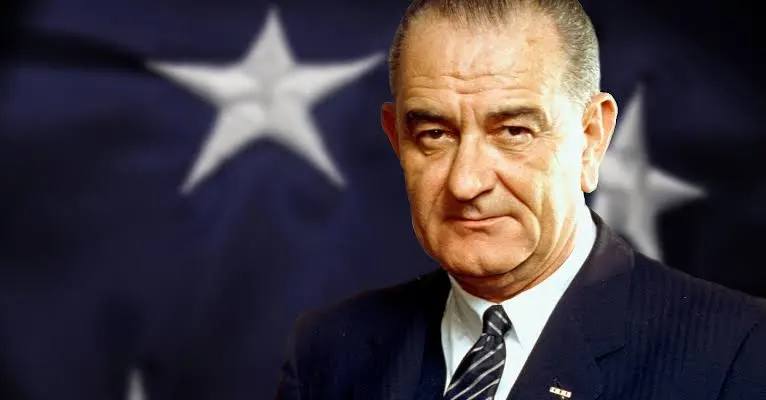
Lyndon B. Johnson, a Democrat from Texas, became president after John F. Kennedy's assassination in 1963 and served until 1969. He pursued an ambitious domestic agenda while presiding over a major escalation of the Vietnam War.
Johnson’s domestic agenda, known as the Great Society, expanded civil rights, health care, education, and anti-poverty programs, producing landmark laws such as the Civil Rights Act, the Voting Rights Act, Medicare, and Medicaid.
His decision to escalate U.S. military involvement in Vietnam eroded public support and overshadowed many of his achievements, leaving a complex legacy that reshaped civil rights, social policy, and debates over U.S. foreign intervention.
Signed the Civil Rights Act (1964) and Voting Rights Act (1965); Created Medicare and Medicaid (1965); Launched the Great Society and War on Poverty initiatives; Escalated U.S. military involvement in the Vietnam War; Enacted the Immigration and Nationality Act (1965)
Key highlights and dated events associated with this presidency.
Showing 12 of 216 entries.
Approximately 3,500 U.S. Marines landed at Da Nang airbase—the first sustained deployment of American combat troops to South Vietnam.

Alabama state troopers and local law enforcement violently dispersed civil rights marchers crossing the Edmund Pettus Bridge in Selma, Alabama, injuring dozens.
On March 2, 1965, U.S. forces initiated Operation Rolling Thunder, beginning a sustained aerial bombing campaign against targets in North Vietnam authorized by the Johnson administration.
Jimmie Lee Jackson died on February 26 from wounds sustained after being shot by an Alabama state trooper during a voting-rights protest in Marion on February 18.
On February 24, 1965, U.S. Air Force and Navy aircraft carried out further retaliatory strikes against North Vietnamese military targets in a follow-up to earlier Flaming Dart operations.
On February 21, 1965, Malcolm X was assassinated at the Audubon Ballroom in Manhattan, a high‑profile killing of a prominent African American leader and critic of mainstream civil-rights strategies.
Ranger 8 deliberately impacted the lunar surface after sending back thousands of high-resolution photographs of prospective landing sites.
During a voting-rights demonstration in Marion, Alabama, state troopers shot Jimmie Lee Jackson, who was participating in a night march and later succumbed to his wounds.
Ranger 8 was launched to impact the Moon after transmitting high-resolution photographs of the lunar surface.
On February 11, 1965, U.S. aircraft carried out Operation Flaming Dart strikes against selected military targets in North Vietnam in retaliation for recent attacks on U.S. installations in South Vietnam.
On February 7, 1965, Viet Cong forces attacked the U.S. helicopter base at Pleiku (Camp Holloway), killing and wounding American personnel, and President Johnson authorized retaliatory air strikes against North Vietnamese targets known as Operation Flaming Dart.
Johnson was sworn in for his full elected term and delivered an inaugural address emphasizing continuation of the Great Society programs and national unity.