
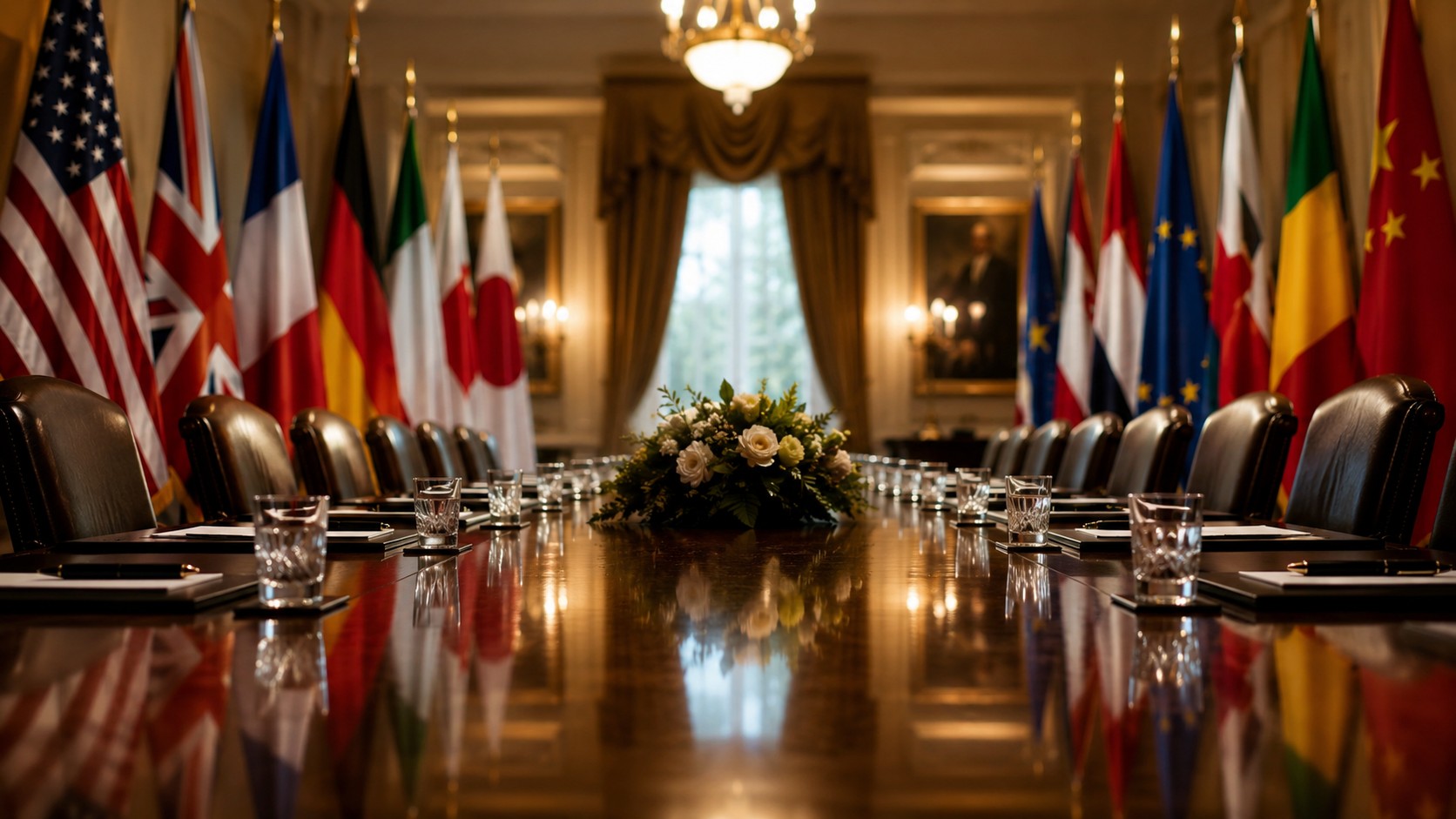
Geneva Summit concludes with joint communiqué urging reduced tensions and expanded dialogue
The four-power Geneva Summit ended with a communiqu e9 expressing a mutual desire to lessen international tensions and seek peaceful resolution of disputes.
Dwight D. Eisenhower (1890-1969) was a five-star general in World War II and served as the 34th President of the United States from 1953-1961. A Republican, he presided over postwar prosperity, built the Interstate Highway System, and shaped early Cold War policy.
Eisenhower's presidency stabilized the United States during a period of economic growth and Cold War tension. He prioritized infrastructure and scientific investment, signing the Federal-Aid Highway Act and creating NASA while pursuing containment and cautious diplomacy.
He advanced civil rights enforcement in limited but consequential ways—sending federal troops to enforce desegregation at Little Rock and signing the Civil Rights Act of 1957—and appointed Chief Justice Earl Warren, influencing landmark Supreme Court rulings. His farewell warning about the "military-industrial complex" and the use of covert actions during the Cold War have left a complex and lasting legacy.
Supreme Allied Commander in World War II; Negotiated a Korean War armistice, ending large-scale combat; Created the Interstate Highway System (Federal-Aid Highway Act of 1956); Established NASA (1958) and strengthened the U.S. space program; Enforced school desegregation at Little Rock and signed the Civil Rights Act of 1957; Warned of the "military-industrial complex" in his 1961 farewell address
Key highlights and dated events associated with this presidency.
Showing 12 of 271 entries.
The four-power Geneva Summit ended with a communiqu e9 expressing a mutual desire to lessen international tensions and seek peaceful resolution of disputes.
After five days of talks, the Geneva Summit ended with a joint communiqué and a series of proposals and understandings intended to ease international tensions and promote further diplomatic engagement.
Soviet representatives declined Eisenhower's Open Skies proposal during summit discussions, citing security and sovereignty concerns.
During the Geneva Summit President Eisenhower proposed an 'Open Skies' plan for reciprocal aerial observation, which the Soviet delegation promptly rejected as a cover for espionage.
During summit discussions Eisenhower put forward his 'Open Skies' proposal calling for mutual aerial observation rights to reduce the risk of surprise attack.
During the Geneva Summit, President Eisenhower proposed an 'Open Skies' plan to allow mutual aerial surveillance over U.S. and Soviet territories to verify military forces and reduce the chance of surprise attack.
President Eisenhower held direct discussions with Soviet Premier Bulganin and Communist Party leader Nikita Khrushchev during the Geneva Summit.
President Eisenhower met Soviet Premier Nikolai Bulganin and Communist Party First Secretary Nikita Khrushchev in a bilateral session during the Geneva Summit.
During the Geneva Summit, Eisenhower held face-to-face meetings with Soviet Premier Nikolai Bulganin and First Secretary Nikita Khrushchev to discuss easing Cold War tensions.
The Geneva Summit convened in Switzerland bringing President Dwight D. Eisenhower together with British Prime Minister Anthony Eden, Soviet Premier Nikolai Bulganin, and French Prime Minister Edgar Faure for high-level talks.
President Dwight D. Eisenhower joined leaders of Britain, the Soviet Union, and France in Geneva for the first summit meeting of the four powers since World War II, opening diplomatic talks aimed at easing Cold War tensions.
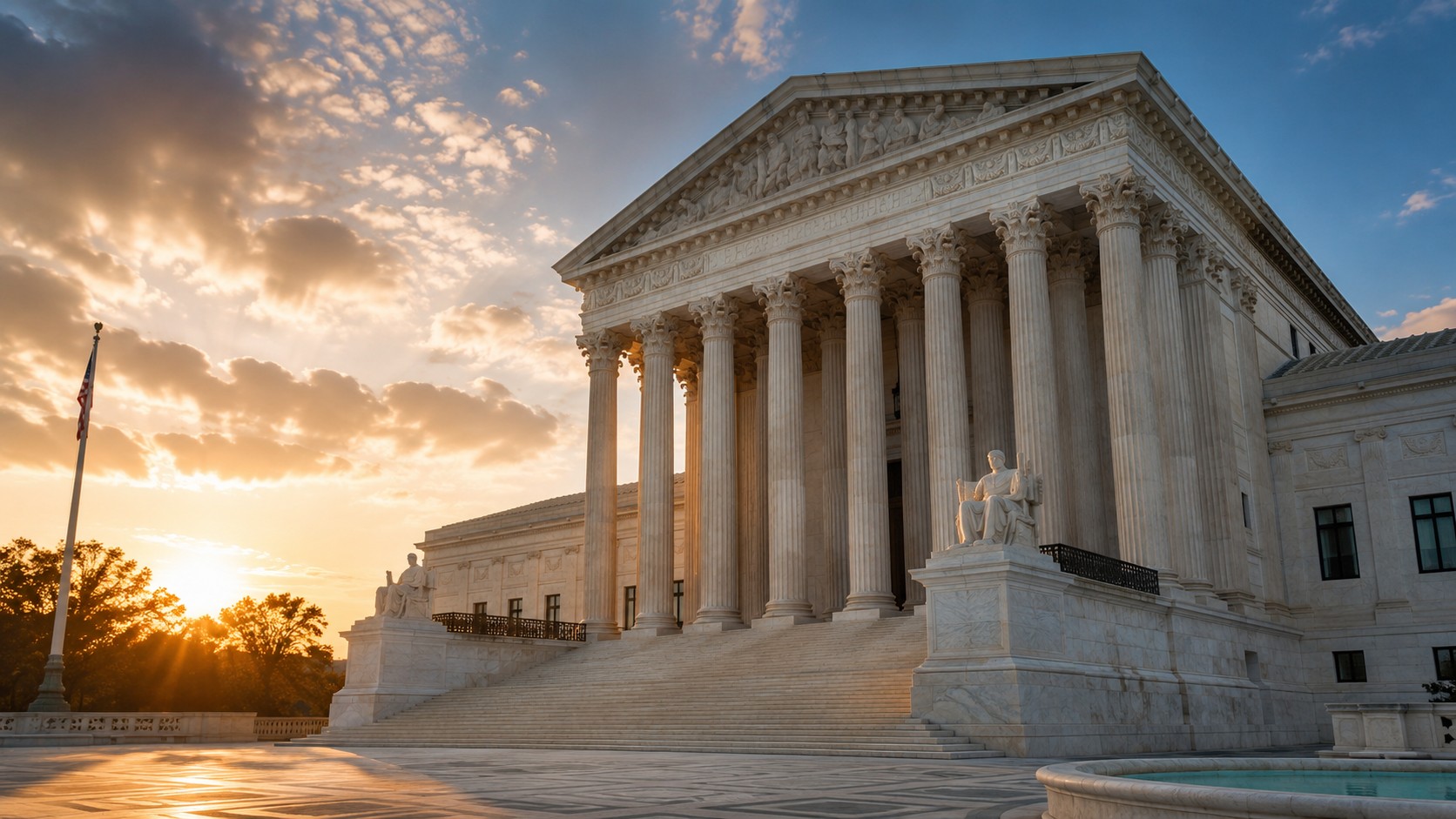
The U.S. Supreme Court issued its Brown II decision, ordering lower courts and school districts to implement the 1954 Brown v. Board of Education ruling and to proceed with desegregation "with all deliberate speed."