State of the Union Address
President Trump delivered his annual State of the Union to a joint session of Congress, outlining priorities including border security, tax and regulatory policy, and a stronger stance on China and Iran.
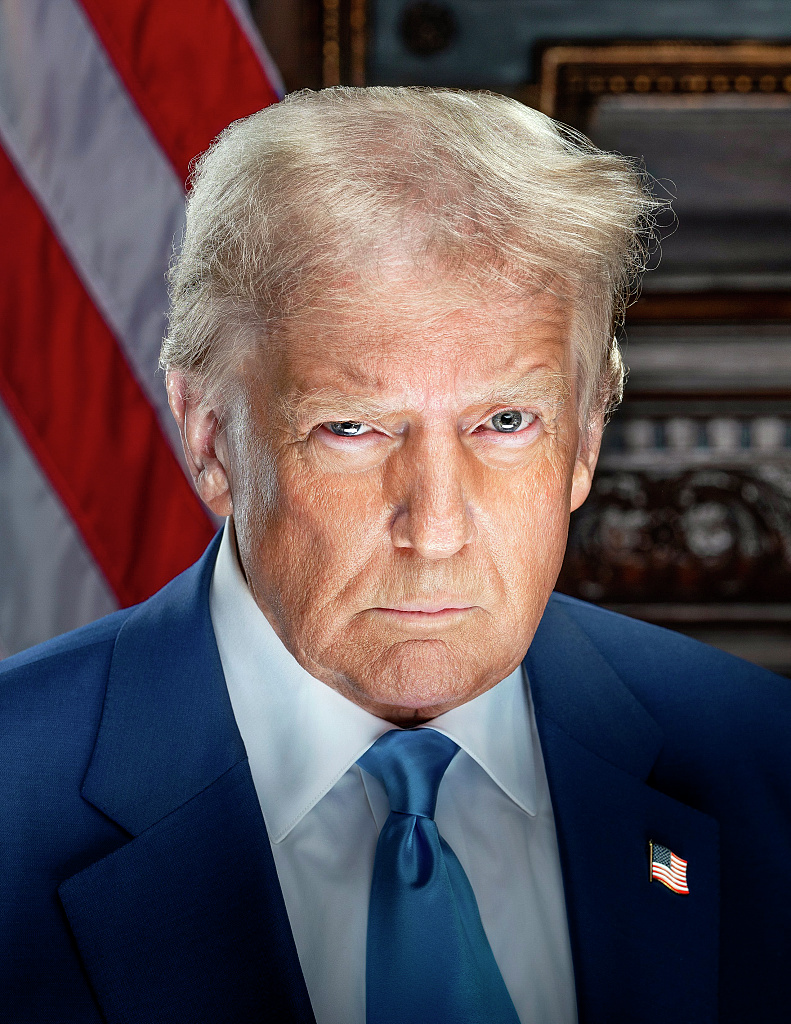
Donald J. Trump is an American businessman and Republican politician who returned to the presidency on January 20, 2025, serving with Vice President J.D. Vance. He previously served as president from 2017 to 2021 and is known for populist domestic and trade policies, deregulation efforts, and conservative judicial appointments.
Trump's presidencies reshaped the federal judiciary through multiple Supreme Court appointments and advanced a deregulatory, tax-cutting agenda that supporters credit with stimulating economic growth and shifting federal policy priorities. His administration pursued an assertive trade policy, tightened immigration enforcement, and enacted criminal‑justice reform and other legislative and executive measures that altered Washington's policy landscape.
At the same time, Trump's tenure was highly polarizing, marked by two impeachments and contentious relations with traditional allies and institutions; critics argue his style and rhetoric increased political polarization and weakened norms. His electoral comeback and continued influence have reshaped the Republican Party and American political discourse, leaving a contested but lasting imprint on governance and civic life.

Elected president in 2016 (served 2017–2021) and again in 2024, inaugurated 2025; Appointed three Supreme Court justices, shifting the judiciary rightward; Enacted the 2017 Tax Cuts and Jobs Act and pursued broad deregulation; Implemented tariffs and a confrontational trade policy toward China; Withdrew the U.S. from the Paris climate agreement and the Iran nuclear deal; Oversaw passage of the First Step Act and faced two impeachments
Key highlights and dated events associated with this presidency.
Showing 12 of 334 entries.
President Trump delivered his annual State of the Union to a joint session of Congress, outlining priorities including border security, tax and regulatory policy, and a stronger stance on China and Iran.
After President Trump vetoed a short-term government funding measure on January 22, federal appropriations lapsed and a partial government shutdown began on January 23 while the Office of Management and Budget issued contingency guidance on excepted employees and agency operations.
The President vetoed a continuing resolution passed by Congress, citing objections to its border enforcement language and levels of defense spending.
President Trump signed the FY2026 National Defense Authorization Act, finalizing defense spending levels and policy provisions for the year.
The Commerce Department announced a new round of export-control restrictions limiting advanced semiconductor and AI-related technology exports to designated Chinese companies.
President Trump used his Truth Social account to publish a lengthy post defending the December 30 clemency list, attacking critics in the Justice Department and media and framing the pardons as part of criminal-justice reform and mercy.
In a late-December action, the president issued pardons and commutations covering a mix of high-profile associates and a number of nonviolent drug offenders as part of a year-end clemency package.
The administration issued executive actions invoking the Defense Production Act to prioritize federal contracts, accelerate loans and permits, and direct supply-chain support for domestic semiconductor fabs and EV battery plants.
The president announced a nominee for EPA administrator who has signaled support for expanded fossil‑fuel development and rolling back regulations; the nomination was presented as complementary to recent executive actions to expand onshore and offshore energy leasing.
Signed an executive order directing federal agencies to expand oil and gas leasing on federal lands and waters and to expedite permitting for energy infrastructure projects.
In response to recent attacks on commercial vessels attributed to Iran-linked networks, the president ordered U.S. Navy escort operations for merchant ships transiting the Red Sea and Gulf of Oman and directed commanders to take defensive military measures to protect American forces and vessels.
Announced a package of new U.S. sanctions targeting Iran‑linked militias and financial networks in response to recent attacks on commercial shipping and regional partners, coordinated with allied measures.