Chief Justice John Jay resigns from the U.S. Supreme Court to become Governor of New York
John Jay submitted his resignation as Chief Justice of the United States Supreme Court effective June 29, 1795, after being elected Governor of New York.

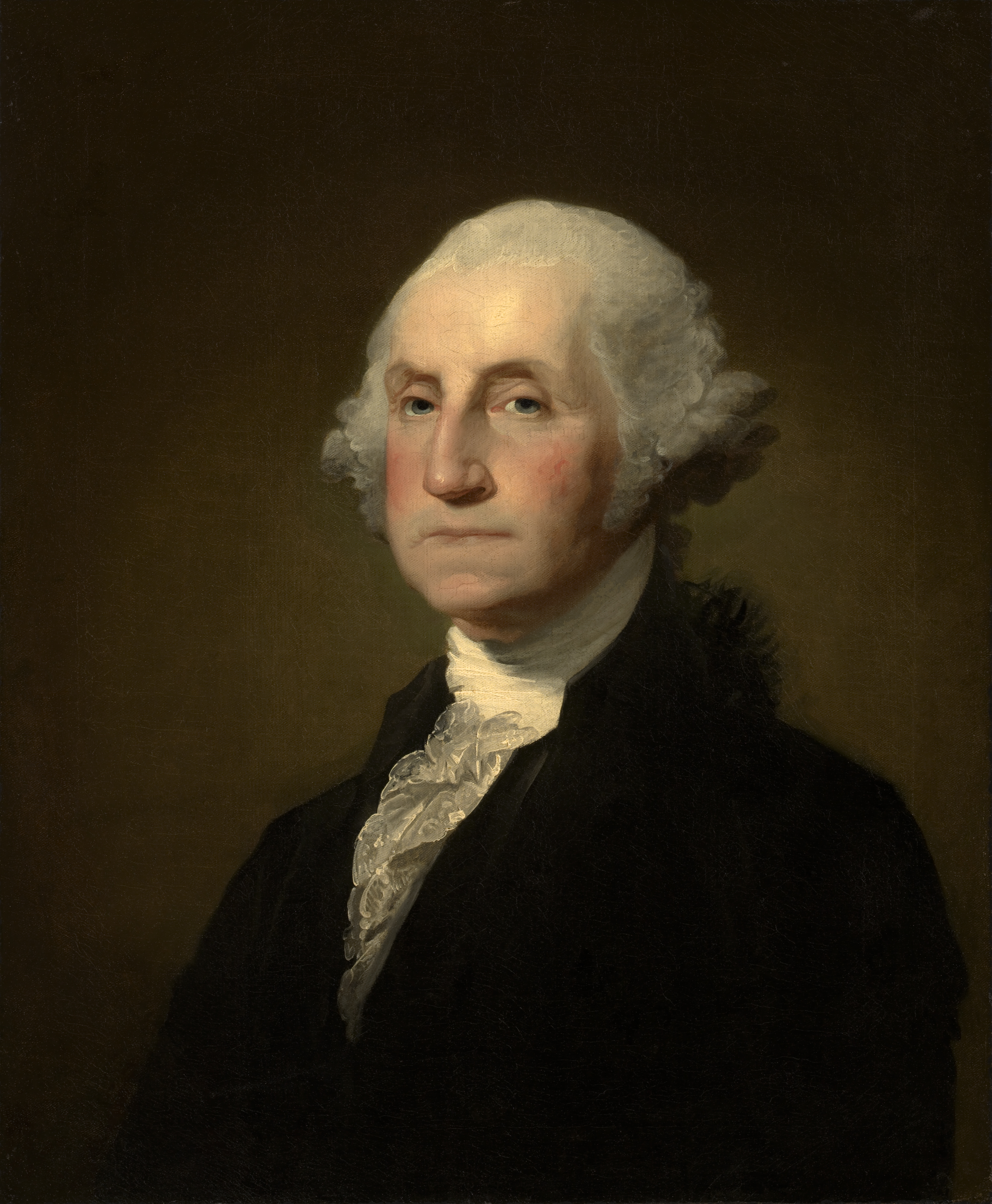
George Washington (1732–1799) commanded the Continental Army and served as the first President of the United States from 1789 to 1797. He helped create federal institutions and set important presidential precedents, though his legacy is complicated by his ownership of enslaved people.
As commander of the Continental Army and the nation’s first president, George Washington led the United States through its formative years, establishing key institutions and precedents such as the presidential cabinet, the federal judiciary, and the peaceful transfer of power.
He helped stabilize the new federal government and promoted neutrality in foreign affairs, but his record is mixed: his actions shaped federal authority and American diplomacy while his ownership of enslaved people and contested policies remain central to assessments of his legacy.
Led Continental Army to victory in the American Revolution; Unanimously elected first President (1789) and served two terms; Established the presidential cabinet and signed the Judiciary Act of 1789; Oversaw the ratification of the Bill of Rights; Issued the Neutrality Proclamation and wrote the Farewell Address advocating non-entanglement; Suppressed the Whiskey Rebellion and set the two-term presidential precedent
Key highlights and dated events associated with this presidency.
Showing 12 of 100 entries.
John Jay submitted his resignation as Chief Justice of the United States Supreme Court effective June 29, 1795, after being elected Governor of New York.
The United States Senate voted to give its advice and consent to ratification of the Jay Treaty between the U.S. and Great Britain on June 24, 1795.
President George Washington signed the Naturalization Act of 1795 on March 26, establishing new federal rules for immigrants to become U.S. citizens.
The official term of the Fourth United States Congress began on March 4, 1795, marking the start of the new congressional term under the Constitution.
On February 7, 1795, the Eleventh Amendment to the U.S. Constitution was ratified by the required number of states, restricting federal courts from hearing certain suits against states by citizens of another state or foreign country.
On 1795-01-31 President Washington accepted Alexander Hamilton's resignation as Secretary of the Treasury and named Oliver Wolcott Jr. to succeed him.
President George Washington signed the Naturalization Act of 1795, revising U.S. naturalization rules by establishing a five-year residency requirement and a declaration of intent for immigrants seeking citizenship.
U.S. envoy John Jay signed the Treaty of Amity, Commerce, and Navigation with Great Britain in London on behalf of the United States.
President George Washington returned to Philadelphia on November 16, 1794 after personally accompanying federal and state militia forces into western Pennsylvania to suppress the Whiskey Rebellion.
President George Washington issued a proclamation calling for state militias to be assembled to suppress the Whiskey Rebellion in western Pennsylvania.
U.S. Army forces under General Anthony Wayne routed a confederation of Native American tribes near the Maumee River at Fallen Timbers (present-day northwestern Ohio).
On August 7, 1794, President Washington issued a proclamation warning insurgents in western Pennsylvania to disperse and calling forth militia to enforce federal law during the Whiskey Rebellion.