
President Johnson signs the National Trails System Act
President Johnson signed the National Trails System Act, creating a framework for designating and protecting national scenic and historic trails.
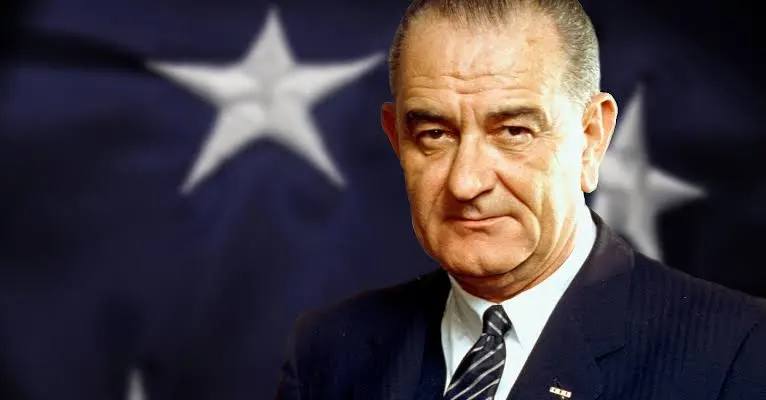
Lyndon B. Johnson, a Democrat from Texas, became president after John F. Kennedy's assassination in 1963 and served until 1969. He pursued an ambitious domestic agenda while presiding over a major escalation of the Vietnam War.
Johnson’s domestic agenda, known as the Great Society, expanded civil rights, health care, education, and anti-poverty programs, producing landmark laws such as the Civil Rights Act, the Voting Rights Act, Medicare, and Medicaid.
His decision to escalate U.S. military involvement in Vietnam eroded public support and overshadowed many of his achievements, leaving a complex legacy that reshaped civil rights, social policy, and debates over U.S. foreign intervention.
Signed the Civil Rights Act (1964) and Voting Rights Act (1965); Created Medicare and Medicaid (1965); Launched the Great Society and War on Poverty initiatives; Escalated U.S. military involvement in the Vietnam War; Enacted the Immigration and Nationality Act (1965)
Key highlights and dated events associated with this presidency.
Showing 12 of 216 entries.
President Johnson signed the National Trails System Act, creating a framework for designating and protecting national scenic and historic trails.
Following his nomination at the Chicago convention, Hubert Humphrey announced that Senator Edmund Muskie of Maine would be his vice-presidential choice.
Delegates at the Democratic National Convention in Chicago adopted the party's 1968 platform, including contested language on Vietnam and domestic policy amid clashes between establishment and antiwar delegates.
On August 29, 1968, Vice President Hubert H. Humphrey was formally nominated as the Democratic Party’s presidential candidate at the tumultuous Chicago convention and accepted the nomination to challenge Republican Richard Nixon.
A federal grand jury returned indictments charging eight antiwar activists—later called the "Chicago Eight"—with conspiring to cross state lines to incite a riot at the Democratic National Convention in Chicago.
On August 28, 1968, large-scale confrontations occurred outside the Democratic National Convention in Chicago as police and National Guard forces violently clashed with antiwar protesters and marchers, with widespread televised coverage of the beatings and arrests.
The Democratic National Convention began in Chicago, drawing thousands of antiwar demonstrators and leading to violent clashes between protesters and Chicago police during the convention week (Aug 26–29).
President Lyndon B. Johnson issued a public statement condemning the Warsaw Pact military invasion of Czechoslovakia that began on August 20–21, 1968.
Richard Nixon secured the Republican Party’s presidential nomination at the 1968 Republican National Convention in Miami Beach on August 8, 1968.
On July 31, 1968, President Johnson signed the Omnibus Crime Control and Safe Streets Act, a major federal crime‑control bill that provided grants to state and local law enforcement and authorized federal electronic surveillance under court order.
President Lyndon B. Johnson signed the Omnibus Crime Control and Safe Streets Act of 1968 into law, creating the Law Enforcement Assistance Administration (LEAA) and authorizing federal grants and programs for police and criminal justice agencies.
President Lyndon B. Johnson signed the Nuclear Non‑Proliferation Treaty on July 1, 1968, when the treaty opened for signature in Washington (with parallel signings in London and Moscow).