Roosevelt announces he will not be a candidate for reelection
President Theodore Roosevelt publicly declared on February 14, 1908, that he would not be a candidate for another term as president.
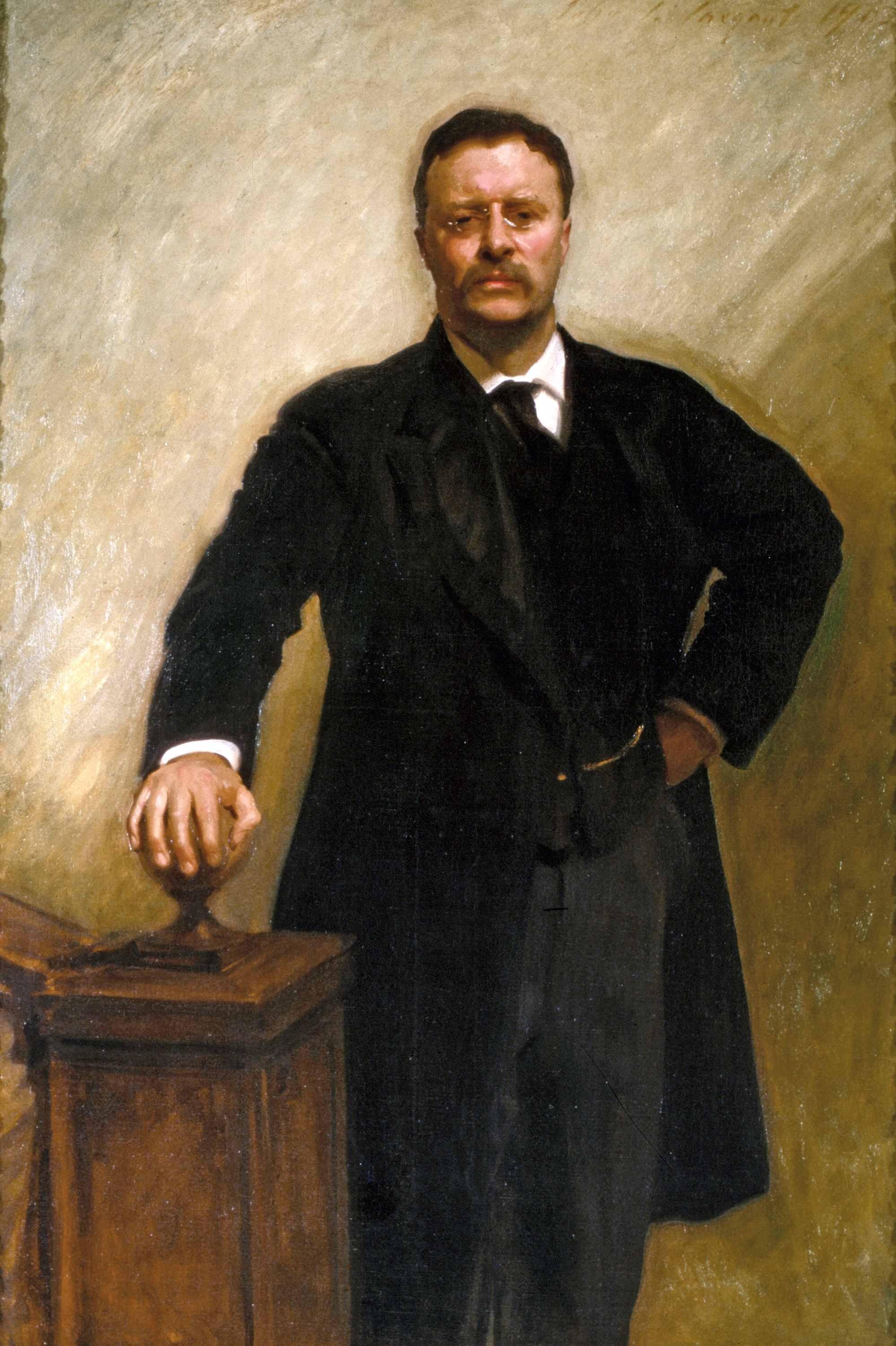
Theodore Roosevelt was the 26th president of the United States, serving from 1901 to 1909 after succeeding William McKinley. A Republican reformer and conservationist, he expanded federal regulation, trust-busting, and American influence abroad.
Roosevelt broadened the role of the federal government in regulating business and protecting consumers. His "Square Deal" policies included antitrust actions, the Pure Food and Drug Act, and major conservation initiatives that created national parks, forests, and monuments.
He transformed the presidency into a more active office and pursued an assertive foreign policy summarized by "speak softly and carry a big stick." He mediated the end of the Russo-Japanese War, advanced construction of the Panama Canal, and left a lasting impact on American institutions and global presence.
Assumed the presidency after William McKinley’s assassination (1901); Launched the "Square Deal" with trust-busting and regulatory reforms; Enacted the Pure Food and Drug Act and Meat Inspection Act (1906); Established national parks, forests, and monuments through expanded conservation policy; Brokered peace in the Russo-Japanese War, receiving the 1906 Nobel Peace Prize; Supported Panama Canal construction and demonstrated U.S. naval power (Great White Fleet).
Key highlights and dated events associated with this presidency.
Showing 12 of 136 entries.
President Theodore Roosevelt publicly declared on February 14, 1908, that he would not be a candidate for another term as president.
President Theodore Roosevelt issued a public statement declaring he would not accept the Republican nomination for the 1908 presidential election.
President Theodore Roosevelt used the Antiquities Act to proclaim the Grand Canyon in Arizona a national monument.
Sixteen U.S. battleships of the 'Great White Fleet' sailed from Hampton Roads to begin a global voyage ordered by Roosevelt to demonstrate American naval power.
On December 6, 1907 a massive explosion at the Fairmont Coal Company mines in Monongah, West Virginia killed an estimated 360 miners, devastating the local community.
Roosevelt transmitted his annual message to Congress outlining his administration's priorities and legislative recommendations for the coming year.
Following private meetings, New York banks and the Clearing House arranged liquidity measures and coordinated lending to troubled institutions to halt runs.
Stocks fell sharply and financial markets experienced intense volatility as runs on banks and trust companies intensified across New York.
After runs on trust companies accelerated following the Knickerbocker failure, J.P. Morgan convened leading New York bankers and trust officials to organize a coordinated rescue effort.
On October 22, 1907 the Knickerbocker Trust Company of New York suspended operations after a run on the bank, setting off intense runs on other trusts and a broader financial panic.
The Second Hague Peace Conference opened in The Hague on June 15, 1907, with the United States represented by a delegation led by Secretary of State Elihu Root under President Roosevelt's administration.
On February 28, 1907, President Theodore Roosevelt ordered the dishonorable discharge without trial of 167 Black enlisted men of the 25th U.S. Infantry following an August 1906 shooting in Brownsville, Texas.