
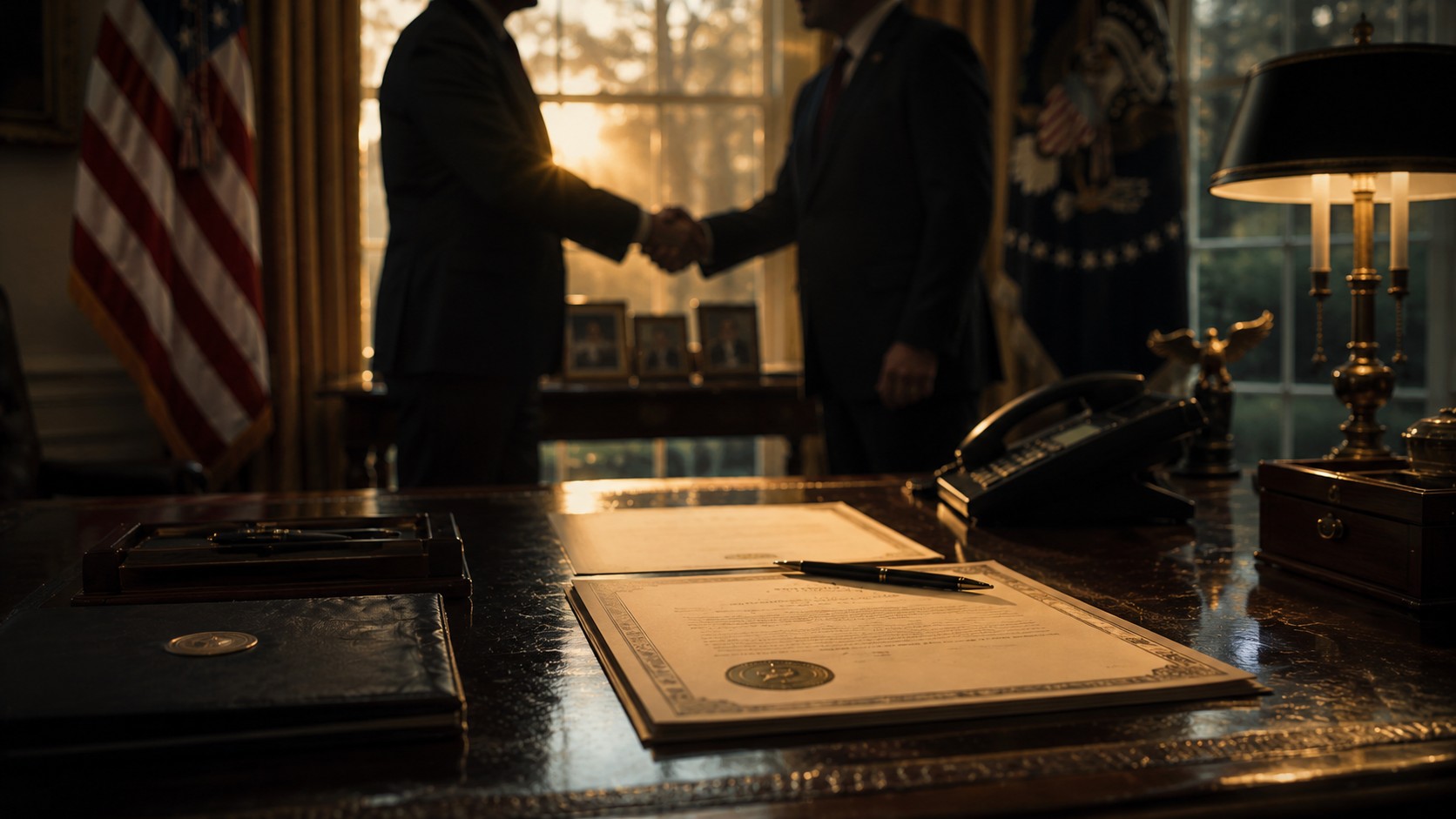
Donald Rumsfeld sworn in as Secretary of Defense
Donald Rumsfeld was sworn in as U.S. Secretary of Defense as part of Bush’s inaugural Cabinet on January 20, 2001.
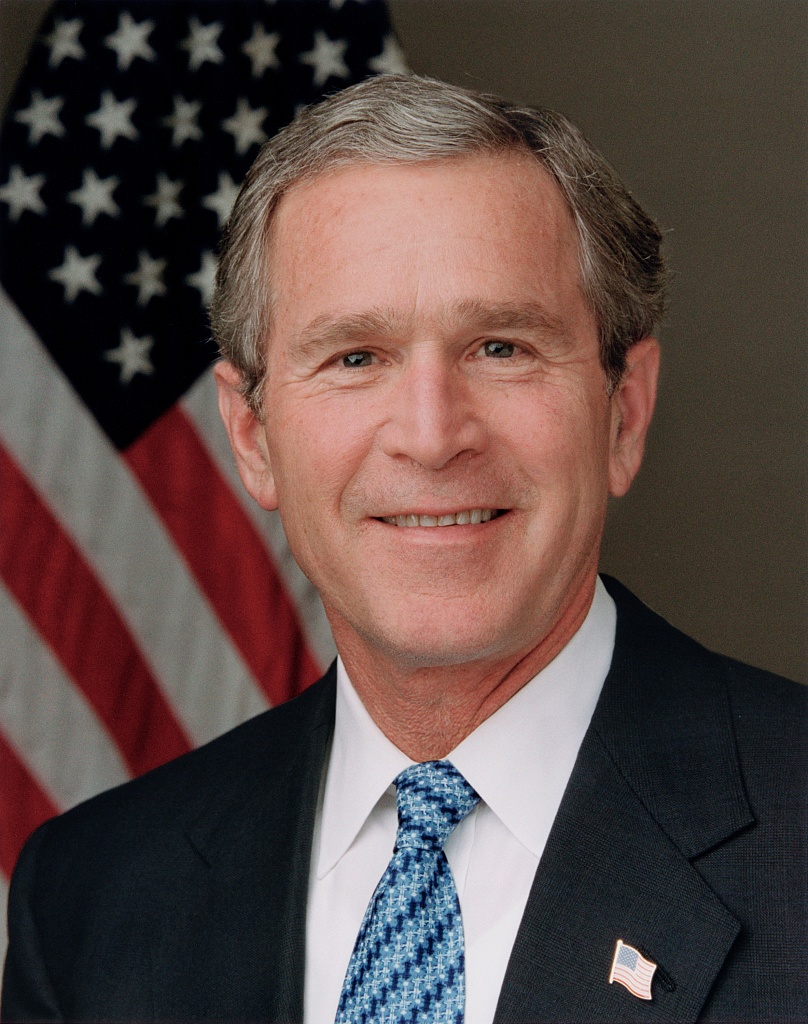
George W. Bush served as the 43rd President of the United States from January 20, 2001 to January 20, 2009. A Republican and former governor of Texas, his presidency was shaped by the response to the September 11, 2001 attacks and consequential domestic policies.
Bush's presidency is most widely remembered for the response to the September 11 attacks, the launch of the global War on Terror, and military campaigns in Afghanistan and Iraq. Decisions on intelligence, national security, and counterterrorism had long-lasting international and political effects.
On the domestic front, his administration passed major laws including the No Child Left Behind education reform and the Medicare Part D prescription drug benefit, and he appointed two Supreme Court justices. The 2008 financial crisis and emergency responses also significantly influenced assessments of his record.
Led U.S. response to 9/11 and launched the War on Terror; Ordered U.S. invasions of Afghanistan (2001) and Iraq (2003); Enacted No Child Left Behind education reform (2001); Created Medicare Part D prescription drug benefit (2003); Appointed Chief Justice John Roberts and Justice Samuel Alito; Responded to the 2008 financial crisis, including signing the TARP bailout
Key highlights and dated events associated with this presidency.
Showing 7 of 307 entries.
Donald Rumsfeld was sworn in as U.S. Secretary of Defense as part of Bush’s inaugural Cabinet on January 20, 2001.
Condoleezza Rice took office as President Bush’s National Security Advisor on January 20, 2001.
Andrew Card was sworn in as White House Chief of Staff at the start of the George W. Bush administration on inauguration day.
George W. Bush was sworn in as the 43rd President of the United States and Dick Cheney was sworn in as Vice President, and Bush delivered his inaugural address outlining priorities such as tax relief, education reform, and 'compassionate conservatism.'
The U.S. Senate confirmed Colin Powell to serve as Secretary of State for the incoming Bush administration.
In a joint session, Congress counted and certified the Electoral College votes from the 2000 election, formally confirming George W. Bush as the winner.
The newly elected 107th Congress convened and the Republican majority in the House elected Rep. Dennis Hastert as Speaker of the House.