Democrats expand Congressional majorities in 1936 elections
Alongside Roosevelt's re‑election on November 3, 1936, the Democratic Party increased its majorities in both the House and the Senate in the general elections.

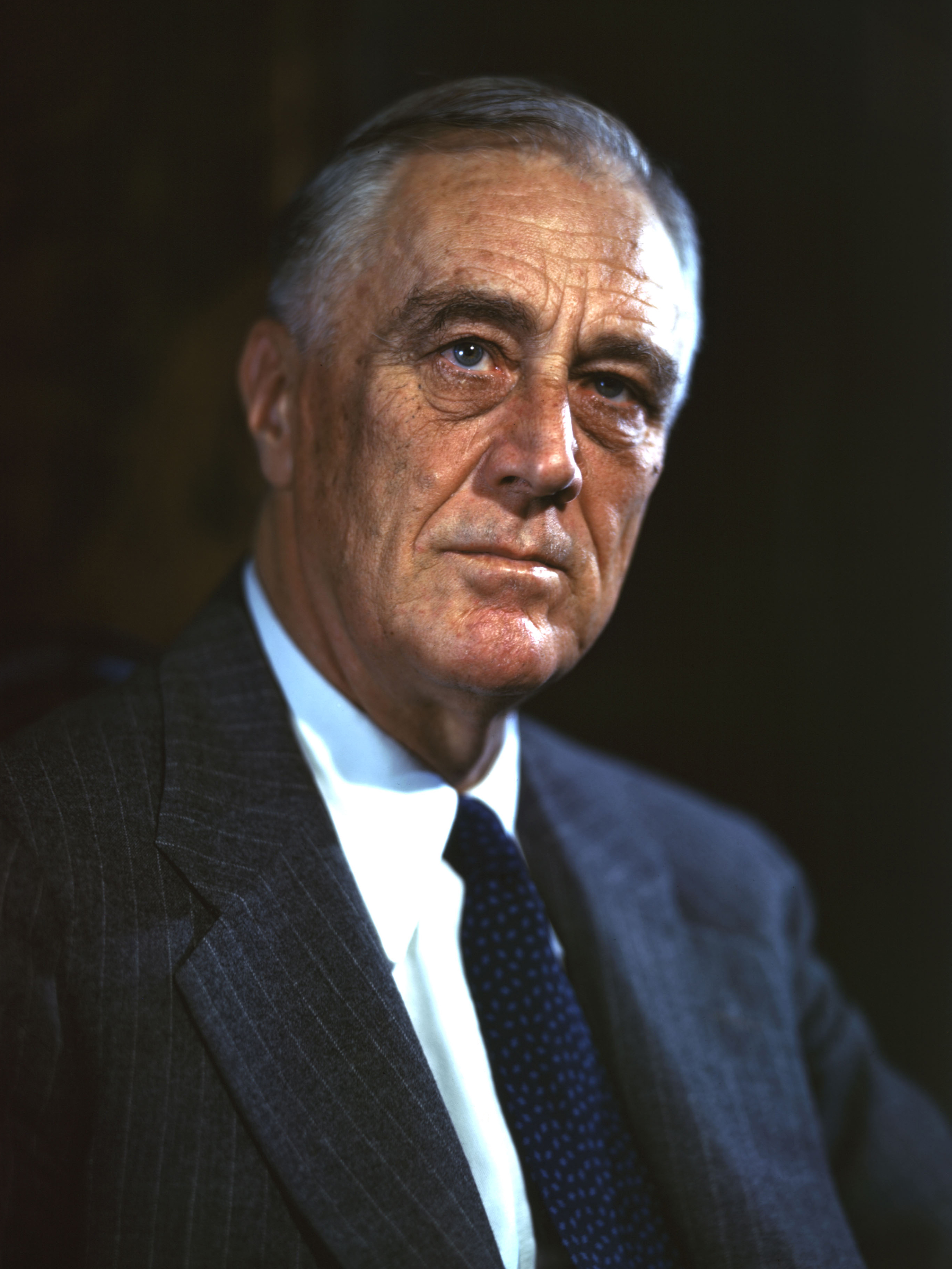
Franklin D. Roosevelt (1882–1945) was the 32nd President of the United States, serving from March 4, 1933, to April 12, 1945. A Democrat, he led the nation through the Great Depression and most of World War II.
Roosevelt reshaped the federal government's role in the economy through the New Deal, creating programs and institutions such as Social Security, the FDIC, and large-scale public works to relieve unemployment and stabilize finance.
He also guided the United States through World War II, overseeing mobilization, Lend-Lease, and Allied cooperation; his four-term presidency expanded the scope and influence of the executive branch and left a lasting global and domestic legacy, though some initiatives, like the 1937 court-packing plan, provoked controversy.
Implemented New Deal reforms including the Social Security Act; Stabilized banking and created the FDIC and SEC; Established large public works programs (WPA, CCC, TVA); Backed Lend-Lease and led U.S. mobilization in World War II; Elected to four terms, reshaping presidential precedent; Proposed 1937 Supreme Court reorganization (court-packing)
Key highlights and dated events associated with this presidency.
Showing 12 of 415 entries.
Alongside Roosevelt's re‑election on November 3, 1936, the Democratic Party increased its majorities in both the House and the Senate in the general elections.

On November 3, 1936, Franklin D. Roosevelt defeated Republican Alf Landon in a nationwide landslide, carrying 46 states and winning 523 electoral votes to Landon's 8.
On July 17, 1936 a Nationalist military revolt, led by officers including Francisco Franco in Spanish Morocco, spread to the mainland and marked the start of the Spanish Civil War.
President Franklin D. Roosevelt signed the Walsh‑Healey Public Contracts Act into law, imposing minimum wage, maximum hours, and safety standards on federal government manufacturing contracts.
Roosevelt signed the Merchant Marine Act of 1936, creating the U.S. Maritime Commission and authorizing measures to modernize the American merchant fleet and shipbuilding industry.
Franklin D. Roosevelt delivered his acceptance speech at the close of the Democratic National Convention, outlining his administration's record and campaign themes for re-election.
The Democratic National Convention convened in Philadelphia, beginning proceedings that would renominate President Franklin D. Roosevelt and set the party platform.
At the Democratic National Convention in Philadelphia, delegates formally renominated Vice President John Nance Garner as Franklin D. Roosevelt's running mate.
The Democratic National Convention convened in Philadelphia and formally renominated Franklin D. Roosevelt for a second full term as the party's presidential nominee.
President Franklin D. Roosevelt signed the Flood Control Act of 1936 into law, authorizing comprehensive federal involvement in flood prevention and control projects.
The Republican National Convention in Cleveland nominated Kansas Governor Alfred M. (Alf) Landon as its candidate for president.
On May 5, 1936, Italian troops entered and seized Addis Ababa, effectively completing their conquest of Ethiopia after a months‑long campaign.