Census 2000 — Official Census Day
April 1, 2000 was Census Day for the decennial Census 2000, the date by which households were asked to report their resident population.
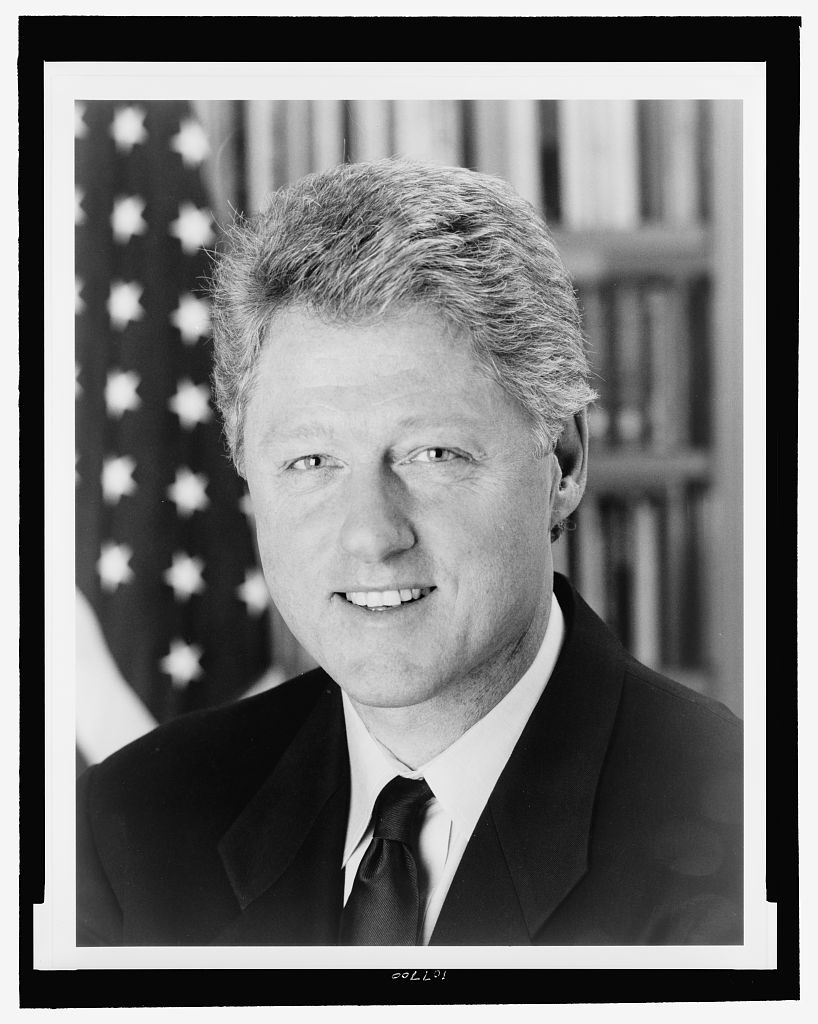
Bill Clinton served as the 42nd President of the United States from January 20, 1993, to January 20, 2001. His two-term administration oversaw strong economic growth and budget surpluses while also facing major political controversies, including impeachment and acquittal in 1998–1999.
Domestically, Clinton presided over a period of sustained economic expansion, reduced unemployment, and several major policy initiatives—most notably passage of NAFTA, welfare reform in 1996, and balanced budgets that produced federal surpluses in the late 1990s. His administration also advanced legislation on crime, gun control, and family leave while benefiting from the technology-driven boom of the decade.
Clinton’s presidency is also marked by controversy: a personal scandal led to his impeachment by the House in 1998 and acquittal by the Senate in 1999, which shaped public debate about character and accountability. On foreign policy he expanded U.S. engagement, including NATO interventions in Bosnia and Kosovo, leaving a mixed legacy of increased international involvement and contested domestic politics.

Signed NAFTA (1993); Enacted 1996 Welfare Reform (Personal Responsibility and Work Opportunity Act); Achieved federal budget surpluses in the late 1990s; Led NATO interventions in Bosnia (1995) and Kosovo (1999); Impeached by the House (1998) and acquitted by the Senate (1999); Signed key domestic laws including the Brady Bill and Family and Medical Leave Act
Key highlights and dated events associated with this presidency.
Showing 12 of 279 entries.
April 1, 2000 was Census Day for the decennial Census 2000, the date by which households were asked to report their resident population.
Acting President Vladimir Putin won the Russian presidential election, formally securing the office after Boris Yeltsin’s resignation the previous winter.
The NASDAQ Composite reached its record peak in March 2000, marking the high point of the late‑1990s internet/technology boom during Clinton’s presidency.
Former Senator Bill Bradley ended his challenge to Al Gore, suspending his campaign and announcing his support for Gore.
Clinton transmitted his Administration’s Fiscal Year 2001 budget to Congress, outlining spending priorities and fiscal projections for the coming year.
President Clinton delivered his final full State of the Union address, outlining priorities including budget discipline, education, and health-care initiatives.
The administration announced that the transition to the year 2000 passed without major Y2K-related failures and credited extensive federal and private-sector preparations.
On December 31, 1999, the United States formally turned over control and operation of the Panama Canal to the Republic of Panama, completing the implementation of the Torrijos–Carter Treaties.
The World Trade Organization's third Ministerial Conference opened in Seattle on November 30, and large, coordinated protests and demonstrations disrupted the opening sessions and blocked delegates' access to venues.
President Clinton signed the Gramm–Leach–Bliley Act into law, rolling back Depression-era barriers between commercial banking, investment banking, and insurance.
President Bill Clinton delivered the U.S. address to the UN General Assembly in New York, outlining U.S. priorities on Kosovo stabilization, nonproliferation, and broader international cooperation.
The Senate confirmed Richard Holbrooke and he was sworn in as the United States Ambassador to the United Nations on September 22, 1999.