Senate Judiciary Committee Opens Confirmation Hearings for Samuel A. Alito Jr.
The Senate Judiciary Committee began formal confirmation hearings for President Bush's Supreme Court nominee Samuel A. Alito Jr.
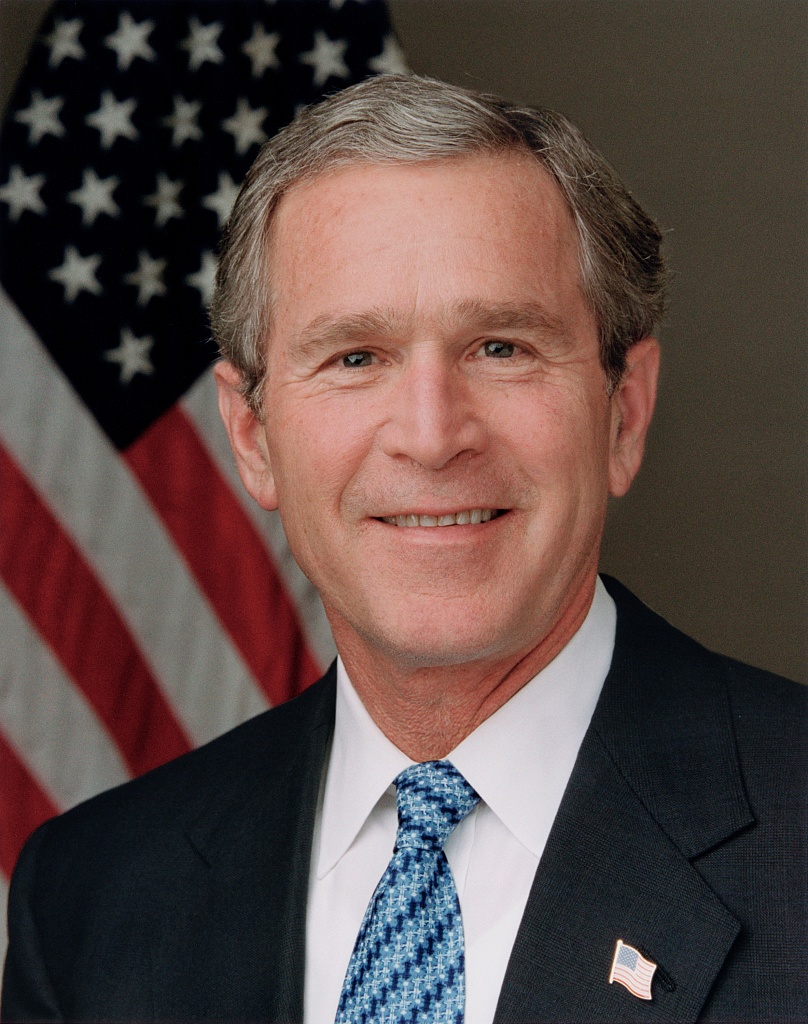
George W. Bush served as the 43rd President of the United States from January 20, 2001 to January 20, 2009. A Republican and former governor of Texas, his presidency was shaped by the response to the September 11, 2001 attacks and consequential domestic policies.
Bush's presidency is most widely remembered for the response to the September 11 attacks, the launch of the global War on Terror, and military campaigns in Afghanistan and Iraq. Decisions on intelligence, national security, and counterterrorism had long-lasting international and political effects.
On the domestic front, his administration passed major laws including the No Child Left Behind education reform and the Medicare Part D prescription drug benefit, and he appointed two Supreme Court justices. The 2008 financial crisis and emergency responses also significantly influenced assessments of his record.
Led U.S. response to 9/11 and launched the War on Terror; Ordered U.S. invasions of Afghanistan (2001) and Iraq (2003); Enacted No Child Left Behind education reform (2001); Created Medicare Part D prescription drug benefit (2003); Appointed Chief Justice John Roberts and Justice Samuel Alito; Responded to the 2008 financial crisis, including signing the TARP bailout
Key highlights and dated events associated with this presidency.
Showing 12 of 307 entries.
The Senate Judiciary Committee began formal confirmation hearings for President Bush's Supreme Court nominee Samuel A. Alito Jr.
President Bush issued a public statement expressing concern and offering wishes for recovery after Israeli Prime Minister Ariel Sharon suffered a severe stroke on January 4, 2006.
President Bush issued a statement expressing condolences to the families of trapped miners and offered federal assistance after the Sago Mine explosion in West Virginia.
The U.S. Senate failed to invoke cloture on debate over President Bush's nominee to be U.S. Ambassador to the United Nations, John R. Bolton, effectively preventing a confirmation vote.
The New York Times published a report that the White House had authorized the National Security Agency to eavesdrop on international telephone and email communications of people inside the United States without obtaining court warrants.
Following Iraq's December 15 parliamentary elections, President Bush issued a statement praising Iraqi voters and urging national reconciliation and support for Iraq's new government.
At the APEC Leaders' Meeting in Busan, President Bush addressed fellow leaders emphasizing free trade, economic growth, and cooperation on regional security challenges.
During the APEC leaders' meetings in Busan, President Bush and Chinese President Hu Jintao met face-to-face to discuss bilateral ties, regional security, and concerns about North Korea.
On November 19, 2005, Marines in Haditha, Iraq killed a number of Iraqi civilians, including women and children, following an insurgent attack on U.S. forces and a subsequent roadside bombing.
Democrat Tim Kaine won the Virginia gubernatorial election on November 8, 2005, defeating Republican Jerry Kilgore.
Democrat Jon Corzine won the New Jersey gubernatorial election on November 8, 2005, defeating Republican Doug Forrester.
On November 5, 2005, U.S. Marines and Iraqi security forces launched Operation Steel Curtain, a coordinated offensive to clear insurgent strongholds in and around the Euphrates River towns near the Syria–Iraq border, including Husaybah and Karabilah.