Martin Luther King Jr. arrested in Birmingham during demonstrations
Dr. King was arrested for leading nonviolent protests in Birmingham and jailed by local authorities amid intensified demonstrations.

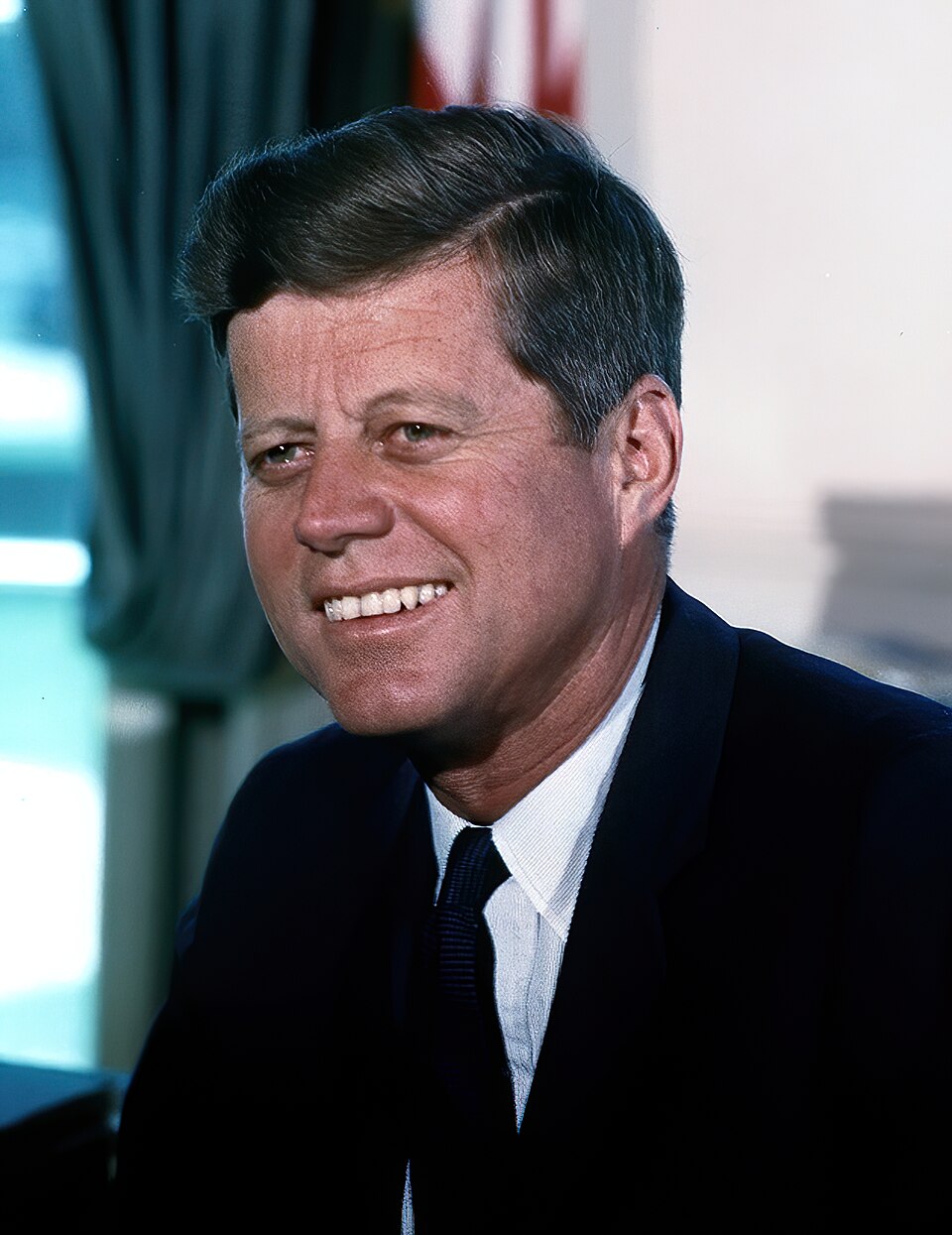
John F. Kennedy was the 35th President of the United States, serving from January 20, 1961, until his assassination on November 22, 1963. A Democrat and former U.S. senator from Massachusetts, he is remembered for his Cold War leadership and ambitious domestic and space initiatives.
Kennedy's presidency was defined by Cold War confrontations and high-stakes diplomacy. He navigated crises such as the Bay of Pigs invasion and the Cuban Missile Crisis, pursued arms-control agreements like the 1963 Partial Nuclear Test Ban Treaty, and worked to maintain U.S. credibility abroad.
On the domestic front, Kennedy advanced a program called the New Frontier that promoted economic stimulus, education, and social programs, established the Peace Corps, and used federal authority to press for civil rights. His pledge to land a man on the Moon and his assassination in 1963 left a lasting cultural and political legacy.
Managed the Cuban Missile Crisis, averting nuclear escalation; Oversaw the failed Bay of Pigs invasion; Created the Peace Corps to support international development; Committed the U.S. to a Moon landing and boosted NASA funding; Advanced civil rights through federal actions and public appeals; Negotiated the 1963 Partial Nuclear Test Ban Treaty
Key highlights and dated events associated with this presidency.
Showing 12 of 120 entries.
Dr. King was arrested for leading nonviolent protests in Birmingham and jailed by local authorities amid intensified demonstrations.
Local civil rights organizations and the SCLC launched coordinated sit-ins, marches, and boycotts in Birmingham, Alabama, to challenge segregation.
President Kennedy sent a special message to Congress outlining a comprehensive proposal for across‑the‑board tax reductions and other measures to spur economic growth and reduce unemployment.
On February 8, Iraqi military officers associated with the Ba'ath Party overthrew and executed Prime Minister Abd al‑Karim Qasim in the Ramadan Revolution, installing a new government in Baghdad.
President John F. Kennedy delivered his annual State of the Union address to a joint session of Congress, outlining priorities including a proposed tax cut to stimulate economic growth, civil rights initiatives, and continued investment in the space program and national defense.
President John F. Kennedy delivered the annual radio and television Christmas message to the American people, reflecting on the year's events and addressing the nation's mood after the Cuban Missile Crisis.
President John F. Kennedy delivered a public statement announcing that Soviet offensive weapons had been removed from Cuba and that the United States was ending its naval quarantine.
The U.S. announced that Soviet offensive missiles and bombers had been removed from Cuba and that the naval quarantine around Cuba was being lifted.
President Kennedy announced that U.S. reconnaissance confirmed the dismantling and removal of Soviet offensive weapons from Cuba and ordered an end to the naval quarantine.
President John F. Kennedy signed Executive Order 11063, directing federal agencies to prohibit discrimination in the sale, leasing, rental, or other disposition of properties owned or operated by the federal government or provided with federal funds.
In the U.S. midterm elections, Democrats kept control of both the House and the Senate while Republicans made modest gains.
Soviet Premier Nikita Khrushchev publicly announced that the USSR would remove its offensive missiles from Cuba, following behind‑the‑scenes negotiations with the United States.