
Annual Message to Congress (1935 State of the Union)
President Franklin D. Roosevelt delivered his annual message to Congress outlining his administration's plans to continue economic recovery and support federal relief and public-works efforts.
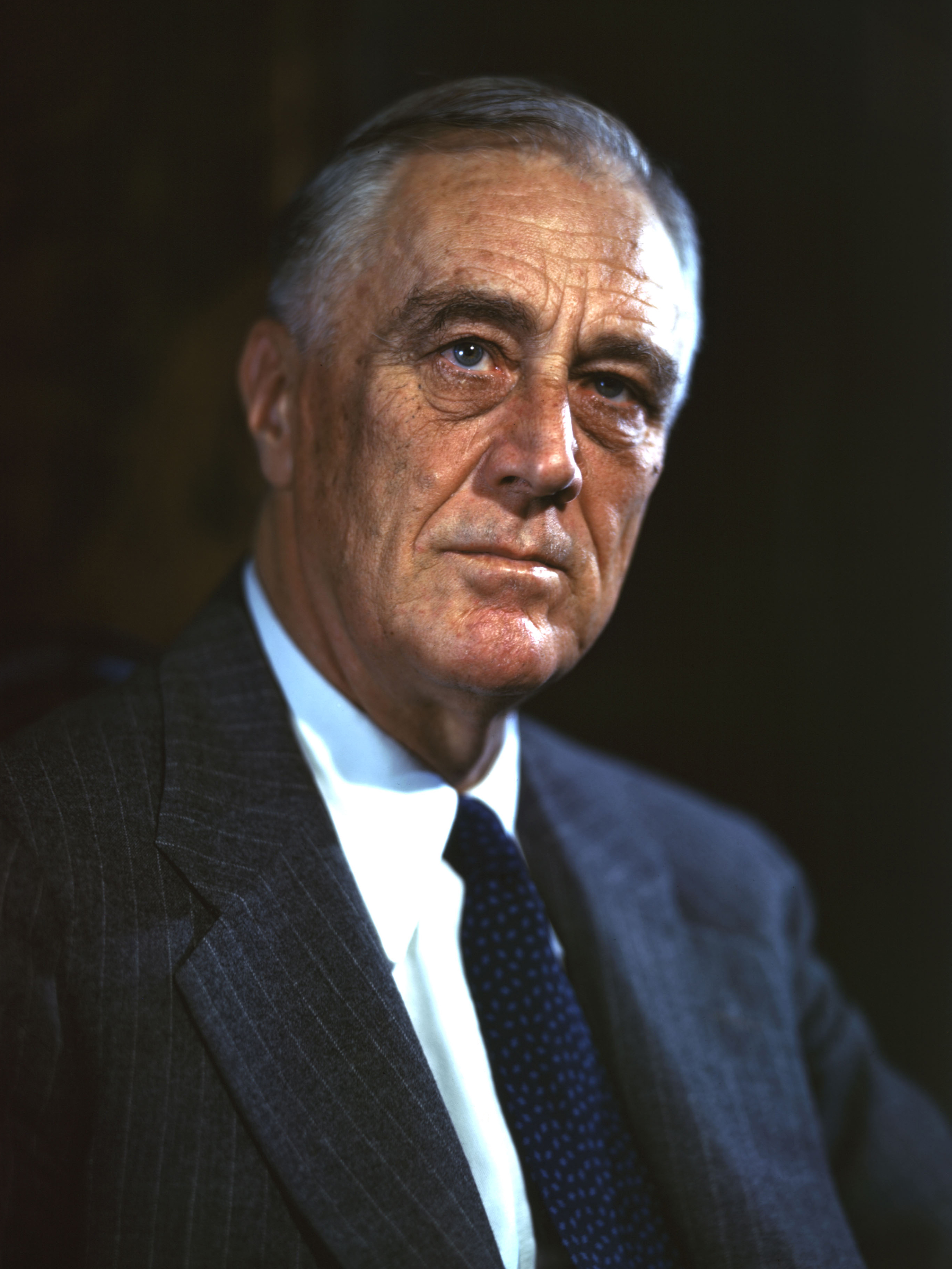
Franklin D. Roosevelt (1882–1945) was the 32nd President of the United States, serving from March 4, 1933, to April 12, 1945. A Democrat, he led the nation through the Great Depression and most of World War II.
Roosevelt reshaped the federal government's role in the economy through the New Deal, creating programs and institutions such as Social Security, the FDIC, and large-scale public works to relieve unemployment and stabilize finance.
He also guided the United States through World War II, overseeing mobilization, Lend-Lease, and Allied cooperation; his four-term presidency expanded the scope and influence of the executive branch and left a lasting global and domestic legacy, though some initiatives, like the 1937 court-packing plan, provoked controversy.
Implemented New Deal reforms including the Social Security Act; Stabilized banking and created the FDIC and SEC; Established large public works programs (WPA, CCC, TVA); Backed Lend-Lease and led U.S. mobilization in World War II; Elected to four terms, reshaping presidential precedent; Proposed 1937 Supreme Court reorganization (court-packing)
Key highlights and dated events associated with this presidency.
Showing 12 of 415 entries.
President Franklin D. Roosevelt delivered his annual message to Congress outlining his administration's plans to continue economic recovery and support federal relief and public-works efforts.

In the November 6, 1934 midterm elections, Democrats made notable net gains in both the House and the Senate, bucking the typical midterm losses for the president's party.
King Alexander I of Yugoslavia was assassinated in Marseille, France, on October 9, 1934, during a state visit to France.
On August 2, 1934, German President Paul von Hindenburg died, enabling Chancellor Adolf Hitler to merge the offices of president and chancellor and assume the title 'Führer.'
Chancellor Engelbert Dollfuss of Austria was assassinated on July 25, 1934, during an attempted coup by Austrian Nazis seeking to bring Austria into line with Nazi Germany.
Public Enemy No. 1 John Dillinger was shot and killed by federal agents outside the Biograph Theater in Chicago on July 22, 1934.
The newly created Federal Communications Commission (established by the Communications Act of 1934) commenced operations to regulate interstate radio, telephone, and telegraph communications.
Adolf Hitler's violent purge of the SA leadership and other political opponents, known as the Night of the Long Knives, culminated in early July 1934 with the execution or arrest of key figures including SA chief Ernst Röhm.
Roosevelt signed the National Housing Act, which created the Federal Housing Administration to insure mortgages and stimulate home building and lending.
President Franklin D. Roosevelt signed the Federal Credit Union Act, creating a federal charter for nonprofit credit unions to promote thrift and provide credit to underserved communities.
President Roosevelt signed the Communications Act of 1934 on June 19, establishing the Federal Communications Commission to regulate interstate communications.
On June 18, 1934 Roosevelt signed the Indian Reorganization Act, reversing allotment policy and promoting tribal self-government and land restoration.