
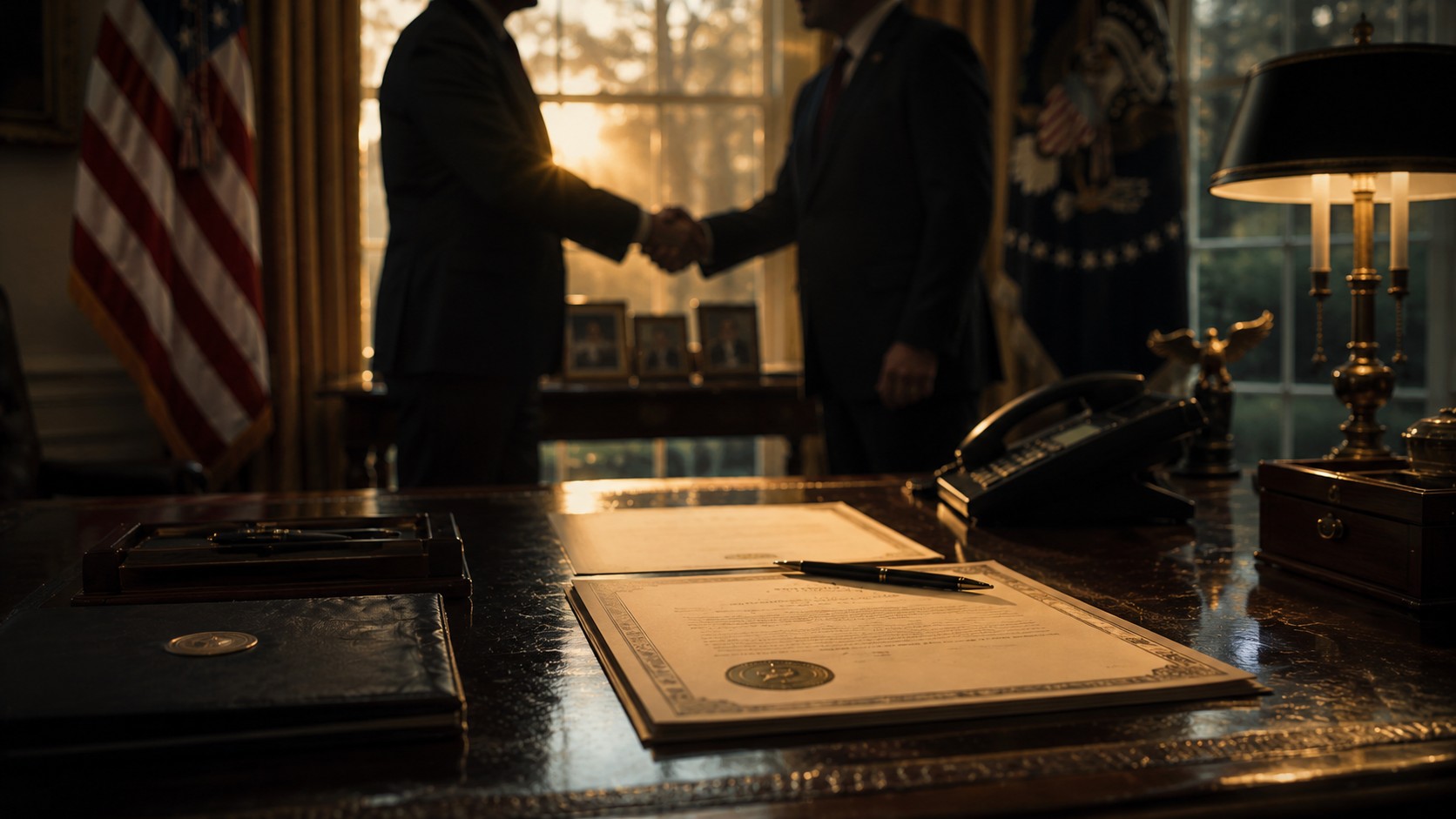
Homer Cummings Confirmed and Sworn in as Attorney General
Homer Cummings was confirmed by the Senate and sworn in as Attorney General on FDR's first day in office.

Franklin D. Roosevelt (1882–1945) was the 32nd President of the United States, serving from March 4, 1933, to April 12, 1945. A Democrat, he led the nation through the Great Depression and most of World War II.
Roosevelt reshaped the federal government's role in the economy through the New Deal, creating programs and institutions such as Social Security, the FDIC, and large-scale public works to relieve unemployment and stabilize finance.
He also guided the United States through World War II, overseeing mobilization, Lend-Lease, and Allied cooperation; his four-term presidency expanded the scope and influence of the executive branch and left a lasting global and domestic legacy, though some initiatives, like the 1937 court-packing plan, provoked controversy.
Implemented New Deal reforms including the Social Security Act; Stabilized banking and created the FDIC and SEC; Established large public works programs (WPA, CCC, TVA); Backed Lend-Lease and led U.S. mobilization in World War II; Elected to four terms, reshaping presidential precedent; Proposed 1937 Supreme Court reorganization (court-packing)
Key highlights and dated events associated with this presidency.
Showing 7 of 415 entries.
Homer Cummings was confirmed by the Senate and sworn in as Attorney General on FDR's first day in office.
Harold L. Ickes was confirmed and took office as Secretary of the Interior on March 4, 1933.
Henry A. Wallace was confirmed by the Senate and sworn in as FDR's Secretary of Agriculture on inauguration day.
Cordell Hull was confirmed by the Senate and sworn in as Secretary of State at the beginning of Roosevelt's presidency.
William H. Woodin took office as Secretary of the Treasury at the start of Roosevelt's administration.
The Senate confirmed Frances Perkins and she was sworn in as Secretary of Labor, becoming the first woman to serve in a U.S. presidential cabinet.
Roosevelt gave his first inaugural address in Washington, famously declaring 'the only thing we have to fear is fear itself' and outlining a vigorous federal response to the Great Depression.