Charles G. Dawes accepts the Republican vice-presidential nomination
At the Republican National Convention in Cleveland, Charles G. Dawes formally accepted the party's nomination for vice president on June 12, 1924.

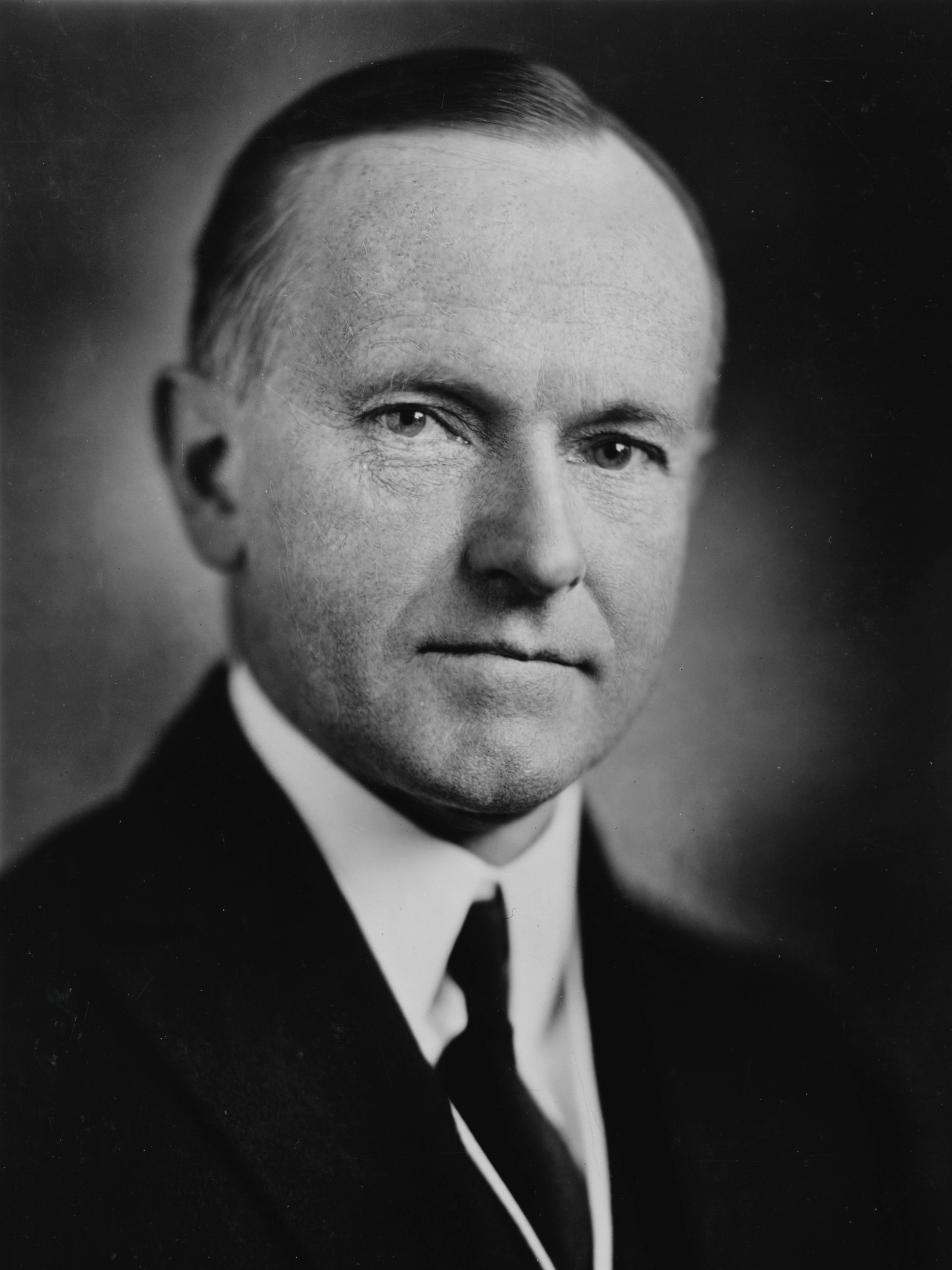
Calvin Coolidge, a Republican, served as the 30th president of the United States from August 2, 1923, to March 4, 1929 after succeeding Warren G. Harding. He was known for his quiet demeanor, frugality, and advocacy of limited government and pro‑business policies.
Coolidge presided over much of the Roaring Twenties, a period of economic growth; his administration pursued tax cuts, reduced federal spending, and favored business-friendly policies that many credit with sustaining short-term prosperity.
Historians debate his legacy: supporters praise his integrity, fiscal restraint, and restoration of public trust after earlier scandals, while critics argue his laissez-faire approach and limited regulation contributed to conditions that preceded the Great Depression. He also signed the Indian Citizenship Act (1924), supported the Dawes Plan for European reparations, and approved the Kellogg–Briand Pact.
Assumed the presidency after Warren G. Harding’s death (1923); enacted tax cuts and reduced federal spending to promote business growth; signed the Indian Citizenship Act (1924) granting Native Americans U.S. citizenship; supported the Dawes Plan (1924) to stabilize German reparations; signed the Kellogg–Briand Pact (1928) renouncing war
Key highlights and dated events associated with this presidency.
Showing 12 of 68 entries.
At the Republican National Convention in Cleveland, Charles G. Dawes formally accepted the party's nomination for vice president on June 12, 1924.

Following his formal nomination at the Republican National Convention in Cleveland, President Coolidge delivered an acceptance address outlining his administration's record and principles.
The Republican National Convention in Cleveland nominated incumbent President Calvin Coolidge for a full elected term and selected Charles G. Dawes as the vice-presidential nominee.
The Republican National Convention in Cleveland adopted its 1924 party platform outlining the party's positions for the upcoming presidential campaign.
The Republican National Convention convened in Cleveland to begin formal business ahead of nominating a presidential ticket for the 1924 election.
President Coolidge signed the Revenue Act of 1924, a major tax reduction measure crafted by Treasury Secretary Andrew Mellon that lowered individual income tax rates and modified estate and corporate taxation.
Calvin Coolidge signed the Indian Citizenship Act, granting U.S. citizenship to all Native Americans born in the United States.
On May 26, 1924, President Coolidge signed the Immigration Act of 1924, establishing national-origin quotas that severely restricted immigration from Southern and Eastern Europe and effectively banned immigration from Asia.
Both houses of Congress voted to override Coolidge's veto, enacting the World War Adjusted Compensation Act despite presidential opposition.
On May 19, 1924, Congress overrode President Coolidge’s veto of the World War Adjusted Compensation Act (the 'Bonus Act'), authorizing adjusted compensation payments to World War I veterans.
President Calvin Coolidge issued a formal veto of the World War Adjusted Compensation Act, rejecting a bill to provide adjusted compensation bonuses to World War I veterans.
Vladimir Ilyich Lenin, leader of the Russian Revolution and head of the Soviet state, died on January 21, 1924.