U.S. invasion of Guam begins (Battle of Guam, 1944)
U.S. Marines and Army units landed on Guam on July 21, 1944, beginning the campaign to retake the island from Japanese forces.
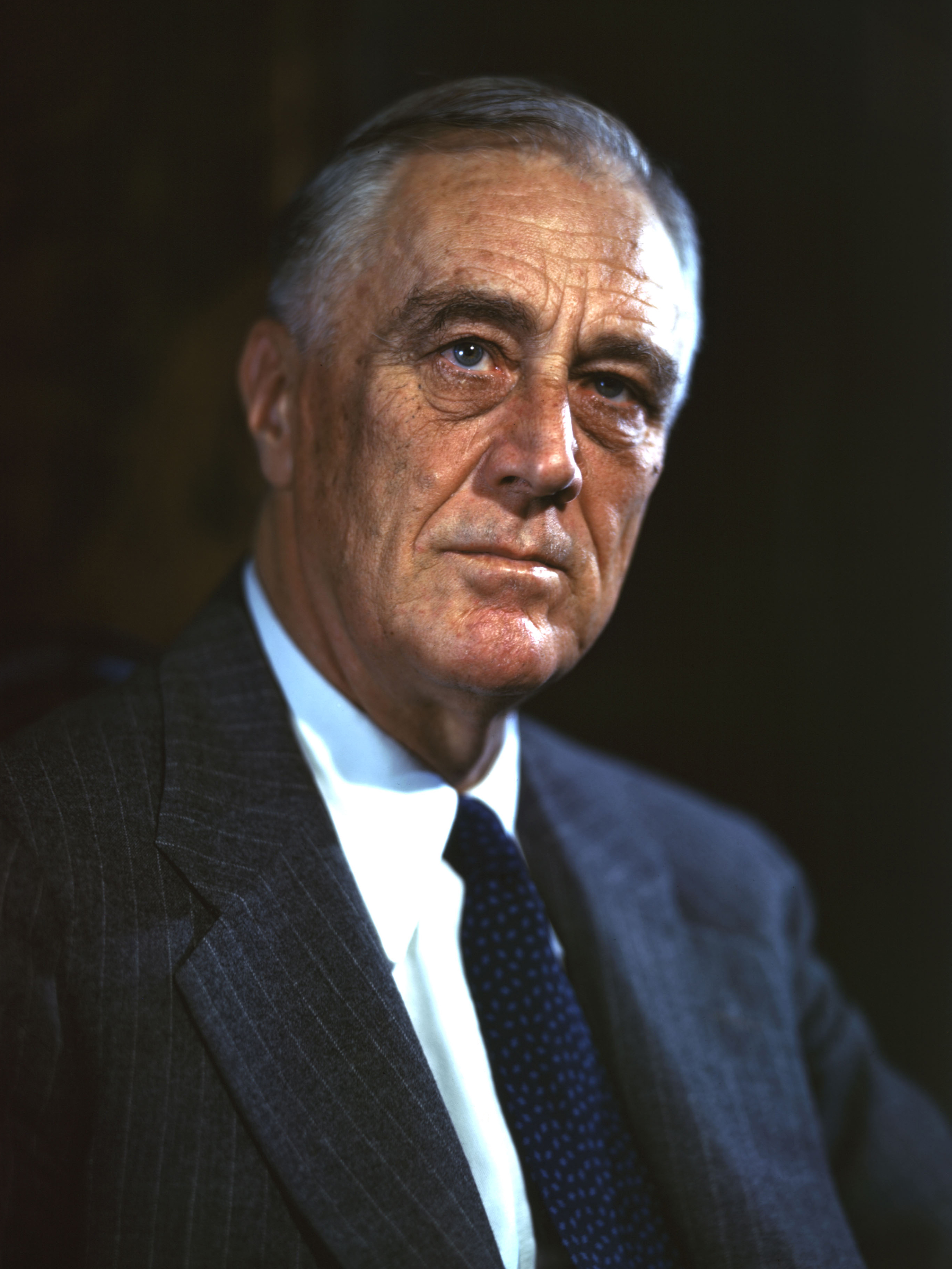
Franklin D. Roosevelt (1882–1945) was the 32nd President of the United States, serving from March 4, 1933, to April 12, 1945. A Democrat, he led the nation through the Great Depression and most of World War II.
Roosevelt reshaped the federal government's role in the economy through the New Deal, creating programs and institutions such as Social Security, the FDIC, and large-scale public works to relieve unemployment and stabilize finance.
He also guided the United States through World War II, overseeing mobilization, Lend-Lease, and Allied cooperation; his four-term presidency expanded the scope and influence of the executive branch and left a lasting global and domestic legacy, though some initiatives, like the 1937 court-packing plan, provoked controversy.
Implemented New Deal reforms including the Social Security Act; Stabilized banking and created the FDIC and SEC; Established large public works programs (WPA, CCC, TVA); Backed Lend-Lease and led U.S. mobilization in World War II; Elected to four terms, reshaping presidential precedent; Proposed 1937 Supreme Court reorganization (court-packing)
Key highlights and dated events associated with this presidency.
Showing 12 of 415 entries.
U.S. Marines and Army units landed on Guam on July 21, 1944, beginning the campaign to retake the island from Japanese forces.
Following the Democratic National Convention in Chicago, President Franklin D. Roosevelt formally accepted his party's nomination for a fourth presidential term.
Conspirators in the German military detonated a bomb at Hitler's East Prussian headquarters in an attempt to kill him, but Hitler survived and the plot failed.
Delegates at the Chicago convention nominated Senator Harry S. Truman of Missouri for vice president, replacing incumbent Henry A. Wallace on the ticket.
The Democratic National Convention convened in Chicago and formally placed Franklin D. Roosevelt in nomination for an unprecedented fourth presidential term.
American forces seized the strategic Norman town of Saint-Lô after intense fighting, securing a vital road and rail hub.
After weeks of intense fighting, U.S. forces declared Saipan secured on July 9, 1944, ending major organized Japanese resistance on the island.
Delegates from 44 Allied and neutral nations convened at Bretton Woods, New Hampshire, to design a postwar international monetary and financial order.
FDR signed the Servicemen's Readjustment Act of 1944 (the GI Bill) into law, providing returning veterans with education benefits, loan guarantees, and unemployment support.
Franklin D. Roosevelt delivered a nationwide radio address informing Americans of the Allied landings in Normandy and praising the armed forces' effort.
After landings and fighting from February 17–23, 1944, U.S. forces secured Eniwetok Atoll in the Marshall Islands on February 23.
On February 20, Allied air forces (primarily the USAAF with RAF support) launched Operation Argument—known as "Big Week"—a concentrated series of daylight and nighttime raids against German aircraft factories and airfields.