U.S. Senate creates the Select Committee on Presidential Campaign Activities (Watergate)
The U.S. Senate voted to establish the Select Committee on Presidential Campaign Activities to investigate the Watergate burglary and related campaign abuses.
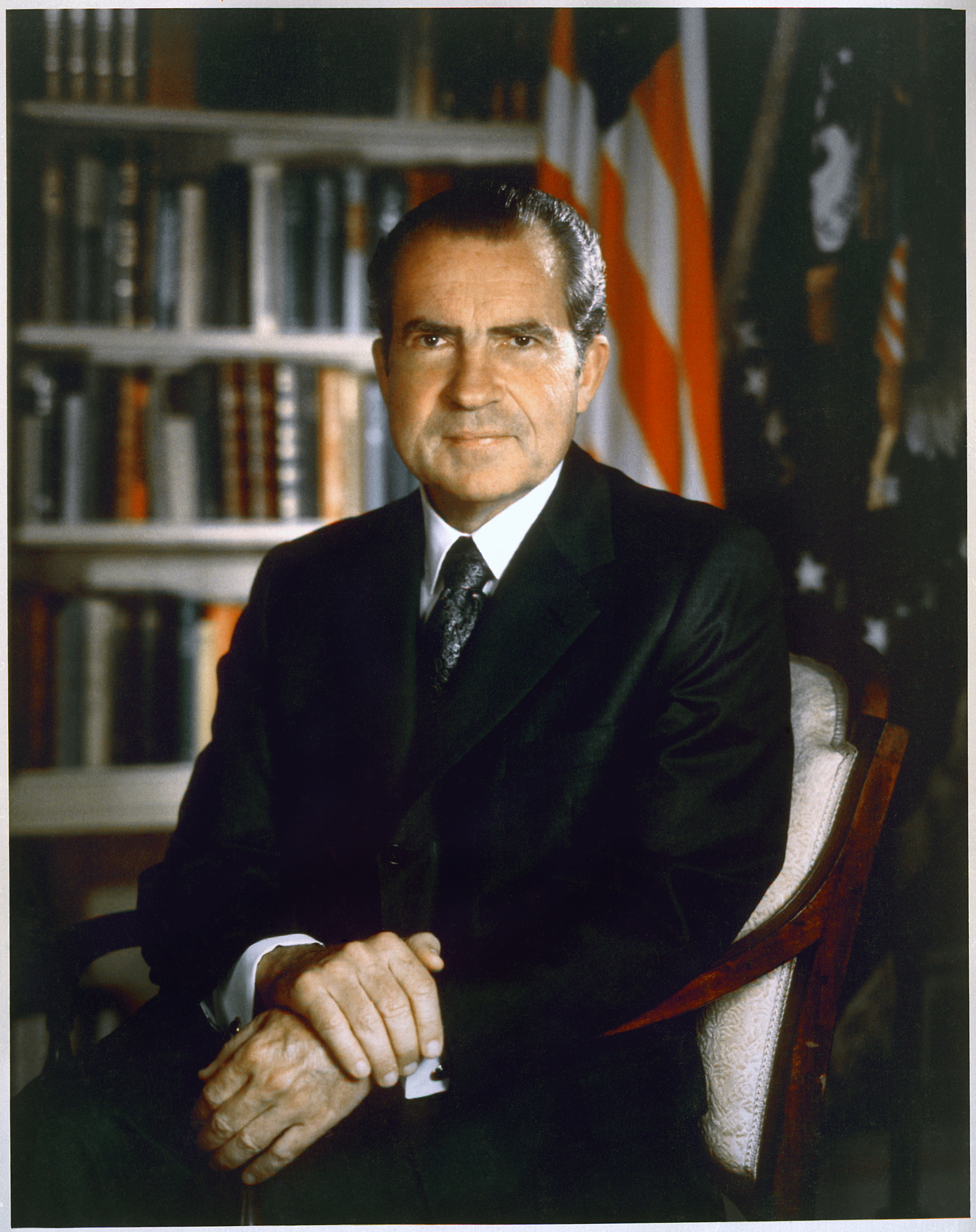
Richard Milhous Nixon was the 37th president of the United States, serving from January 20, 1969, to August 9, 1974. A Republican, he is known for major foreign-policy initiatives and for resigning amid the Watergate scandal.
Nixon presided over a period of significant foreign-policy realignment, opening diplomatic relations with the People’s Republic of China and pursuing détente with the Soviet Union, including the SALT I agreement. Domestically his administration created the Environmental Protection Agency and advanced major environmental and economic measures.
His second term was dominated by the Watergate scandal; revelations of abuses of power led to investigations, impeachment proceedings in the House, and his resignation in 1974. Nixon’s legacy remains mixed—praised for diplomatic and policy achievements and criticized for the constitutional crisis and erosion of public trust.
Opened diplomatic relations with the People’s Republic of China; Pursued détente with the Soviet Union and signed SALT I; Created the Environmental Protection Agency and advanced environmental laws; Implemented Vietnamization and negotiated the Paris Peace Accords leading to U.S. troop withdrawal; Resigned in 1974 amid the Watergate scandal
Key highlights and dated events associated with this presidency.
Showing 12 of 64 entries.
The U.S. Senate voted to establish the Select Committee on Presidential Campaign Activities to investigate the Watergate burglary and related campaign abuses.
The Paris Peace Accords were signed in Paris on January 27, 1973, establishing a ceasefire and terms for U.S. troop withdrawal from Vietnam.
In Roe v. Wade, the U.S. Supreme Court ruled that the Constitution protects a woman’s right to choose to have an abortion, invalidating many state restrictions on abortion access.
Richard Nixon was sworn in for his second presidential term on January 20, 1973.
The criminal trial of the men arrested for the June 1972 Watergate break‑in began in U.S. District Court in Washington, D.C.
After 11 days of heavy bombardment, the United States announced an end to the Linebacker II campaign on December 29, 1972, as North Vietnam agreed to resume peace negotiations in Paris.
Apollo 17 splashed down in the Pacific Ocean on December 19, 1972, safely returning the last astronauts from the final lunar landing of the Apollo program.
On December 18, 1972, the United States Electoral College met and cast its votes, formally confirming Richard Nixon's victory in the 1972 presidential election.
President Nixon ordered a concentrated aerial bombing campaign—Operation Linebacker II—against North Vietnam beginning heavy B-52 strikes on Hanoi and Haiphong on December 18, 1972.
NASA launched Apollo 17 from Cape Kennedy with Eugene Cernan, Harrison Schmitt, and Ronald Evans on a mission that would be the last crewed lunar landing of the Apollo program.
Incumbent President Richard Nixon defeated Democratic nominee Senator George McGovern in a nationwide landslide on Election Day.
President Nixon signed the Social Security Amendments of 1972, a major revision that increased benefits, extended coverage, and created automatic cost-of-living adjustments (COLAs).