
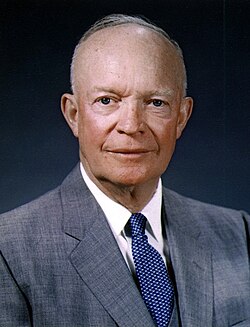
Eisenhower takes public responsibility for Republican midterm defeats
President Eisenhower issued a public statement accepting responsibility for the Republican losses in the 1958 midterm elections and pledged to work with Congressional Democrats.

Dwight D. Eisenhower (1890-1969) was a five-star general in World War II and served as the 34th President of the United States from 1953-1961. A Republican, he presided over postwar prosperity, built the Interstate Highway System, and shaped early Cold War policy.
Eisenhower's presidency stabilized the United States during a period of economic growth and Cold War tension. He prioritized infrastructure and scientific investment, signing the Federal-Aid Highway Act and creating NASA while pursuing containment and cautious diplomacy.
He advanced civil rights enforcement in limited but consequential ways—sending federal troops to enforce desegregation at Little Rock and signing the Civil Rights Act of 1957—and appointed Chief Justice Earl Warren, influencing landmark Supreme Court rulings. His farewell warning about the "military-industrial complex" and the use of covert actions during the Cold War have left a complex and lasting legacy.
Supreme Allied Commander in World War II; Negotiated a Korean War armistice, ending large-scale combat; Created the Interstate Highway System (Federal-Aid Highway Act of 1956); Established NASA (1958) and strengthened the U.S. space program; Enforced school desegregation at Little Rock and signed the Civil Rights Act of 1957; Warned of the "military-industrial complex" in his 1961 farewell address
Key highlights and dated events associated with this presidency.
Showing 12 of 271 entries.
President Eisenhower issued a public statement accepting responsibility for the Republican losses in the 1958 midterm elections and pledged to work with Congressional Democrats.
Following the Nov. 4, 1958 midterm elections, President Eisenhower publicly acknowledged and accepted responsibility for the Republican Party's heavy losses in Congress.
In the November 4, 1958 midterm elections, Democrats won a large nationwide victory, gaining 49 House seats and 13 Senate seats to expand their congressional majorities.
President Eisenhower announced the completion of the withdrawal of U.S. forces from Lebanon, ending Operation Blue Bat.
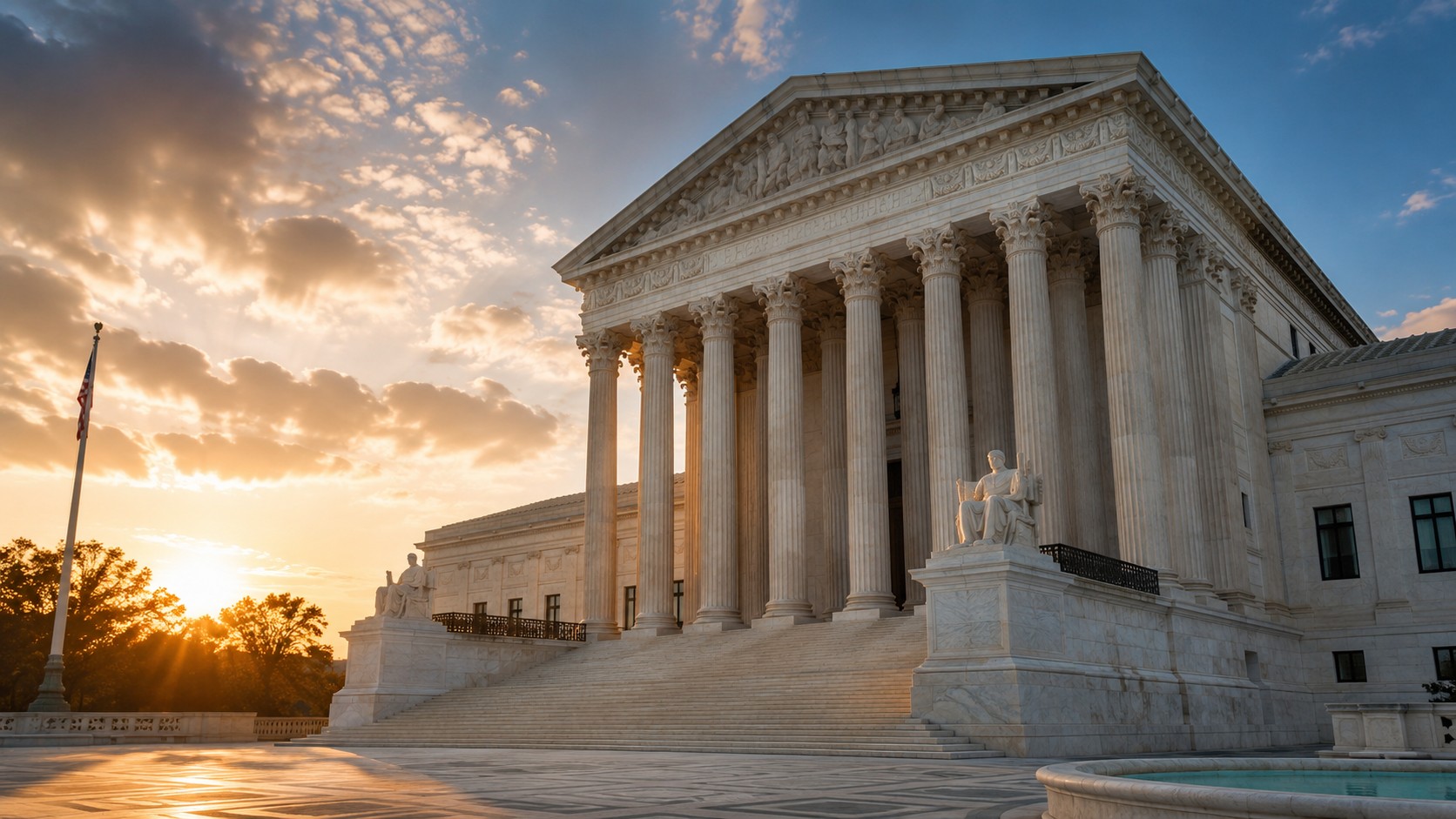
The Supreme Court unanimously ruled in Cooper v. Aaron that state officials are bound by federal court orders enforcing school desegregation, rejecting Arkansas' attempt to delay integration.
The Supreme Court unanimously held that state officials are bound by its rulings and cannot refuse to enforce desegregation orders, reaffirming Brown v. Board of Education.
The U.S. Supreme Court unanimously held that state officials are bound by its rulings and must enforce school desegregation under Brown v. Board of Education.
The U.S. carried out the last of several clandestine high-altitude nuclear detonations over the South Atlantic as part of Operation Argus.
The U.S. carried out the final of three clandestine high‑altitude nuclear detonations (Operation Argus) over the South Atlantic to study geomagnetic and radiation effects.
Eisenhower authorized U.S. naval escorts for Nationalist Chinese resupply convoys to the offshore islands of Quemoy and Matsu amid bombardment by the People’s Republic of China.
Eisenhower authorized U.S. naval escorts for Republic of China (Taiwan) resupply convoys to the offshore islands of Quemoy and Matsu amid renewed Communist shelling.
Amid shelling of offshore islands by the People’s Republic of China, Eisenhower ordered U.S. Navy escorts for Republic of China (Taiwan) resupply convoys to Quemoy and Matsu.