
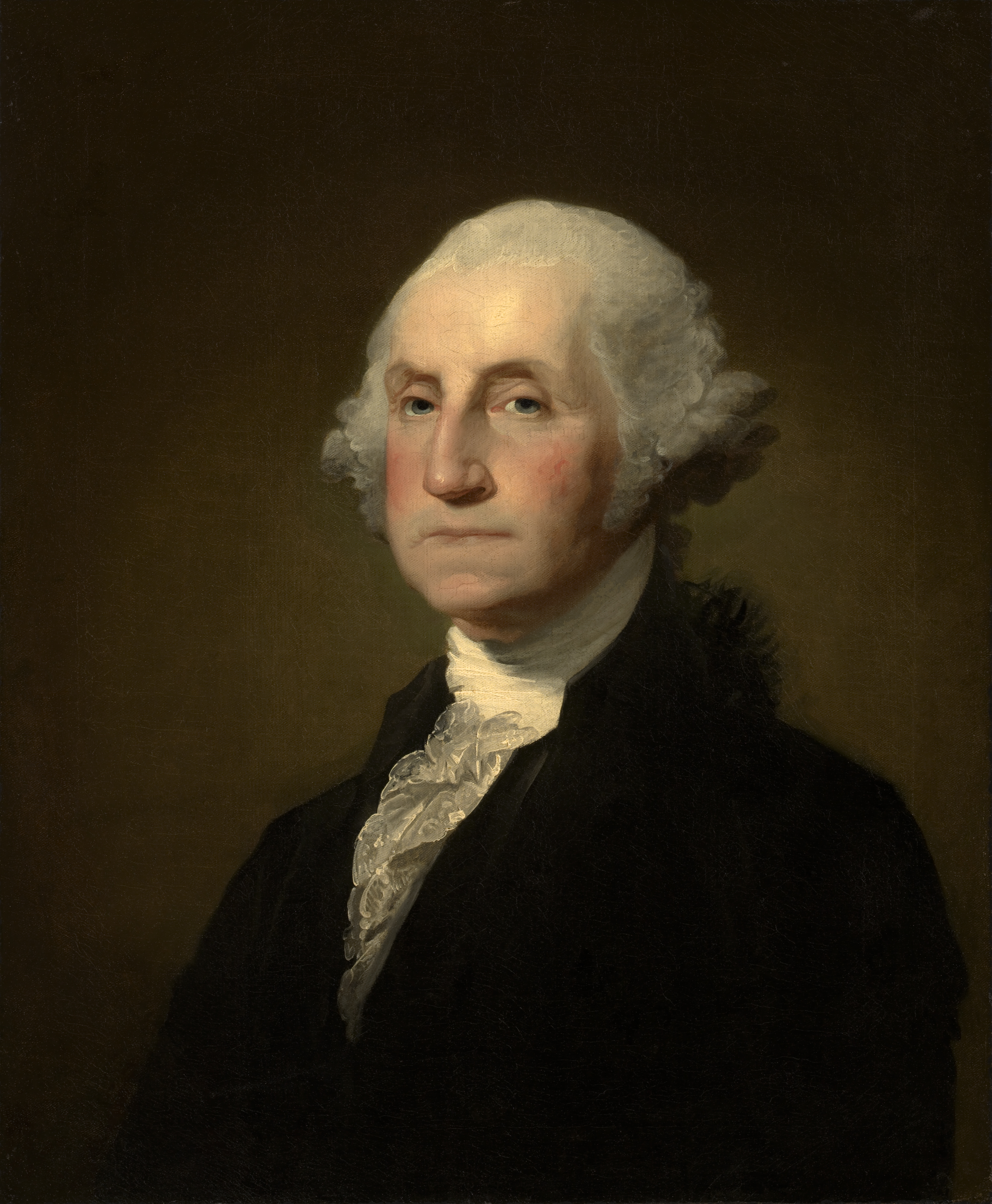
George Washington Departs Mount Vernon for New York to Assume the Presidency
Washington left his home at Mount Vernon on April 16, 1789, beginning the journey to New York City to take the oath of office as the first President of the United States.
George Washington (1732–1799) commanded the Continental Army and served as the first President of the United States from 1789 to 1797. He helped create federal institutions and set important presidential precedents, though his legacy is complicated by his ownership of enslaved people.
As commander of the Continental Army and the nation’s first president, George Washington led the United States through its formative years, establishing key institutions and precedents such as the presidential cabinet, the federal judiciary, and the peaceful transfer of power.
He helped stabilize the new federal government and promoted neutrality in foreign affairs, but his record is mixed: his actions shaped federal authority and American diplomacy while his ownership of enslaved people and contested policies remain central to assessments of his legacy.
Led Continental Army to victory in the American Revolution; Unanimously elected first President (1789) and served two terms; Established the presidential cabinet and signed the Judiciary Act of 1789; Oversaw the ratification of the Bill of Rights; Issued the Neutrality Proclamation and wrote the Farewell Address advocating non-entanglement; Suppressed the Whiskey Rebellion and set the two-term presidential precedent
Key highlights and dated events associated with this presidency.
Showing 4 of 100 entries.
Washington left his home at Mount Vernon on April 16, 1789, beginning the journey to New York City to take the oath of office as the first President of the United States.
On April 6, 1789 the United States Senate elected John Langdon of New Hampshire as its first President pro tempore.
In a joint session in New York City, the new Congress opened and counted the Electoral College returns, officially declaring George Washington unanimously elected President and John Adams elected Vice President.
After the House achieved a quorum, members elected Representative Frederick A. Muhlenberg of Pennsylvania as the first Speaker of the United States House of Representatives on April 1, 1789.