Senate confirms Tom C. Clark to the U.S. Supreme Court
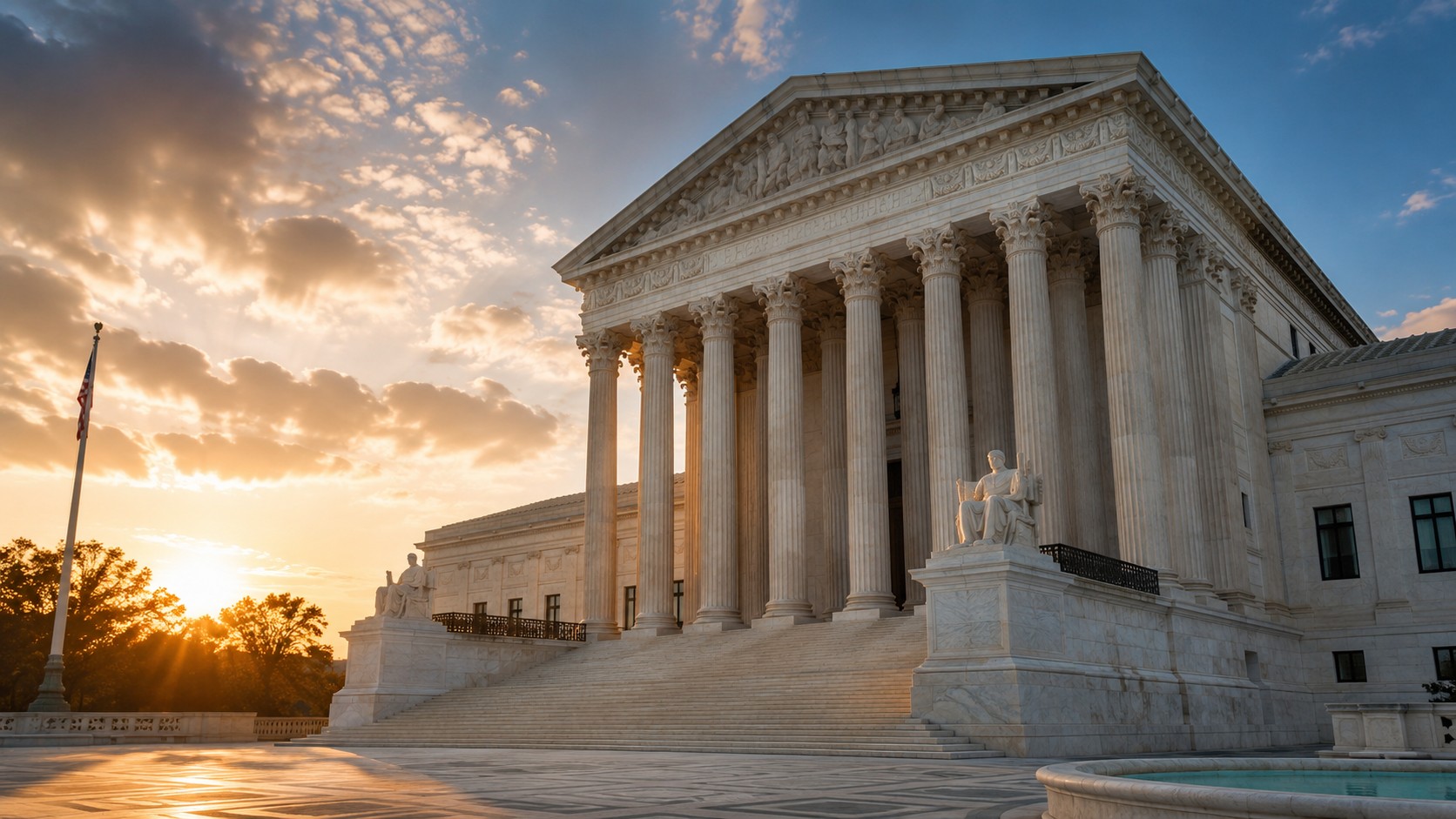
The U.S. Senate voted to confirm Attorney General Tom C. Clark as an Associate Justice of the Supreme Court following President Truman's nomination.
Harry S. Truman (1884–1972) was the 33rd President of the United States, serving from April 12, 1945 to January 20, 1953. A Democrat, he assumed the presidency after Franklin D. Roosevelt's death and guided the nation through the end of World War II and the early Cold War.
Truman reshaped America's postwar role, moving the nation from global war to Cold War leadership through the Marshall Plan, the Truman Doctrine, the Berlin Airlift, and the creation of NATO while confronting crises such as the Korean War.
On the domestic front he promoted the Fair Deal and took historic steps on civil rights, notably issuing Executive Order 9981 to desegregate the armed forces; his plainspoken leadership and decisive choices left a complex but enduring legacy that gained greater respect over time.
Assumed the presidency in 1945 and guided the transition from World War II to peacetime; Authorized use of atomic weapons against Japan (Hiroshima and Nagasaki); Articulated the Truman Doctrine and enacted the Marshall Plan to contain Soviet expansion; Supported the Berlin Airlift and helped establish NATO; Recognized the State of Israel in 1948; Issued Executive Order 9981 to desegregate the armed forces and led the U.S. during the Korean War (1950–1953)
Key highlights and dated events associated with this presidency.
Showing 12 of 276 entries.
The U.S. Senate voted to confirm Attorney General Tom C. Clark as an Associate Justice of the Supreme Court following President Truman's nomination.
President Harry S. Truman appointed General Omar N. Bradley as the first Chairman of the Joint Chiefs of Staff, filling the newly created senior military advisory post.
West Germany held its first federal election since the founding of the Federal Republic, selecting a Bundestag that would determine its government and chancellor.
A diplomatic conference in Geneva adopted four revised conventions on the laws of war covering the wounded and sick, shipwrecked personnel, prisoners of war, and protection of civilians.
President Truman signed amendments to the National Security Act of 1947 on August 10, 1949, strengthening the authority of the Secretary of Defense and reorganizing the military establishment into the Department of Defense.
President Truman nominated U.S. Attorney General Tom C. Clark to fill the Supreme Court vacancy left by the death of Justice Frank Murphy.
The U.S. Senate voted its advice and consent to the North Atlantic Treaty on July 21, 1949, authorizing U.S. ratification of the NATO alliance.
The U.S. Senate voted to give its advice and consent to ratification of the North Atlantic Treaty, clearing the way for formal U.S. participation in NATO.
Associate Justice Frank Murphy died on July 19, 1949, creating a vacancy on the U.S. Supreme Court.
President Truman signed the Housing Act of 1949, authorizing federal funding for slum clearance, public housing construction, and urban redevelopment.
The Truman administration extended formal U.S. recognition to the newly established Federal Republic of Germany on the day the Basic Law came into effect.
On May 23, 1949 the Basic Law (Grundgesetz) for the Federal Republic of Germany took effect, formally creating West Germany with Bonn as its provisional capital.