Nominates new Secretary of Defense
President Trump nominated a new Secretary of Defense to fill a vacancy at the Pentagon, sending the nomination to the Senate for confirmation hearings.
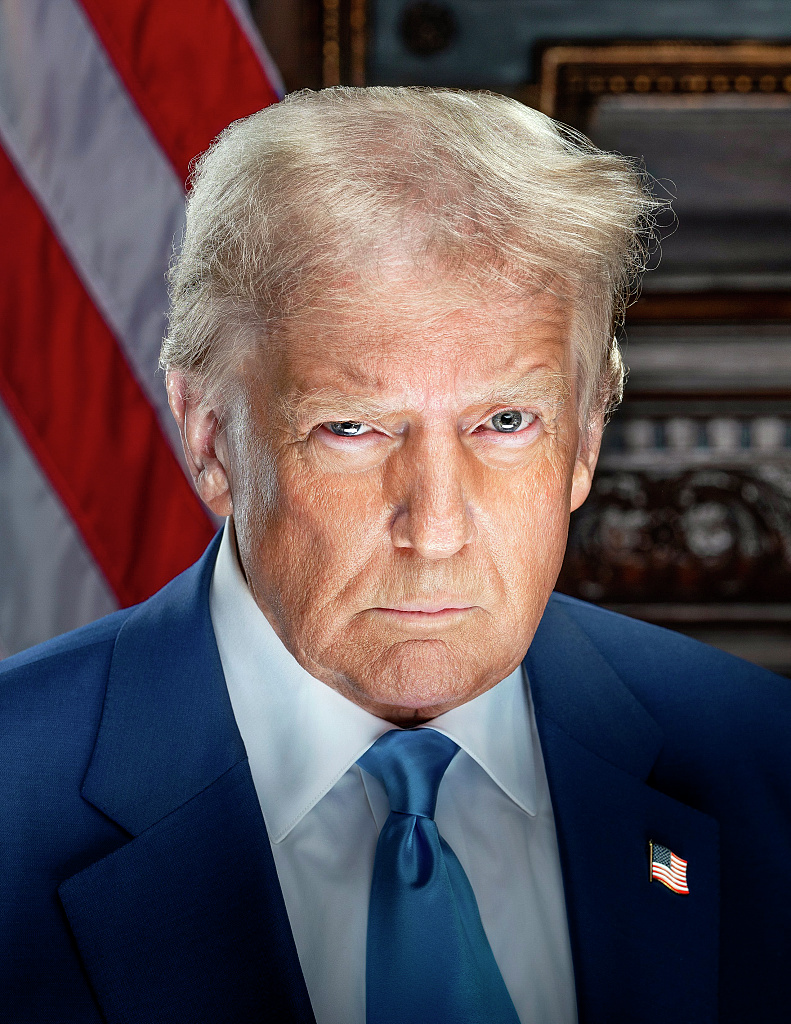
Donald J. Trump is an American businessman and Republican politician who returned to the presidency on January 20, 2025, serving with Vice President J.D. Vance. He previously served as president from 2017 to 2021 and is known for populist domestic and trade policies, deregulation efforts, and conservative judicial appointments.
Trump's presidencies reshaped the federal judiciary through multiple Supreme Court appointments and advanced a deregulatory, tax-cutting agenda that supporters credit with stimulating economic growth and shifting federal policy priorities. His administration pursued an assertive trade policy, tightened immigration enforcement, and enacted criminal‑justice reform and other legislative and executive measures that altered Washington's policy landscape.
At the same time, Trump's tenure was highly polarizing, marked by two impeachments and contentious relations with traditional allies and institutions; critics argue his style and rhetoric increased political polarization and weakened norms. His electoral comeback and continued influence have reshaped the Republican Party and American political discourse, leaving a contested but lasting imprint on governance and civic life.

Elected president in 2016 (served 2017–2021) and again in 2024, inaugurated 2025; Appointed three Supreme Court justices, shifting the judiciary rightward; Enacted the 2017 Tax Cuts and Jobs Act and pursued broad deregulation; Implemented tariffs and a confrontational trade policy toward China; Withdrew the U.S. from the Paris climate agreement and the Iran nuclear deal; Oversaw passage of the First Step Act and faced two impeachments
Key highlights and dated events associated with this presidency.
President Trump nominated a new Secretary of Defense to fill a vacancy at the Pentagon, sending the nomination to the Senate for confirmation hearings.
The president issued a major disaster declaration for several Midwestern states after widespread spring flooding, authorizing FEMA aid, temporary housing assistance and public-recovery funds.
President Trump met with Ukraine’s president at the White House and announced a new package of security assistance and logistical support aimed at strengthening Ukraine’s defense capabilities.
The administration announced new tariffs on certain electric vehicles and battery components imported from China, citing unfair trade practices and national-security concerns for the domestic auto and battery industries.
President Trump signed an executive order clarifying and expanding federal immigration-enforcement priorities, directing agencies to prioritize removal of noncitizens with certain criminal convictions and to increase cooperation with state and local law enforcement.
The president signed a memorandum directing federal agencies to adopt specific measures from a recent port and supply-chain summit, including permit streamlining and targeted infrastructure grants.
Announced intent to nominate a business executive to serve as Secretary of Commerce and submitted the nomination to the Senate for confirmation.
The president announced his intent to nominate a candidate to fill a vacancy on a U.S. Court of Appeals, initiating the formal nomination and Senate confirmation process.
Issued a package of commutations and pardons focused on individuals serving long sentences for nonviolent drug convictions, with an emphasis on elderly and rehabilitated inmates.
Hosted governors, port authorities and industry leaders to announce federal grants and regulatory steps intended to reduce congestion and strengthen supply-chain capacity.
The White House issued a memorandum directing federal agencies to identify and reduce regulatory burdens on small businesses, accelerate permitting processes, and simplify compliance requirements.
The administration announced authorization for further equipment transfers and logistical support to Eastern European allies to enhance deterrence amid regional tensions.
President Trump hosted NATO leadership at the White House to review U.S. commitments and coordination on military and economic support for allied security priorities, including assistance related to the war in Ukraine.
Following an earlier executive order on AI, the president issued a memorandum directing OMB, DoD, DHS, and other agencies to adopt procurement rules, risk assessments, and timelines for compliance.
Signed an executive order directing federal agencies to develop AI safety guidelines, set procurement restrictions for high-risk systems, and coordinate industry standards.
The president met with Israel's leader to reaffirm security cooperation, discuss regional stability, and review U.S. assistance and humanitarian concerns related to ongoing regional conflicts.
Authorized additional transfers of defensive military equipment and expedited aid to Israel amid ongoing regional hostilities.
The administration issued an executive order directing DHS to expand expedited removal, tighten asylum eligibility for migrants entering between ports of entry, and increase immigration enforcement resources at the southern border.
The White House convened lawmakers, health officials, and treatment providers to announce funding reallocations and public-private partnerships to expand addiction treatment and overdose prevention programs.
Issued a proclamation imposing tariffs on certain imported EV batteries and related components to protect domestic producers and promote onshoring.
President Trump signed an executive order directing agencies to accelerate permitting and provide incentives for domestic mining and processing of critical minerals used in batteries and semiconductors.
The president spoke to state governors about federal-state coordination for disaster response and prioritized infrastructure approvals to speed recovery from recent extreme-weather events.
The White House announced a presidential-led trade delegation to Japan and South Korea focused on strengthening supply-chain ties, semiconductor cooperation, and market access for U.S. exporters.
Signed bipartisan legislation expanding tax credits and grant funding to boost domestic semiconductor manufacturing and supply-chain resilience.
The administration announced a federal initiative to expand apprenticeships, vocational training grants, and employer tax incentives to boost skilled labor in manufacturing and construction.
President Trump delivered a major address at CPAC outlining his 2026 policy priorities, including immigration enforcement, economic growth measures, and Republican messaging ahead of the midterm elections.
President Trump met with bipartisan congressional leaders to discuss a potential border-security and asylum reform package aimed at strengthening enforcement and streamlining adjudication.
President visited an El Paso processing facility, met with U.S. Customs and Border Protection personnel and local officials, and reviewed temporary holding and processing operations.
Donald Trump returned to office for a second, nonconsecutive presidential term.