Electoral College casts ballots in the 1796 presidential election
Electors met in their respective states and cast votes in the 1796 presidential election, with John Adams receiving the most electoral votes and Thomas Jefferson finishing second.
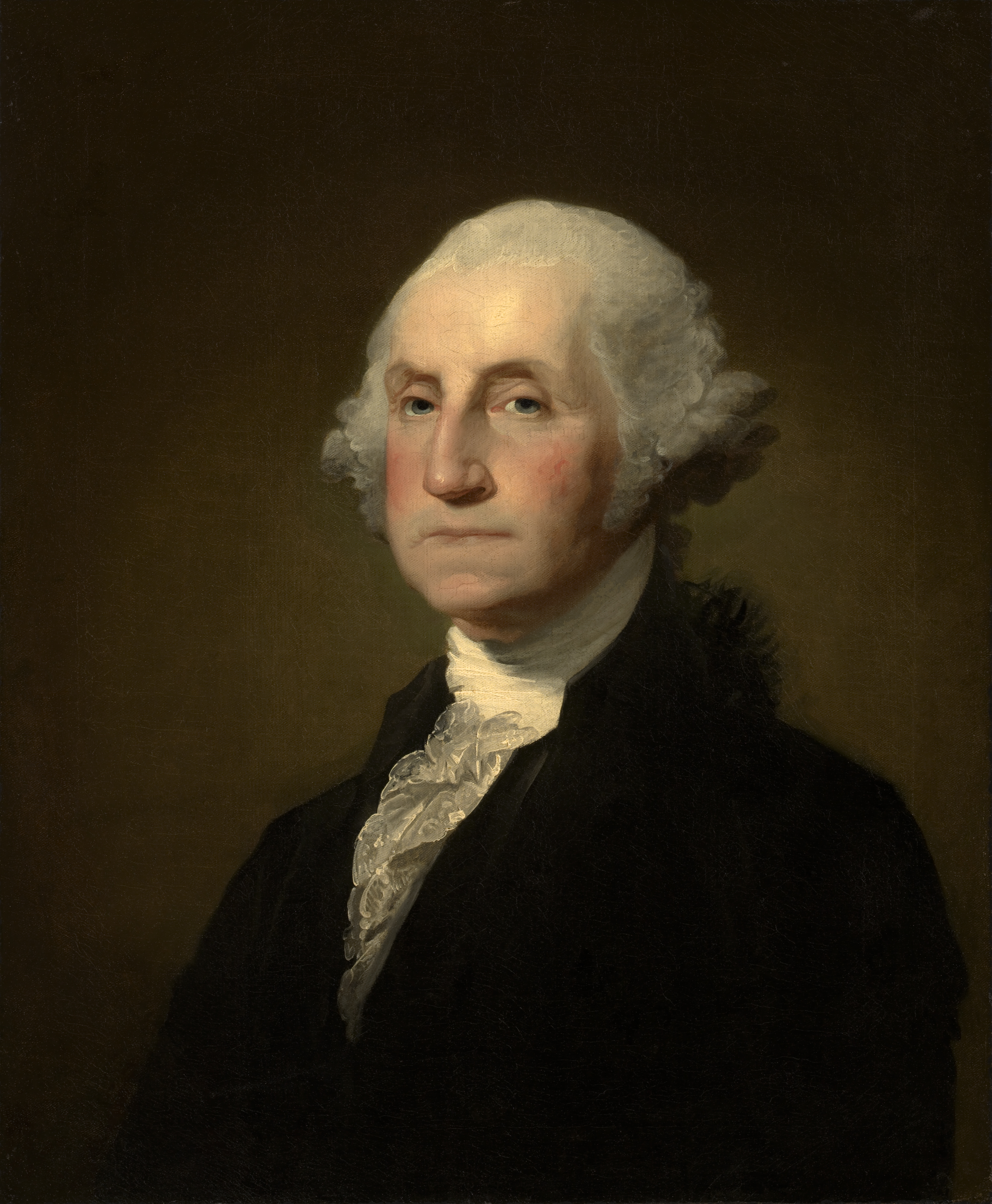
George Washington (1732–1799) commanded the Continental Army and served as the first President of the United States from 1789 to 1797. He helped create federal institutions and set important presidential precedents, though his legacy is complicated by his ownership of enslaved people.
As commander of the Continental Army and the nation’s first president, George Washington led the United States through its formative years, establishing key institutions and precedents such as the presidential cabinet, the federal judiciary, and the peaceful transfer of power.
He helped stabilize the new federal government and promoted neutrality in foreign affairs, but his record is mixed: his actions shaped federal authority and American diplomacy while his ownership of enslaved people and contested policies remain central to assessments of his legacy.
Led Continental Army to victory in the American Revolution; Unanimously elected first President (1789) and served two terms; Established the presidential cabinet and signed the Judiciary Act of 1789; Oversaw the ratification of the Bill of Rights; Issued the Neutrality Proclamation and wrote the Farewell Address advocating non-entanglement; Suppressed the Whiskey Rebellion and set the two-term presidential precedent
Key highlights and dated events associated with this presidency.
Showing 12 of 100 entries.
Electors met in their respective states and cast votes in the 1796 presidential election, with John Adams receiving the most electoral votes and Thomas Jefferson finishing second.
State voting to select presidential electors began on November 4, 1796, initiating the nationwide process for choosing the next president.
Over subsequent weeks, partisan newspapers and political figures debated Washington’s cautions about factionalism and foreign alliances, using the address to support competing electoral arguments.
The Farewell Address was issued in pamphlet and broadside form for broader distribution, allowing copies to be read and cited in public and private settings beyond single newspaper issues.
Within days of its initial appearance, a wide range of American newspapers republished Washington’s Farewell Address, distributing his retirement statement and policy warnings to readers in multiple states.
Washington’s Farewell Address warned against factionalism and permanent foreign entanglements.
On June 1, 1796, Tennessee was admitted to the United States as the 16th state following congressional approval and the required state constitutional conventions.
The United States Senate voted 14–10 on December 15, 1795 to reject President Washington's nomination of John Rutledge to be Chief Justice of the Supreme Court.
President Washington delivered his fourth annual message to Congress, reviewing the nation’s foreign policy, commerce, and national defense.
U.S. Minister Thomas Pinckney and Spanish officials signed the Treaty of San Lorenzo (Pinckney's Treaty) in Madrid, establishing the 31st parallel as the boundary with Spanish Florida and granting American navigation rights on the Mississippi River.
Delegates of the United States and leaders of several Native American tribes signed the Treaty of Greenville at Fort Greenville on August 3, 1795, formally ending major hostilities in the Northwest Territory.
President George Washington gave John Rutledge a recess appointment as Chief Justice on June 30, 1795, following John Jay's resignation.