

Reichstag fire in Berlin accelerates Nazi consolidation of power
On Feb 27, 1933, the German Reichstag building was set on fire; the Nazi government blamed communists and used the incident to justify emergency measures.
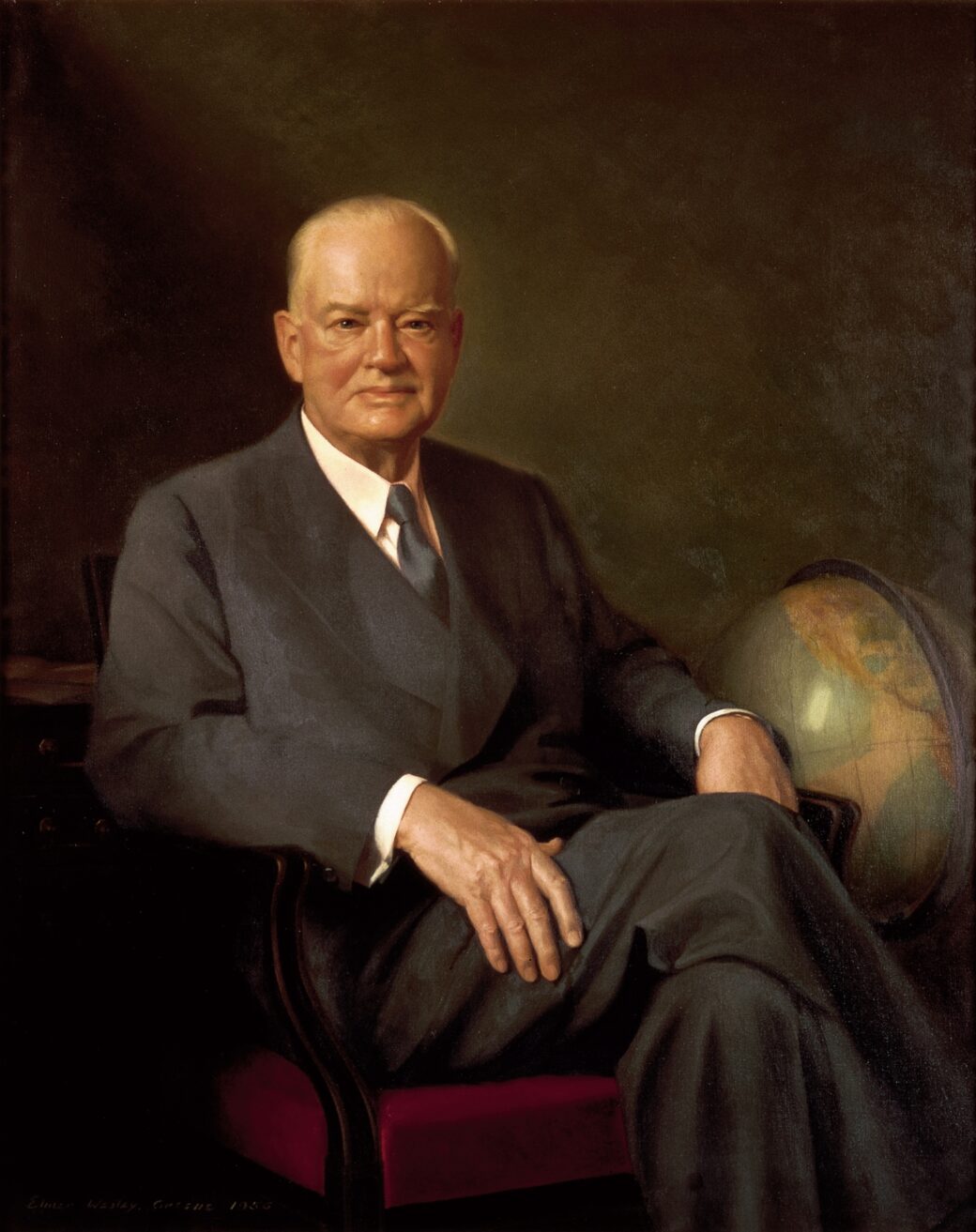
Herbert Hoover (1874–1964) was the 31st President of the United States, serving from March 4, 1929, to March 4, 1933, with Vice President Charles Curtis. A mining engineer and humanitarian who had served as Secretary of Commerce, his presidency was dominated by the onset of the Great Depression.
Hoover came into office as a celebrated engineer and organizer but presided over the crash of 1929 and the early years of the Great Depression. His belief in voluntary cooperation, limited federal intervention and measures such as the Smoot‑Hawley tariff drew heavy criticism as unemployment and hardship grew.
After leaving office, Hoover resumed a long public career that included major humanitarian work and leadership of postwar government reform commissions; over time his reputation was partly rehabilitated for his administrative skill and public service even as debate continues over his economic policies during the crisis.
Signed the Smoot‑Hawley Tariff (1930), raising U.S. tariffs; Created the Reconstruction Finance Corporation (1932) to lend to banks and businesses; Authorized federal support for major public works including initiation of Boulder (Hoover) Dam; Promoted voluntary cooperation and limited direct federal relief during the early Depression; Ordered federal forces to disperse the Bonus Army veterans' protest (1932); Led significant humanitarian and post‑presidential government reform efforts
Key highlights and dated events associated with this presidency.
Showing 12 of 61 entries.
On Feb 27, 1933, the German Reichstag building was set on fire; the Nazi government blamed communists and used the incident to justify emergency measures.
On Feb 15, 1933, an assailant, Giuseppe Zangara, fired shots at a public event in Miami targeting President‑elect Franklin D. Roosevelt, killing Chicago Mayor Anton Cermak and wounding others.
On January 30, 1933, President Paul von Hindenburg appointed Adolf Hitler as Chancellor of Germany, giving the National Socialist (Nazi) Party control of the government.
On January 23, 1933 the required number of states ratified the 20th Amendment, which set new commencement dates for Congress (January 3) and the President and Vice President (January 20).
State electors met on December 13, 1932, and formally cast the Electoral College votes that confirmed Franklin D. Roosevelt as president-elect.
Following the election, President Hoover sent a formal message to Franklin D. Roosevelt indicating acceptance of the results and offering to cooperate during the transition.
On the same election day, Democrats captured substantial gains in both the House and Senate, securing control of Congress.
Democratic Governor Franklin D. Roosevelt defeated incumbent Republican President Herbert Hoover in the national election on November 8, 1932.
Troops under Army command, led by General Douglas MacArthur, forcibly dispersed World War I veterans of the Bonus Army in Washington, D.C., burning their shanty camps and ejecting demonstrators.
President Herbert Hoover signed the Federal Home Loan Bank Act, creating a system of Federal Home Loan Banks to provide liquidity to savings institutions and support mortgage lending.
President Hoover signed the Emergency Relief and Construction Act, authorizing federal loans for public works and limited direct relief through the Reconstruction Finance Corporation.
At the Democratic National Convention in Chicago, delegates nominated Governor Franklin D. Roosevelt for president and John Nance Garner for vice president.