La Amistad slave uprising aboard the schooner La Amistad
On July 2, 1839, Mende captives being transported on the Spanish schooner La Amistad revolted, seized the vessel off the coast of Cuba, and attempted to navigate it back to Africa.
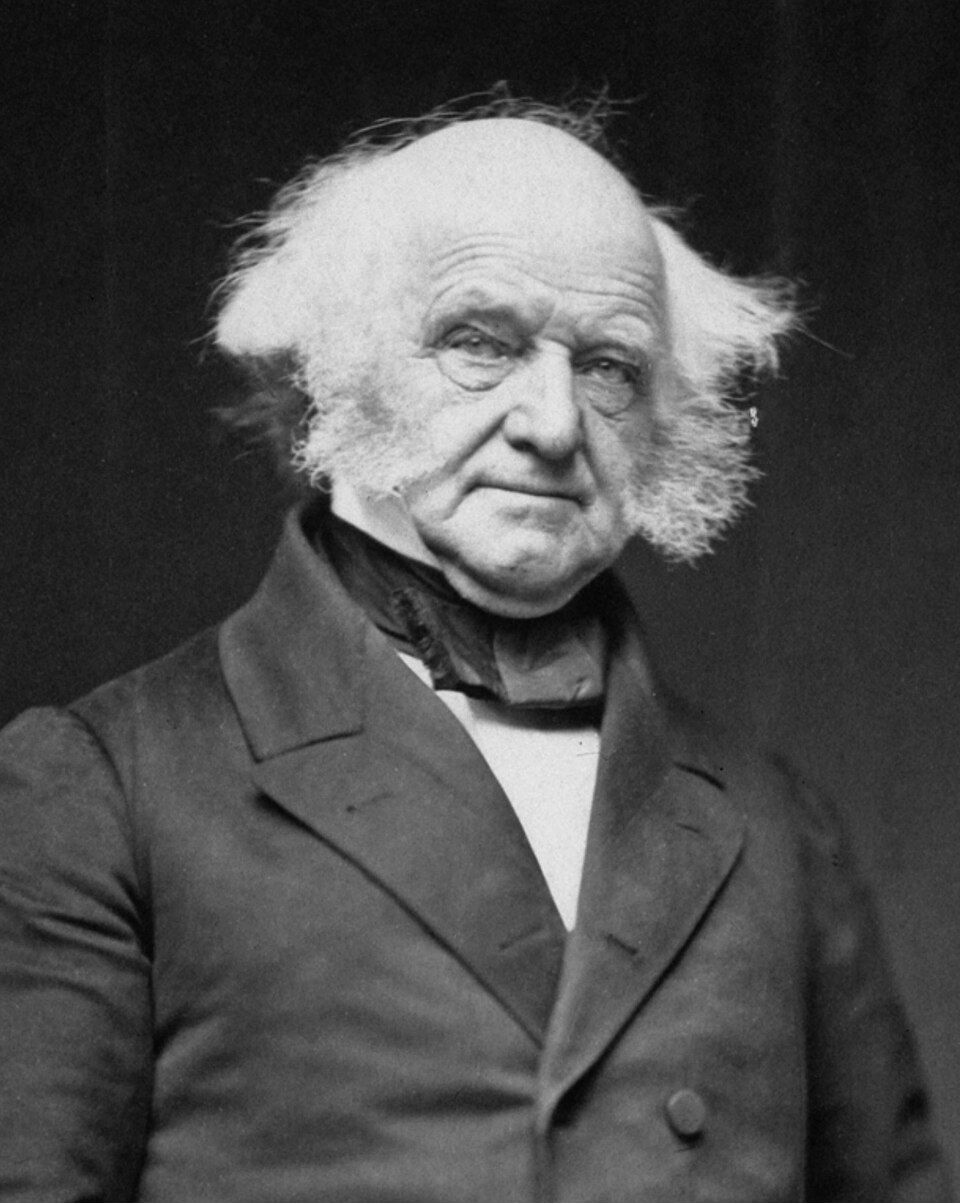
Martin Van Buren was the eighth President of the United States, serving from March 4, 1837, to March 4, 1841. A leading organizer of the Democratic Party, he previously served as Vice President and Secretary of State under Andrew Jackson.
Van Buren is remembered for his skill as a party organizer and for a technocratic approach to governance. His presidency was dominated by the Panic of 1837 and a severe economic depression, and he promoted the Independent Treasury to separate federal funds from private banks.
He helped shape the modern Democratic Party and the spoils system, and later opposed the extension of slavery into new territories, running as the Free Soil candidate in 1848. Historians view him as an adept politician whose presidency was constrained by economic crisis and rising sectional tensions.
Established the Independent Treasury system; Managed the federal response to the Panic of 1837 and the ensuing depression; Strengthened Democratic Party organization and political patronage; Served as Andrew Jackson’s Secretary of State and Vice President prior to the presidency; Ran as the Free Soil Party presidential candidate in 1848 opposing slavery’s expansion
Key highlights and dated events associated with this presidency.
Showing 12 of 13 entries.
On July 2, 1839, Mende captives being transported on the Spanish schooner La Amistad revolted, seized the vessel off the coast of Cuba, and attempted to navigate it back to Africa.
President Martin Van Buren delivered his annual message to Congress, reviewing continued economic distress from the Panic of 1837 and outlining his administration's fiscal positions, including support for an independent treasury.
On May 23, 1838 President Martin Van Buren authorized federal troops under Major General Winfield Scott to enforce the Treaty of New Echota and begin the removal of the Cherokee from their lands.
Osceola, a principal leader of Seminole resistance who had been captured in October 1837 under a flag of truce, died on January 30, 1838 while imprisoned by U.S. forces at Fort Moultrie, South Carolina.
U.S. Army forces fought Seminole warriors near the Loxahatchee River in Florida in an engagement during the Second Seminole War.
On December 29, 1837, a force of British and Canadian loyalists crossed into U.S. waters on the Niagara River, captured the American steamboat Caroline (which had been supplying Canadian rebels), and set it ablaze, sending it over Niagara Falls.
On December 7, colonial militia and British troops defeated William Lyon Mackenzie's rebel force at Montgomery's Tavern in Toronto, ending the principal uprising in Upper Canada and driving many insurgents across the border into the United States.
Van Buren sent a special message to Congress urging creation of an independent treasury (subtreasury) system to hold federal funds separate from private banks in response to the Panic of 1837.
The 25th Congress opened its first session in Washington, and the House organized by re-electing James K. Polk as Speaker.
Several New York banks suspended specie payments on May 10, 1837, setting off runs and a rapid spread of banking failures across the United States.
Richard M. Johnson took the oath of office as Vice President of the United States on March 4, 1837, beginning his term alongside President Martin Van Buren.
At his inauguration, Van Buren delivered his inaugural address outlining his commitment to continue Jacksonian policies, limited government, and fiscal responsibility.