Nixon Resigns the Presidency
Richard Nixon resigned from office amid the Watergate scandal, the first U.S. president to do so.

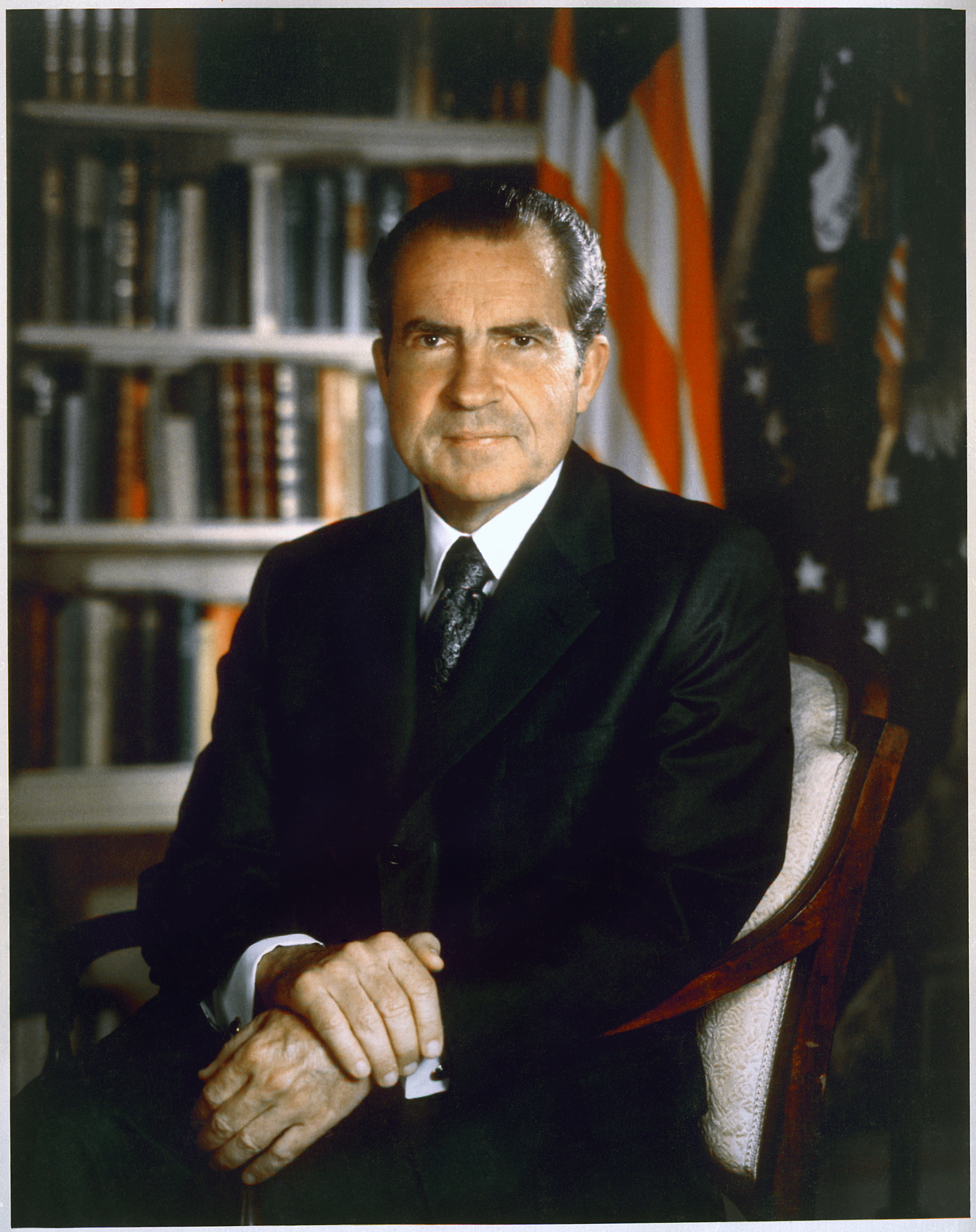
Richard Milhous Nixon was the 37th president of the United States, serving from January 20, 1969, to August 9, 1974. A Republican, he is known for major foreign-policy initiatives and for resigning amid the Watergate scandal.
Nixon presided over a period of significant foreign-policy realignment, opening diplomatic relations with the People’s Republic of China and pursuing détente with the Soviet Union, including the SALT I agreement. Domestically his administration created the Environmental Protection Agency and advanced major environmental and economic measures.
His second term was dominated by the Watergate scandal; revelations of abuses of power led to investigations, impeachment proceedings in the House, and his resignation in 1974. Nixon’s legacy remains mixed—praised for diplomatic and policy achievements and criticized for the constitutional crisis and erosion of public trust.
Opened diplomatic relations with the People’s Republic of China; Pursued détente with the Soviet Union and signed SALT I; Created the Environmental Protection Agency and advanced environmental laws; Implemented Vietnamization and negotiated the Paris Peace Accords leading to U.S. troop withdrawal; Resigned in 1974 amid the Watergate scandal
Key highlights and dated events associated with this presidency.
Showing 12 of 64 entries.
Richard Nixon resigned from office amid the Watergate scandal, the first U.S. president to do so.

After approving three articles of impeachment, the House Judiciary Committee voted to forward the articles and its report to the full House of Representatives for consideration.
The committee approved a third article accusing Nixon of contempt for refusing to comply with congressional subpoenas related to the Watergate investigation.
The Judiciary Committee approved a second article charging Nixon with abuse of power for using federal offices and resources to violate citizens' rights and impede investigations.
The House Judiciary Committee voted to approve its first article of impeachment against President Nixon, charging him with obstruction of justice in connection with the Watergate cover-up.
Following the Supreme Court's decision, Nixon gave a national televised statement agreeing to comply with the ruling but declaring he would not resign the presidency.
On July 25, 1974, President Richard Nixon announced he would comply with the Supreme Court's United States v. Nixon decision and turn over the subpoenaed Oval Office tape recordings to Special Prosecutor Leon Jaworski.
The Supreme Court unanimously held that President Nixon must produce subpoenaed tape recordings and documents to the Watergate special prosecutor, limiting claims of absolute executive privilege.
On July 20, Turkish armed forces invaded Cyprus in response to the July 15 coup, quickly seizing territory and triggering widespread displacement and fighting on the island.
On July 15, a coup d'état engineered by the Greek military junta removed Cyprus President Archbishop Makarios III and installed a pro‑union (Enosis) government.
The U.S. Supreme Court heard expedited oral arguments on the special prosecutor's subpoena for White House tape recordings and related documents in United States v. Nixon.
The House Judiciary Committee began nationally televised public hearings to consider articles of impeachment against President Richard Nixon over the Watergate scandal.