United States Agrees to the Louisiana Purchase
The Jefferson administration agreed to the Louisiana Purchase, dramatically expanding U.S. territory.
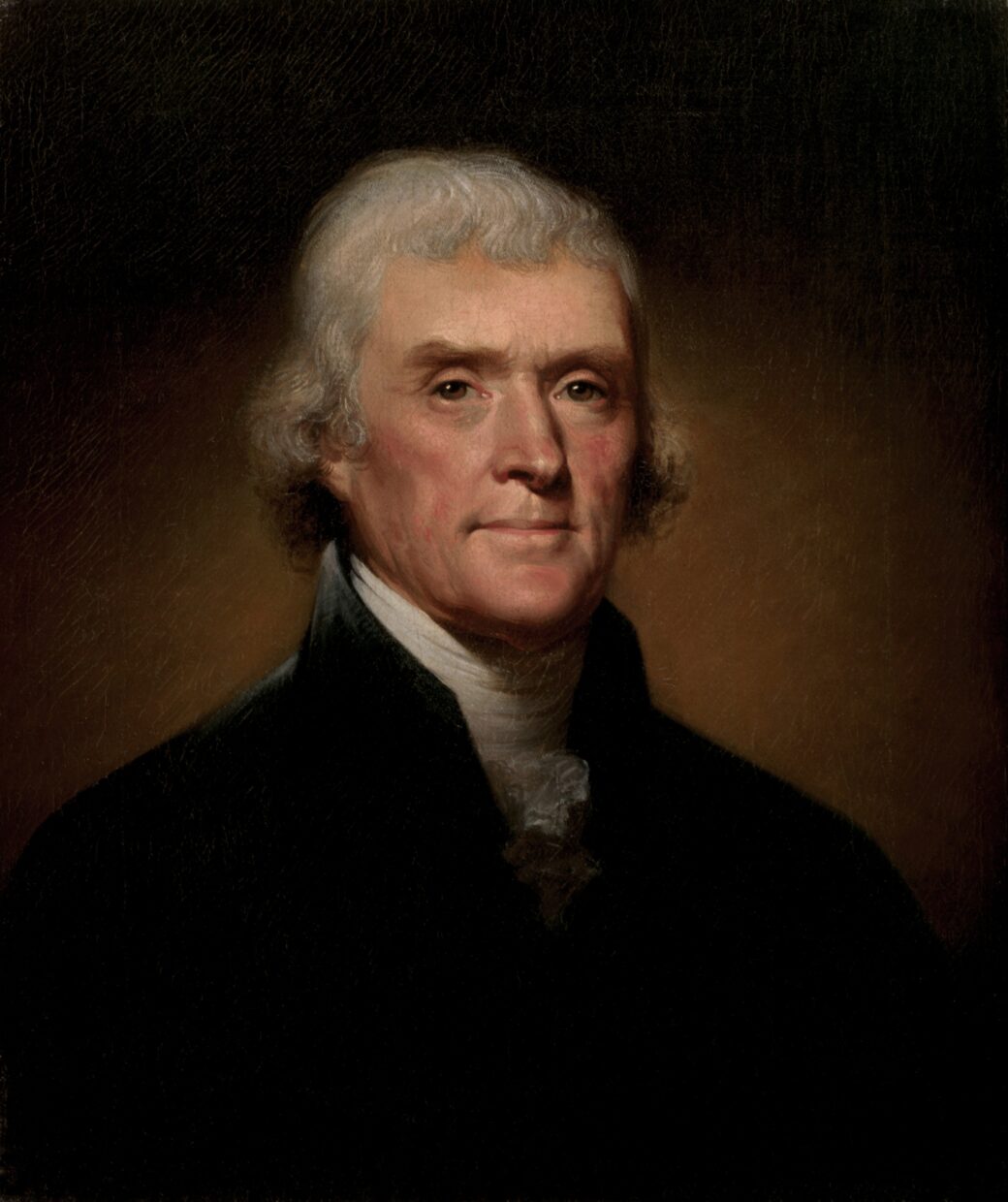
Thomas Jefferson (1743–1826) was the third President of the United States, serving from March 4, 1801 to March 4, 1809 as a leader of the Democratic-Republican Party. Author of the Declaration of Independence, he promoted limited federal government, westward expansion, and support for education and science.
Jefferson's presidency is defined by the Louisiana Purchase of 1803, which doubled U.S. territory, and by sponsoring the Lewis and Clark expedition to map the West. He pursued fiscal retrenchment—reducing federal debt and limiting standing armies—and championed an agrarian vision of republican government.
His record is mixed: the Embargo Act of 1807 damaged American commerce and his clashes with the Federalist judiciary raised enduring constitutional questions; his ownership of enslaved people contrasts sharply with his rhetoric on liberty. Nonetheless, Jefferson's emphasis on expansion, education, and local government left a lasting imprint on the nation's development.
Louisiana Purchase (1803), doubling U.S. territory; Commissioned Lewis and Clark expedition (1804–06) to explore the West; Reduced federal debt and cut military spending; Enacted the Embargo Act (1807) to pressure Britain and France; Sent naval forces in the Barbary War (1801–05) against North African piracy; Presidency coincided with Marbury v. Madison, which established judicial review
Key highlights and dated events associated with this presidency.
The Jefferson administration agreed to the Louisiana Purchase, dramatically expanding U.S. territory.