St. Valentine's Day Massacre in Chicago
Members and associates of Chicago's North Side Gang were gunned down in a garage on North Clark Street in a high-profile gangland killing known as the St. Valentine's Day Massacre.

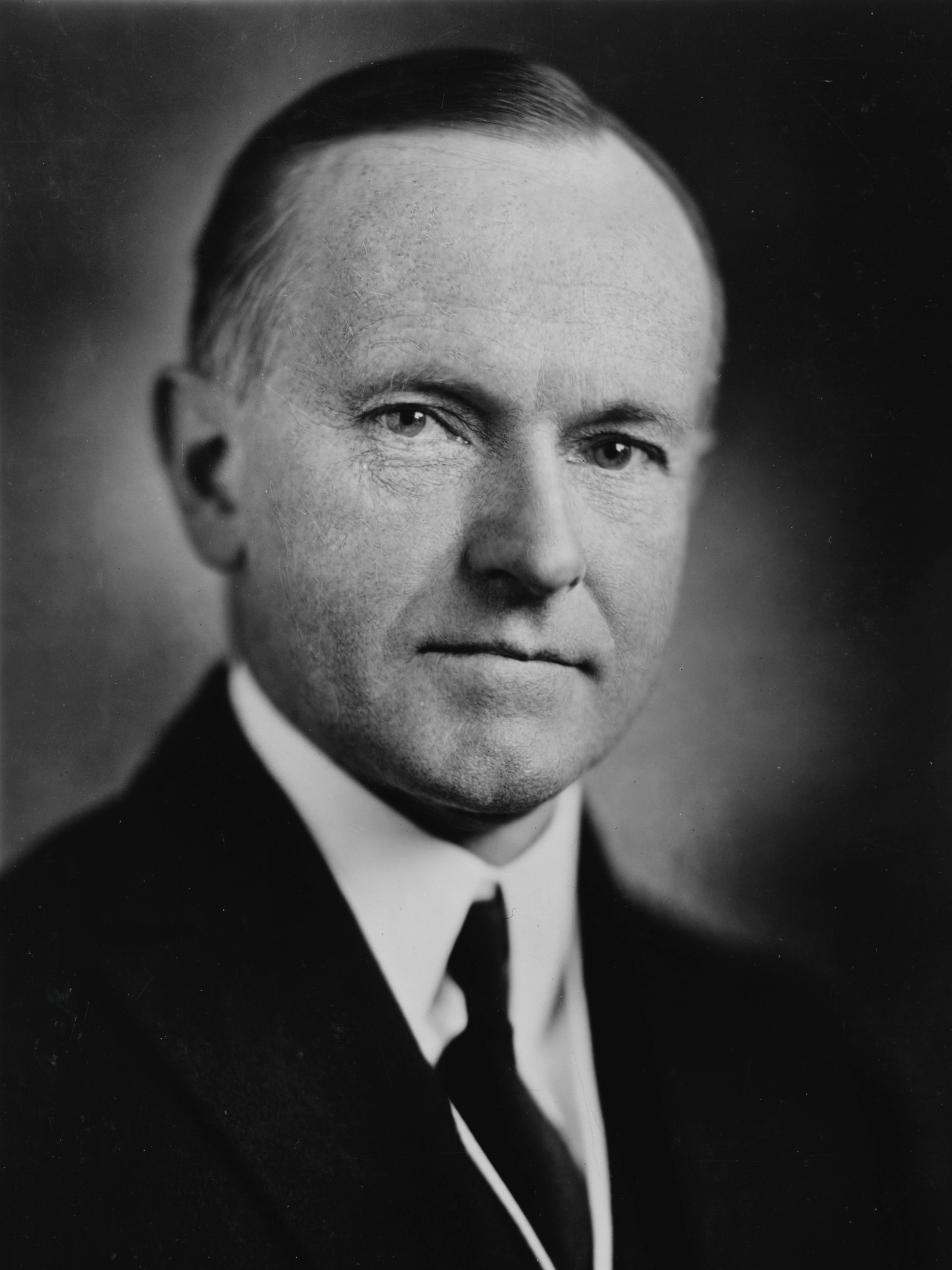
Calvin Coolidge, a Republican, served as the 30th president of the United States from August 2, 1923, to March 4, 1929 after succeeding Warren G. Harding. He was known for his quiet demeanor, frugality, and advocacy of limited government and pro‑business policies.
Coolidge presided over much of the Roaring Twenties, a period of economic growth; his administration pursued tax cuts, reduced federal spending, and favored business-friendly policies that many credit with sustaining short-term prosperity.
Historians debate his legacy: supporters praise his integrity, fiscal restraint, and restoration of public trust after earlier scandals, while critics argue his laissez-faire approach and limited regulation contributed to conditions that preceded the Great Depression. He also signed the Indian Citizenship Act (1924), supported the Dawes Plan for European reparations, and approved the Kellogg–Briand Pact.
Assumed the presidency after Warren G. Harding’s death (1923); enacted tax cuts and reduced federal spending to promote business growth; signed the Indian Citizenship Act (1924) granting Native Americans U.S. citizenship; supported the Dawes Plan (1924) to stabilize German reparations; signed the Kellogg–Briand Pact (1928) renouncing war
Key highlights and dated events associated with this presidency.
Showing 12 of 68 entries.
Members and associates of Chicago's North Side Gang were gunned down in a garage on North Clark Street in a high-profile gangland killing known as the St. Valentine's Day Massacre.
President Calvin Coolidge delivered his final annual message to Congress, reviewing the country's economic prosperity and urging continued fiscal restraint and limited government.
President Calvin Coolidge issued the annual Thanksgiving Day proclamation designating Thursday, November 29, 1928, as a national day of thanksgiving.
President Calvin Coolidge issued a presidential proclamation calling for the observance of Armistice Day on November 11, 1928, honoring those who served in World War I.
On November 7, 1928, President Calvin Coolidge sent a formal congratulatory message to President-elect Herbert Hoover following Hoover's victory in the November 6 election.
On November 6, 1928, Republican Herbert Hoover won the U.S. presidential election, defeating Democratic nominee Al Smith and securing a decisive victory in the Electoral College and popular vote.
On August 27, 1928 Secretary of State Frank B. Kellogg signed the Kellogg–Briand Pact in Paris on behalf of the United States, joining numerous nations in renouncing war as national policy.
On August 27, 1928 U.S. Secretary of State Frank B. Kellogg signed the Kellogg–Briand Pact in Paris on behalf of the United States, joining numerous nations in a multilateral agreement renouncing war as a tool of national policy.
President Coolidge vetoed the McNary–Haugen Farm Relief Act, rejecting congressional proposals for federal price-support measures for agriculture.
President Calvin Coolidge signed the Flood Control Act on May 15, 1928, authorizing extensive federal flood-control projects for the Mississippi River and its tributaries.
President Calvin Coolidge vetoed the McNary–Haugen Agricultural Relief Bill, rejecting a congressional plan for federal price-supports for surplus farm commodities.
On December 6, 1927 President Calvin Coolidge transmitted his 1927 Annual Message to Congress (the State of the Union), setting out his administration's fiscal priorities and general policy outlook.