The POTUS Timeline
President #43

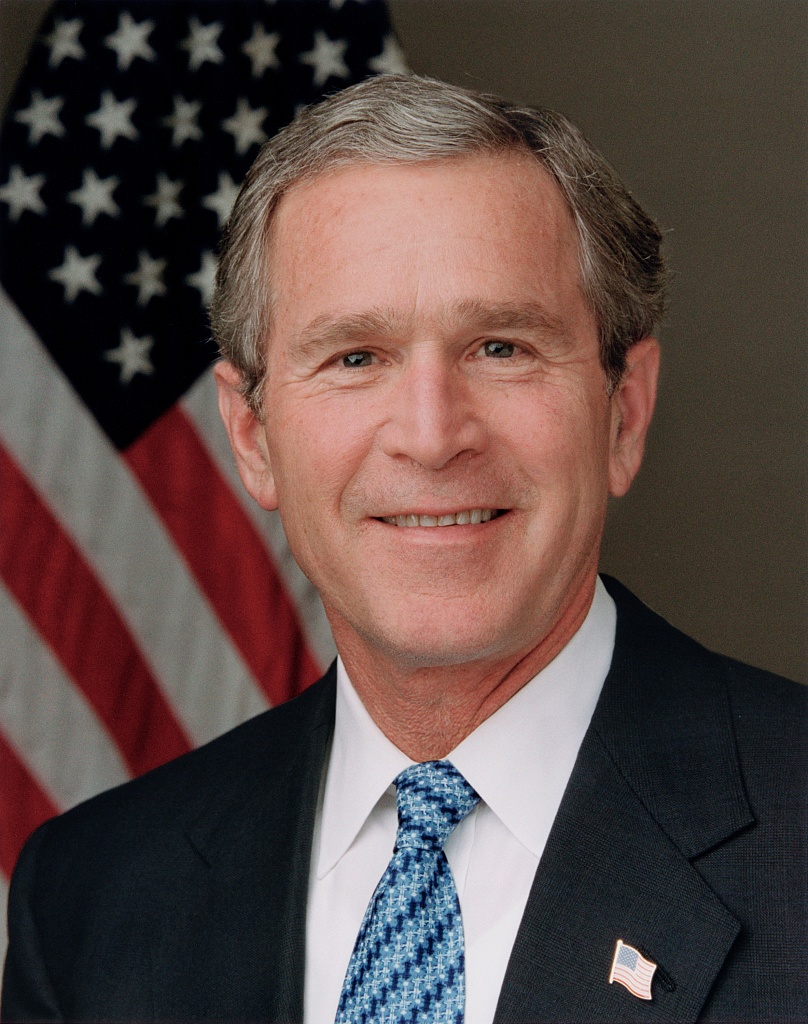
George W. Bush

George W. Bush served as the 43rd President of the United States from January 20, 2001 to January 20, 2009. A Republican and former governor of Texas, his presidency was shaped by the response to the September 11, 2001 attacks and consequential domestic policies.

Legacy Summary

Bush's presidency is most widely remembered for the response to the September 11 attacks, the launch of the global War on Terror, and military campaigns in Afghanistan and Iraq. Decisions on intelligence, national security, and counterterrorism had long-lasting international and political effects.

On the domestic front, his administration passed major laws including the No Child Left Behind education reform and the Medicare Part D prescription drug benefit, and he appointed two Supreme Court justices. The 2008 financial crisis and emergency responses also significantly influenced assessments of his record.

Notable Actions

Led U.S. response to 9/11 and launched the War on Terror; Ordered U.S. invasions of Afghanistan (2001) and Iraq (2003); Enacted No Child Left Behind education reform (2001); Created Medicare Part D prescription drug benefit (2003); Appointed Chief Justice John Roberts and Justice Samuel Alito; Responded to the 2008 financial crisis, including signing the TARP bailout

Timeline Entries

Key highlights and dated events associated with this presidency.

Showing 12 of 307 entries.

Browse full timeline
Republican National Convention opens in New York City
August 30, 2004 George W. Bush
Election / Transition

Republican National Convention opens in New York City

The 2004 Republican National Convention opened at Madison Square Garden in New York City, launching the formal four-day event to renominate President George W. Bush and promote the Bush–Cheney re-election campaign.

President Bush signs the Project BioShield Act into law
July 21, 2004 George W. Bush
Legislation

President Bush signs the Project BioShield Act into law

President George W. Bush signed the Project BioShield Act of 2004, granting the federal government new authorities and funding to accelerate development and procurement of medical countermeasures against chemical, biological, radiological, and nuclear threats.

Supreme Court decides Hamdi v. Rumsfeld
June 28, 2004 George W. Bush
Judicial

Supreme Court decides Hamdi v. Rumsfeld

In Hamdi v. Rumsfeld the Supreme Court held that a U.S. citizen detained as an 'enemy combatant' must be afforded due process to challenge his detention before a neutral decisionmaker.

Supreme Court decides Rasul v. Bush
June 28, 2004 George W. Bush
Judicial

Supreme Court decides Rasul v. Bush

The U.S. Supreme Court ruled in Rasul v. Bush that federal courts have jurisdiction to hear habeas corpus petitions filed by foreign nationals held at Guantanamo Bay.