
Reagan names Caspar W. Weinberger as Secretary of Defense nominee
President Reagan announced Caspar W. Weinberger as his nominee for Secretary of Defense on January 20, 1981.
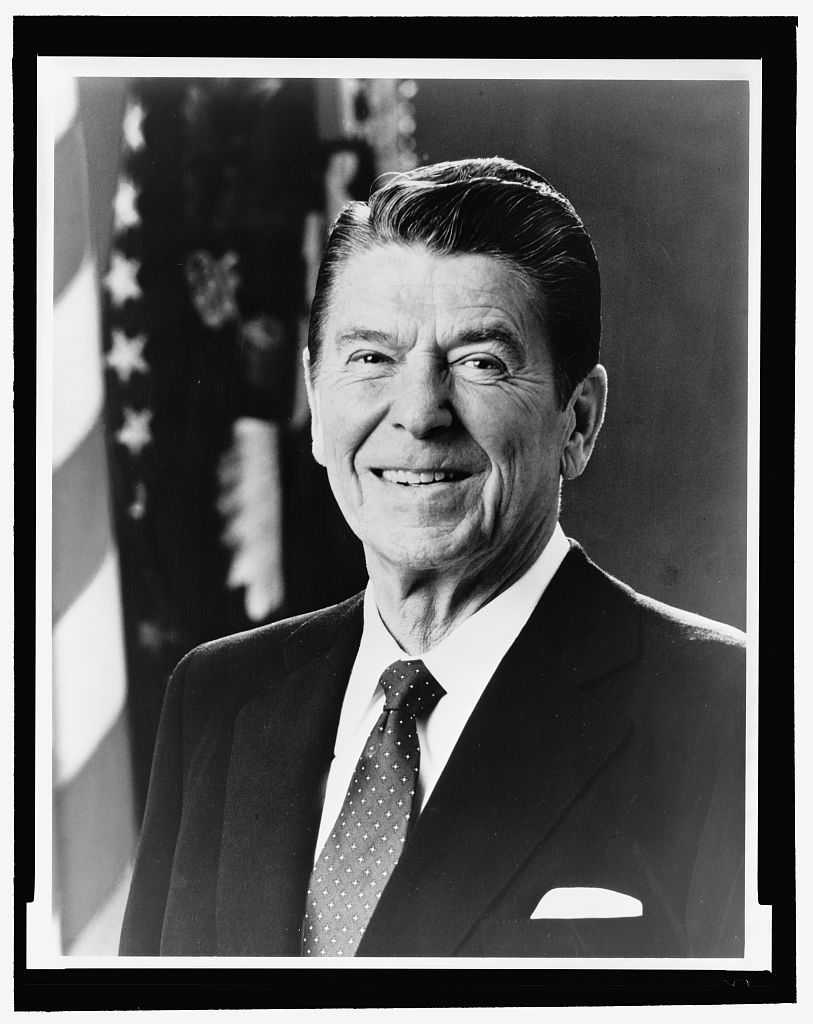
Ronald Reagan was the 40th president of the United States, serving two terms from January 1981 to January 1989. A former actor and governor of California, he promoted conservative economic policies and a firm stance against the Soviet Union.
Reagan pursued supply-side economic policies—large tax cuts, deregulation, and shifts in spending—that helped lower inflation and stimulate growth but also coincided with rising federal deficits and greater income inequality.
On foreign policy he combined a military buildup and tough rhetoric toward the USSR with later diplomacy with Mikhail Gorbachev that advanced arms-control agreements; his presidency was also marred by the Iran–Contra affair.
Enacted major tax cuts with the Economic Recovery Tax Act of 1981; Pursued deregulation and conservative judicial appointments; Increased defense spending and advanced the Strategic Defense Initiative; Negotiated with Mikhail Gorbachev, contributing to U.S.–Soviet arms reductions; Re-elected in a 1984 landslide victory; Administration tarnished by the Iran–Contra affair
Key highlights and dated events associated with this presidency.
Showing 9 of 189 entries.
President Reagan announced Caspar W. Weinberger as his nominee for Secretary of Defense on January 20, 1981.

On his inauguration day, President Ronald Reagan announced Alexander M. Haig Jr. as his nominee for Secretary of State.
James S. Brady was appointed White House Press Secretary and began serving as the administration’s chief communications officer.
George H. W. Bush was inaugurated and sworn in as the 43rd Vice President of the United States.
Ronald Reagan appointed Richard V. Allen as his first National Security Adviser effective upon taking office.
On his inauguration day, Ronald Reagan named James A. Baker III as White House Chief of Staff.
After 444 days in captivity, the 52 American hostages in Tehran were released and flown out of Iran, arriving in West Germany and soon thereafter in the United States.
Ronald Reagan was inaugurated as the 40th President of the United States and delivered his inaugural address outlining his vision for smaller government, tax cuts, and a stronger national defense.
A joint session of the U.S. Congress met to count and certify the Electoral College votes, formally confirming Ronald Reagan's victory in the 1980 presidential election.