Convention elects David G. Burnet interim president of the Republic of Texas
The Texas Convention chose David G. Burnet as interim president and created a provisional government to direct the revolution.
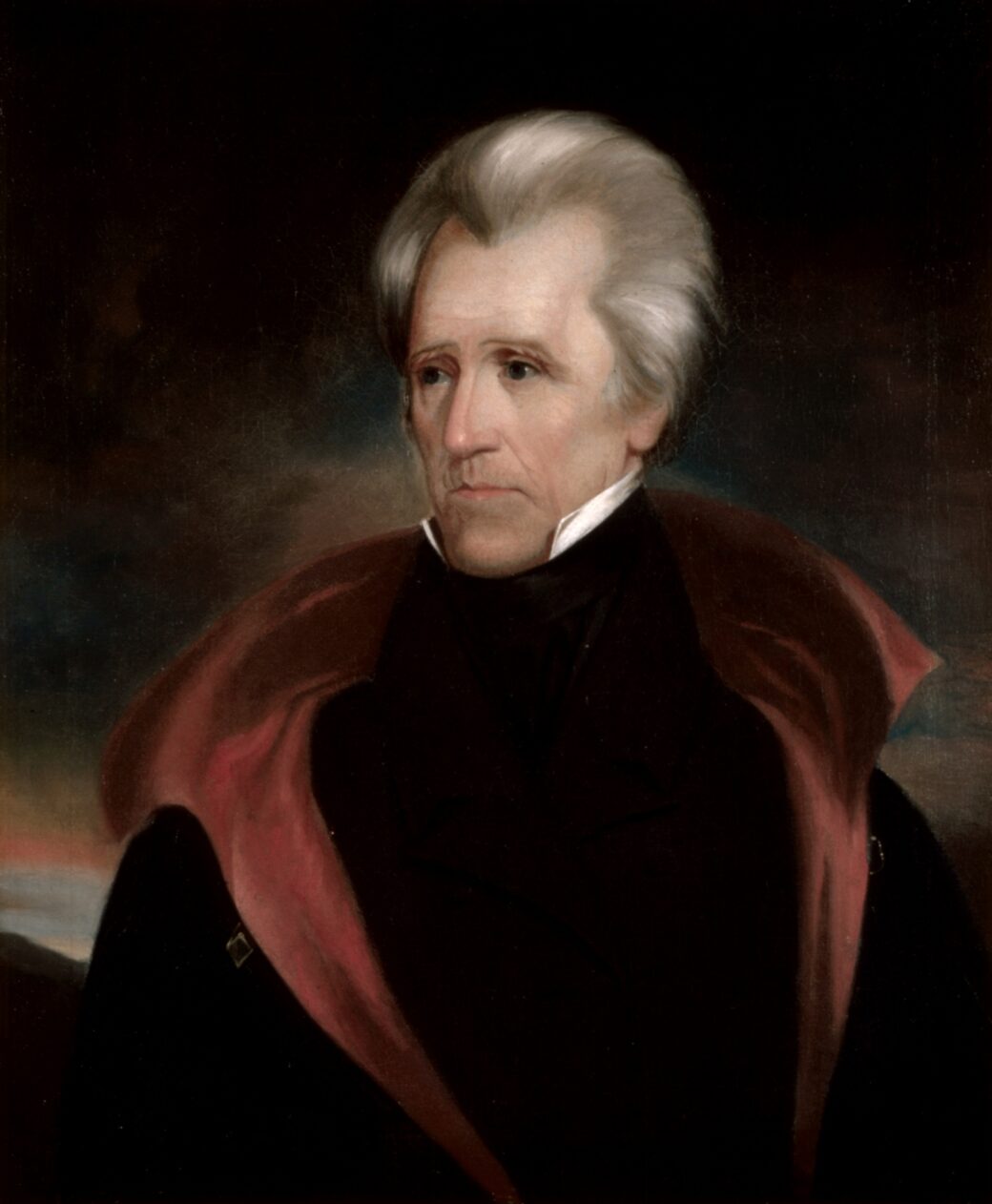
Andrew Jackson (1767–1845) was the seventh President of the United States, serving from 1829 to 1837. A founder of the Democratic Party, he was known for his populist style and strong use of executive power.
Jackson reshaped the presidency into a more powerful, populist office, using the veto, patronage, and direct appeals to voters to influence policy. He led the Bank War, asserted federal authority during the Nullification Crisis, and expanded the role of the executive branch.
His administration enacted the Indian Removal Act, leading to the forced relocation of Native American nations and the Trail of Tears, which remains a major moral and historical controversy. Historians view his legacy as influential but deeply contested for its democratic expansions alongside significant human costs.
Led U.S. forces to victory at the Battle of New Orleans (1815); Helped found the Democratic Party and promoted Jacksonian democracy; Defeated recharter of the Second Bank of the United States (Bank War); Signed the Indian Removal Act (1830), leading to forced relocations; Confronted the Nullification Crisis and asserted federal authority (1832–33); Expanded presidential power through frequent use of the veto and patronage
Key highlights and dated events associated with this presidency.
Showing 12 of 97 entries.
The Texas Convention chose David G. Burnet as interim president and created a provisional government to direct the revolution.
Delegates meeting at Washington-on-the-Brazos adopted a constitution establishing the Republic of Texas.
The U.S. Senate confirmed Roger B. Taney to succeed John Marshall as Chief Justice of the Supreme Court.
After a 13-day siege, Mexican forces led by General Antonio López de Santa Anna stormed the Alamo mission at San Antonio, killing the Texan garrison.
The 20-year federal charter of the Second Bank of the United States expired, ending its status as a national bank.
Congress passed the Distribution Act on March 3, 1836, which President Andrew Jackson signed, authorizing the federal government to distribute surplus revenues from the sale of public lands to the states.
Delegates meeting at Washington-on-the-Brazos adopted the Texas Declaration of Independence, proclaiming the Republic of Texas separate from Mexico.
Delegates from Texas settlements met at Washington-on-the-Brazos to begin drafting a declaration of independence and a constitution for a new Republic of Texas.
Alamo commander William B. Travis wrote and sent his urgent plea for reinforcements—later known as the 'Victory or Death' letter—while the defenders were besieged.
General Antonio López de Santa Anna's Mexican forces reached San Antonio de Béxar and began the siege of the Alamo mission, held by a small Texian garrison.
Delegates from Mexican Texas convened at Washington-on-the-Brazos to draft a constitution and organize a provisional government for Texas.
On December 29, 1835, a factional delegation of Cherokee leaders signed the Treaty of New Echota, ceding Cherokee lands east of the Mississippi in exchange for territory in Indian Territory and removal provisions.