
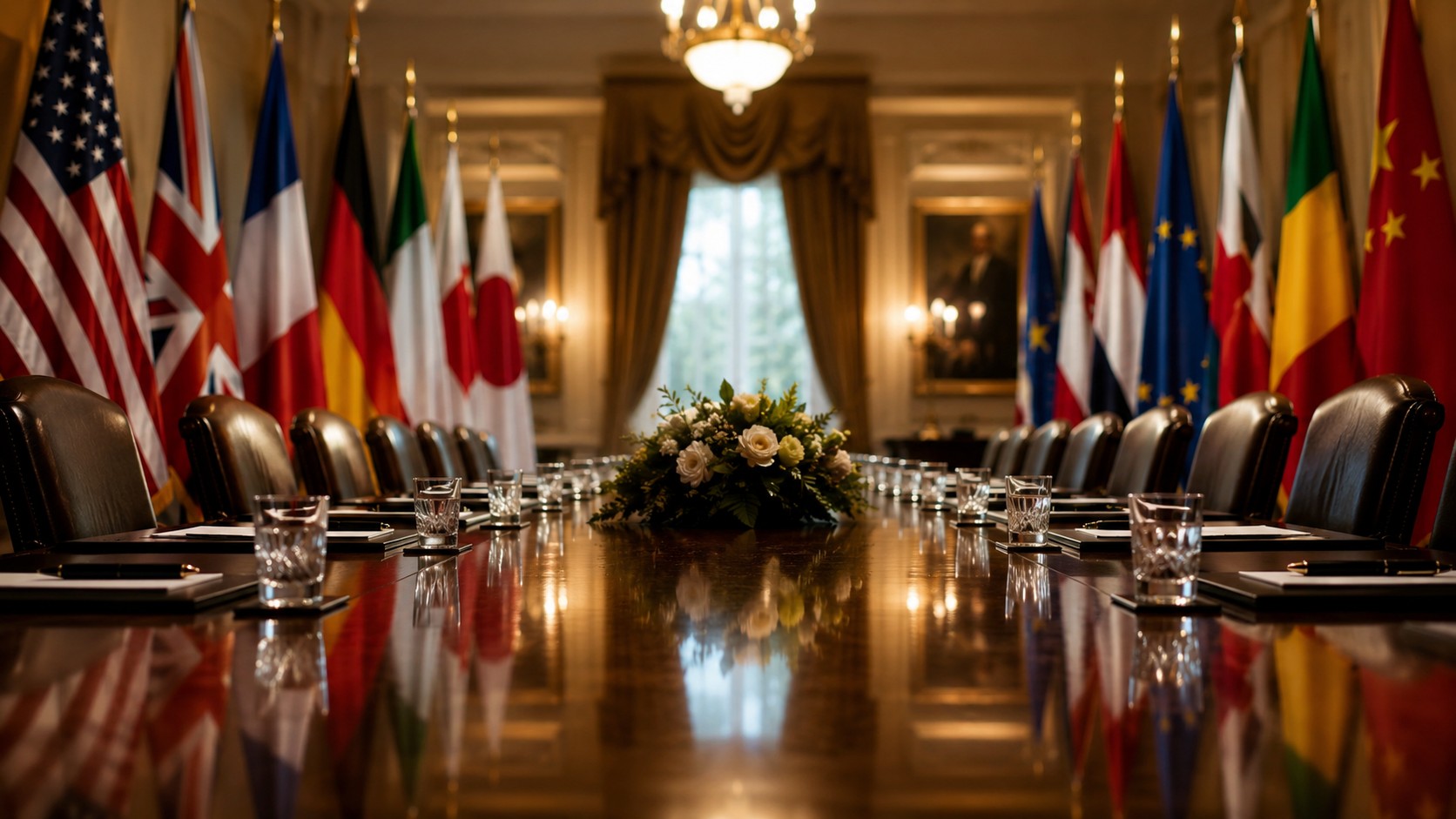
Signing of the Four-Power Treaty on Pacific consultation
The United States, Britain, Japan, and France signed the Four-Power Treaty at Washington, agreeing to consult one another on Pacific matters and respect each other's territorial possessions.
Warren G. Harding was the 29th president of the United States, serving from March 4, 1921, until his death on August 2, 1923. A Republican from Ohio, he campaigned on a "return to normalcy" after World War I and served with Vice President Calvin Coolidge.
Harding oversaw a swift postwar transition, promoting pro-business economic policies, tax reductions, and government reform measures such as the Budget and Accounting Act of 1921; he also led international diplomacy at the Washington Naval Conference (1921–22).
His administration was later tarnished by scandals—most notably the Teapot Dome bribery case—that emerged after his sudden death, leaving historians to weigh his policy achievements against ethical failures among appointees and the lasting damage to his reputation.
Ran on a "Return to Normalcy" platform and promoted pro-business, limited-government policies; Signed the Budget and Accounting Act of 1921 creating the Bureau of the Budget; Convened the 1921–22 Washington Naval Conference to limit naval arms; Enacted the Revenue Act of 1921 and the Fordney–McCumber Tariff affecting taxes and trade; Died in office (August 2, 1923) and left an administration later tarnished by the Teapot Dome scandal
Key highlights and dated events associated with this presidency.
Showing 12 of 44 entries.
The United States, Britain, Japan, and France signed the Four-Power Treaty at Washington, agreeing to consult one another on Pacific matters and respect each other's territorial possessions.
Representatives of the United States, Britain, Japan, France, and Italy signed the Five-Power Treaty at the Washington Naval Conference to limit naval armaments and establish battleship tonnage ratios.
At the conclusion of the Washington Naval Conference on February 6, U.S. and foreign delegations signed the Five-Power Naval Treaty, the Four-Power Treaty, and the Nine-Power Treaty to limit naval armaments and reaffirm Pacific and Chinese territorial and commercial arrangements.
On February 6, 1922, President Warren G. Harding joined representatives of eight other nations at the Washington Naval Conference for the formal signing of the Five‑Power Treaty (naval limitations), the Four‑Power Treaty (Pacific consultation), and the Nine‑Power Treaty (affirmation of the Open Door in China).
The United States, United Kingdom, Japan, and France signed the Four‑Power Treaty at the Washington conference, agreeing to consult one another on Pacific affairs and to respect each other's Pacific possessions.
Nine powers, including the United States, Britain, Japan, and France, signed the Nine‑Power Treaty at the Washington conference to affirm respect for China's sovereignty, territorial integrity, and equal commercial opportunities.
Representatives of the United States, United Kingdom, Japan, France, and Italy signed the Five‑Power Treaty at the Washington Naval Conference, agreeing to limits on capital ship construction and establishing a 5:5:3:1.75:1.75 ratio for naval tonnage.
The United States, Great Britain, France, and Japan signed the Four-Power Treaty at the Washington Naval Conference, agreeing to consult one another on Pacific issues and respect each other's territorial possessions in the region.
Also on February 6, 1922, the United States and other participating nations at the Washington Naval Conference signed the Nine-Power Treaty, which affirmed respect for China’s sovereignty and the Open Door policy on trade.
On February 6, 1922, the United States and four other major naval powers (United Kingdom, Japan, France, and Italy) signed the Five-Power Treaty at the Washington Naval Conference to limit capital ship construction and set tonnage ratios.
On December 25, 1921, President Harding commuted the remaining portion of Socialist leader Eugene V. Debs's ten-year sentence for his 1918 antiwar speech, resulting in Debs's release from federal prison.
Delegates from the United States, Great Britain, France, and Japan signed the Four-Power Treaty in Washington, D.C., pledging to consult one another on Pacific affairs and to respect each other's Pacific possessions.