1938 Midterm Elections: Republicans Make Major Gains
On November 8, 1938, midterm elections delivered significant Republican gains in the House and Senate, substantially reducing Democratic majorities.

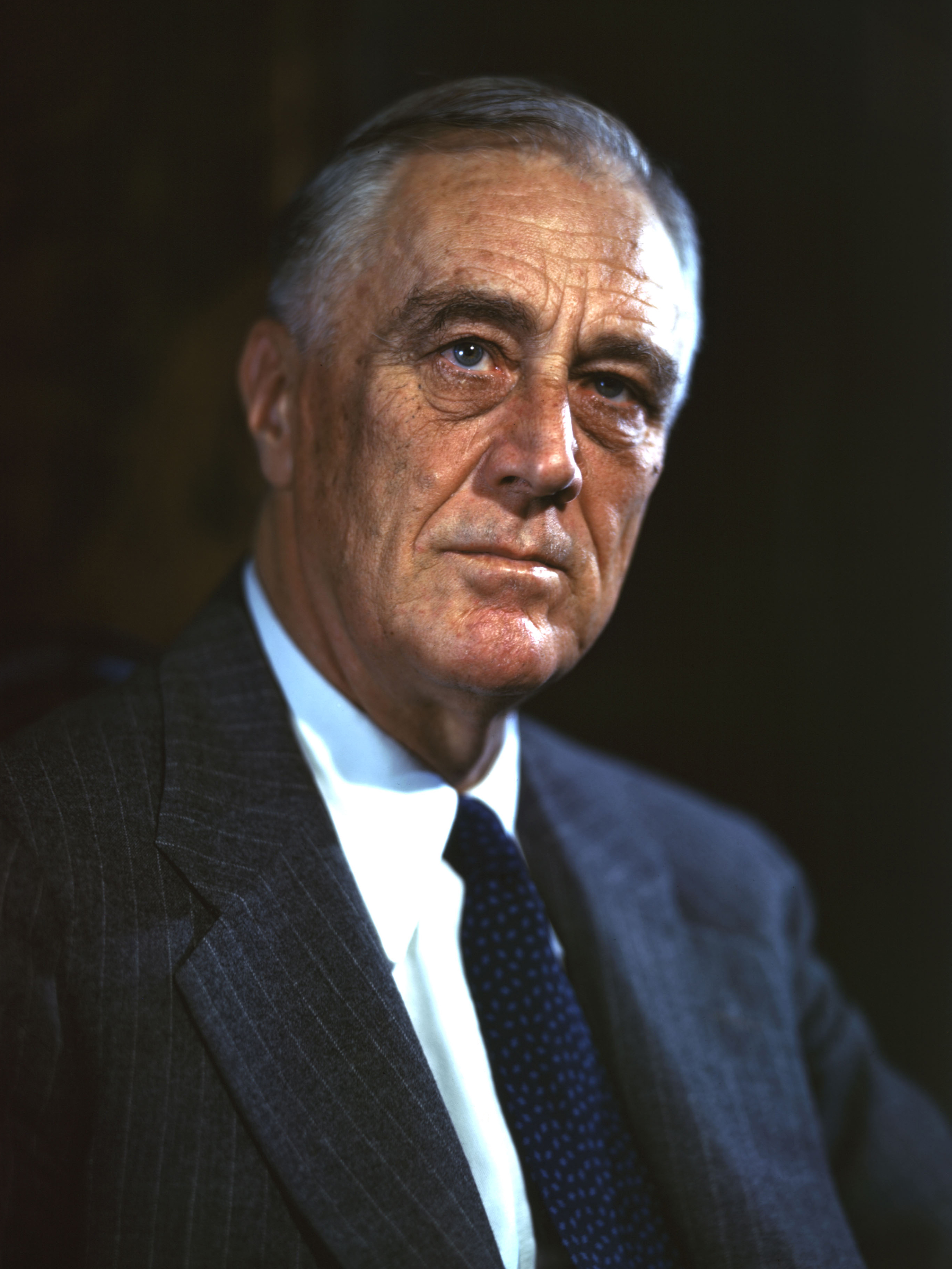
Franklin D. Roosevelt (1882–1945) was the 32nd President of the United States, serving from March 4, 1933, to April 12, 1945. A Democrat, he led the nation through the Great Depression and most of World War II.
Roosevelt reshaped the federal government's role in the economy through the New Deal, creating programs and institutions such as Social Security, the FDIC, and large-scale public works to relieve unemployment and stabilize finance.
He also guided the United States through World War II, overseeing mobilization, Lend-Lease, and Allied cooperation; his four-term presidency expanded the scope and influence of the executive branch and left a lasting global and domestic legacy, though some initiatives, like the 1937 court-packing plan, provoked controversy.
Implemented New Deal reforms including the Social Security Act; Stabilized banking and created the FDIC and SEC; Established large public works programs (WPA, CCC, TVA); Backed Lend-Lease and led U.S. mobilization in World War II; Elected to four terms, reshaping presidential precedent; Proposed 1937 Supreme Court reorganization (court-packing)
Key highlights and dated events associated with this presidency.
Showing 12 of 415 entries.
On November 8, 1938, midterm elections delivered significant Republican gains in the House and Senate, substantially reducing Democratic majorities.
On September 30, 1938, Britain, France, Italy and Germany signed the Munich Agreement allowing Nazi Germany to annex the Sudetenland from Czechoslovakia, a development closely watched by President Roosevelt's administration.
The powerful New England Hurricane struck Long Island and southern New England on September 21, 1938, and President Franklin D. Roosevelt directed federal disaster assistance and mobilized relief efforts for the affected states.
Associate Justice Benjamin N. Cardozo died on July 9, 1938, leaving a seat on the U.S. Supreme Court vacant.
An international conference convened at President Roosevelt's initiative opened in Evian-les-Bains to address the growing problem of Jewish refugees fleeing Nazi persecution.
Roosevelt signed the Federal Food, Drug, and Cosmetic Act, significantly expanding federal authority to regulate the safety of foods, drugs, and cosmetics and requiring new drugs to be shown safe before marketing.
Roosevelt signed the Fair Labor Standards Act into law, establishing a federal minimum wage, overtime pay, and restrictions on child labor in interstate commerce.
Roosevelt signed the Federal Food, Drug, and Cosmetic Act, giving the federal government expanded authority to regulate the safety of foods, drugs, and cosmetics and requiring proof of safety for new drugs before marketing.
President Roosevelt signed the Fair Labor Standards Act (FLSA), establishing a federal minimum wage, maximum hours with overtime pay, and new restrictions on child labor.
On March 12, 1938, German forces crossed the Austrian border and quickly took control, beginning the Anschluss that would formally annex Austria into Nazi Germany.
President Franklin D. Roosevelt delivered his seventh annual message to Congress outlining the administration’s priorities for combating unemployment and strengthening economic recovery.
On December 12, 1937, Japanese aircraft attacked and sank the U.S. gunboat Panay on the Yangtze River near Nanjing, forcing her crew and passengers to abandon ship.