Supreme Court decides Gitlow v. New York
The Supreme Court upheld Benjamin Gitlow's conviction but held that the First Amendment's free-speech protections apply to the states through the Fourteenth Amendment.
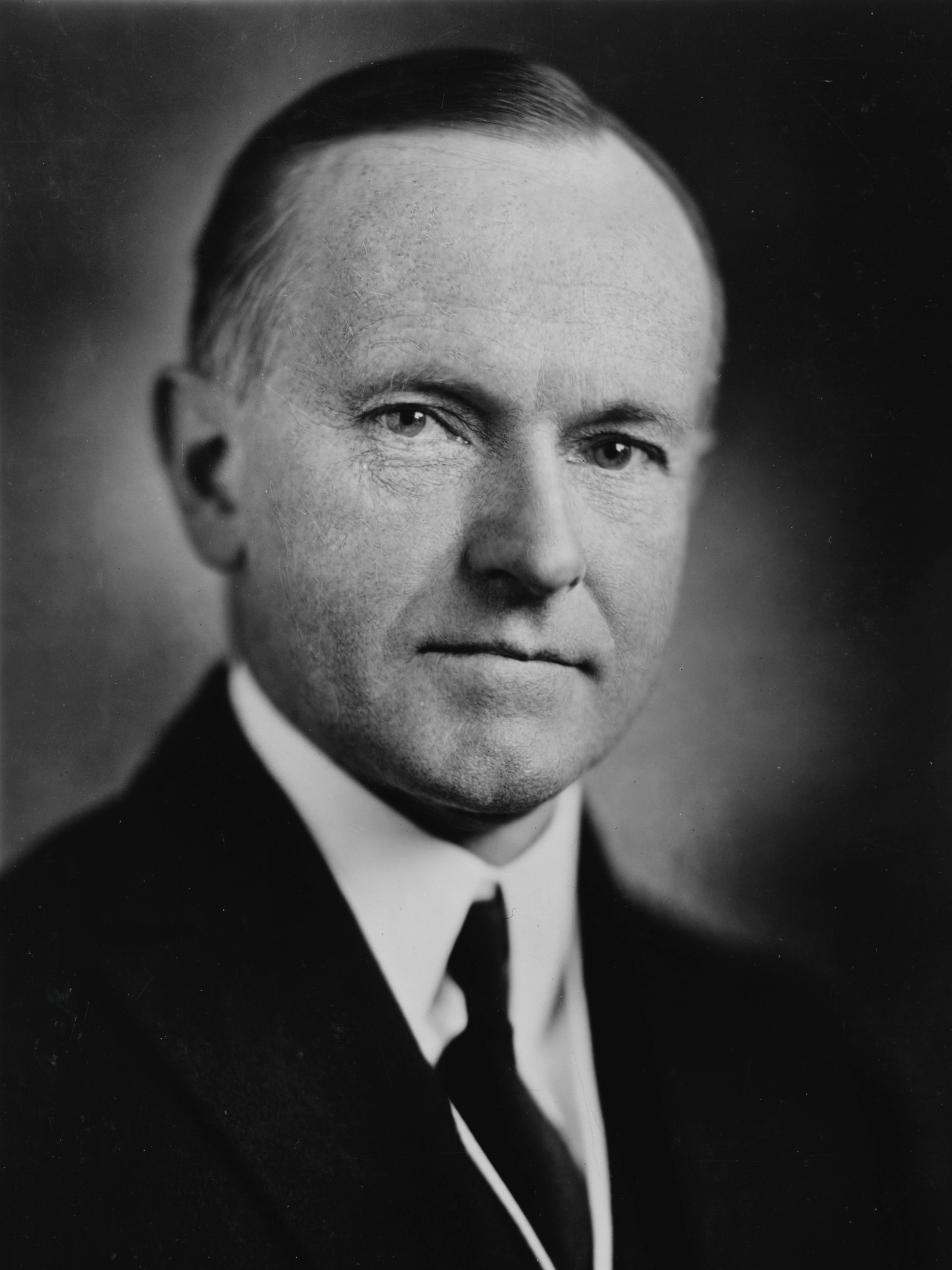
Calvin Coolidge, a Republican, served as the 30th president of the United States from August 2, 1923, to March 4, 1929 after succeeding Warren G. Harding. He was known for his quiet demeanor, frugality, and advocacy of limited government and pro‑business policies.
Coolidge presided over much of the Roaring Twenties, a period of economic growth; his administration pursued tax cuts, reduced federal spending, and favored business-friendly policies that many credit with sustaining short-term prosperity.
Historians debate his legacy: supporters praise his integrity, fiscal restraint, and restoration of public trust after earlier scandals, while critics argue his laissez-faire approach and limited regulation contributed to conditions that preceded the Great Depression. He also signed the Indian Citizenship Act (1924), supported the Dawes Plan for European reparations, and approved the Kellogg–Briand Pact.
Assumed the presidency after Warren G. Harding’s death (1923); enacted tax cuts and reduced federal spending to promote business growth; signed the Indian Citizenship Act (1924) granting Native Americans U.S. citizenship; supported the Dawes Plan (1924) to stabilize German reparations; signed the Kellogg–Briand Pact (1928) renouncing war
Key highlights and dated events associated with this presidency.
Showing 12 of 68 entries.
The Supreme Court upheld Benjamin Gitlow's conviction but held that the First Amendment's free-speech protections apply to the states through the Fourteenth Amendment.
The U.S. Supreme Court unanimously struck down an Oregon law requiring public-school attendance, ruling that it unlawfully interfered with parents' rights and the operation of private schools.
Calvin Coolidge was inaugurated as the 30th President of the United States and delivered his inaugural address on the commencement of his elected term.
President Calvin Coolidge signed the Air Mail Act (commonly called the Kelly Act), authorizing the Post Office to contract with private companies to carry U.S. air mail.
On January 6, 1925, a joint session of Congress met to count and announce the Electoral College votes from the 1924 presidential election, formally confirming Calvin Coolidge's election to a full term.
State electors met on December 15, 1924, and cast their ballots, formally recording Calvin Coolidge's victory in the November presidential election.
President Coolidge delivered his annual message to Congress on December 2, 1924, outlining the administration's emphasis on fiscal restraint, limited government, and balanced budgets.
President Coolidge issued the annual Thanksgiving Day proclamation setting aside Thursday, November 27, 1924, for national observance and thanksgiving.
President Calvin Coolidge issued a presidential proclamation marking Armistice Day and honoring those who served in World War I.
Calvin Coolidge won the U.S. presidential election, defeating Democratic nominee John W. Davis and Progressive Robert M. La Follette to secure a full term in his own right.
After a 103-ballot deadlock at the Democratic National Convention in New York, the delegates nominated former ambassador John W. Davis for president on July 9, 1924.
The Democratic National Convention convened in New York on June 24, beginning a fractious and prolonged nomination fight that would last into July.