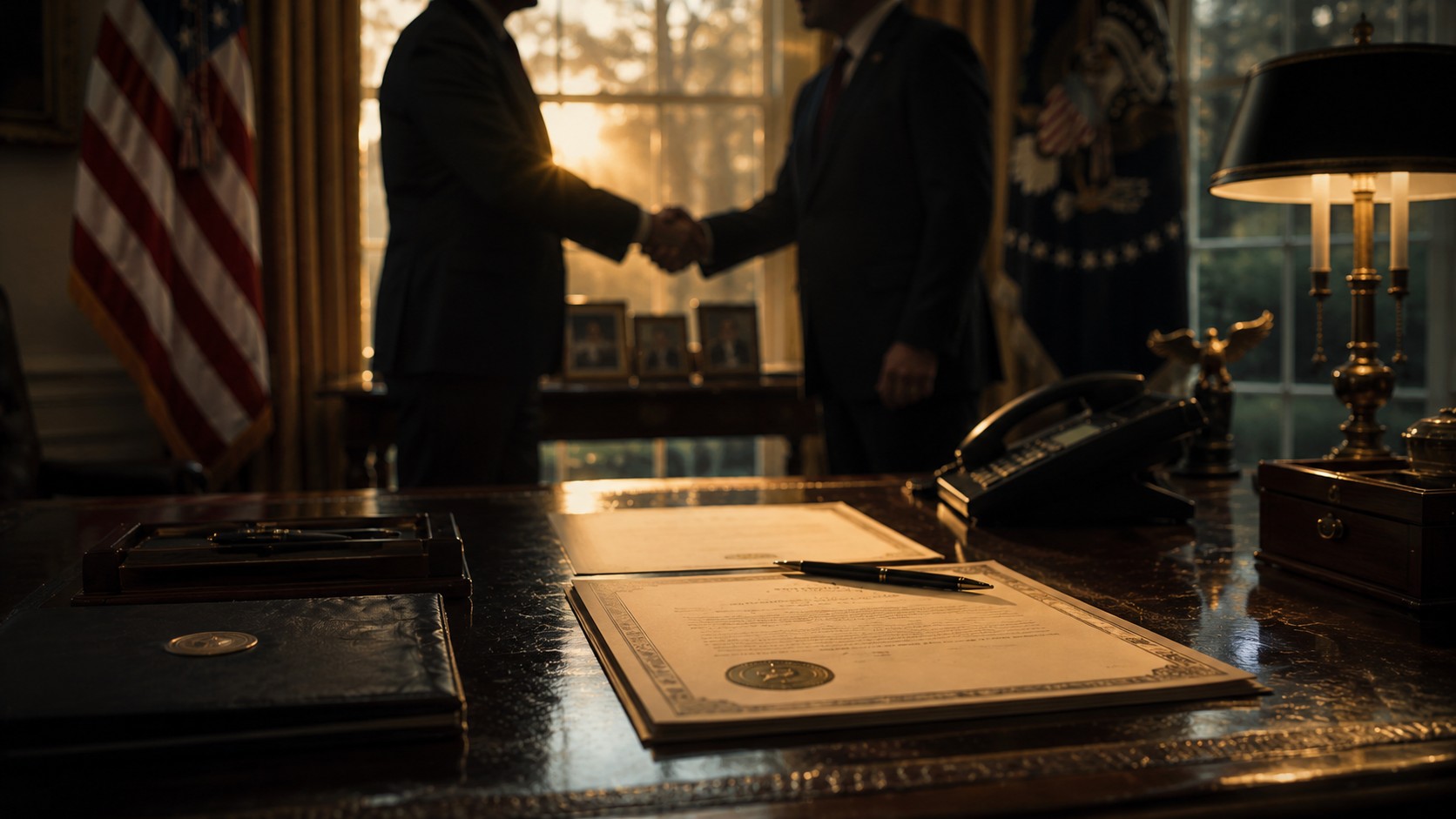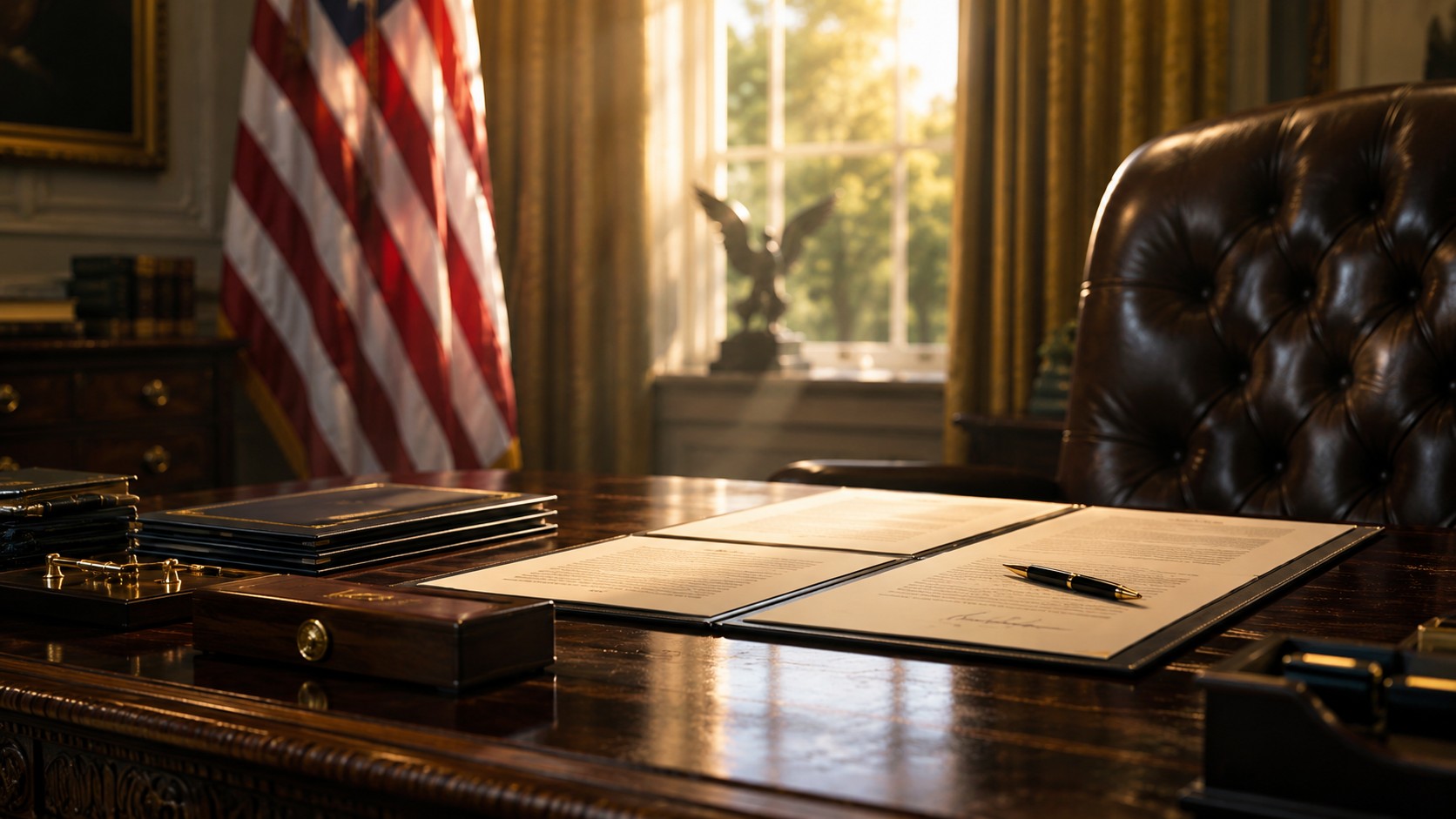
President Carter signs the Department of Education Organization Act into law
On October 17, 1979 President Jimmy Carter signed the Department of Education Organization Act, creating the U.S. Department of Education as a Cabinet-level agency.

Jimmy Carter, a Democrat, served as the 39th President of the United States from January 20, 1977, to January 20, 1981. His administration emphasized human rights, energy policy, and negotiating peace in the Middle East.
Carter's presidency is remembered for diplomatic achievements such as brokering the 1978 Camp David Accords between Egypt and Israel and negotiating the 1977 Panama Canal Treaties, along with major domestic initiatives including the creation of the Departments of Energy and Education and passage of the National Energy Act.
His term was marred by economic difficulties—stagflation and an energy crisis—and by the 1979–1981 Iran hostage crisis, which eroded public confidence. After leaving office he became a prominent global humanitarian and human-rights advocate, founding the Carter Center and receiving the Nobel Peace Prize in 2002.
Brokered the 1978 Camp David Accords between Egypt and Israel; Signed the 1977 Panama Canal Treaties to transfer canal control; Established the Departments of Energy and Education and pushed the 1978 National Energy Act; Promoted a human-rights-centered foreign policy and negotiated SALT II; Faced the 1979–1981 Iran hostage crisis and led a failed rescue attempt; Advanced deregulation in transportation (airlines, trucking, rail)
Key highlights and dated events associated with this presidency.
Showing 12 of 87 entries.
On October 17, 1979 President Jimmy Carter signed the Department of Education Organization Act, creating the U.S. Department of Education as a Cabinet-level agency.
On October 6, 1979 the Federal Reserve announced a major change in operating procedures, emphasizing control of non‑borrowed reserves and tightening monetary policy to fight inflation.
In the East Room, President Jimmy Carter publicly announced that he would seek a second term in the 1980 presidential election.
Following Senate confirmation of President Carter's nominee, Paul A. Volcker took office as Chairman of the Federal Reserve.
On July 19, 1979 Sandinista forces captured Managua as the Somoza regime collapsed, prompting the Carter administration to order the evacuation of U.S. embassy personnel and American citizens from Nicaragua.
President Carter delivered a nationally televised address from Camp David diagnosing a 'crisis of confidence,' urging energy conservation and outlining policy measures to reduce U.S. dependence on foreign oil.
President Carter nominated Paul A. Volcker to serve as chairman of the Board of Governors of the Federal Reserve System.
NASA's Voyager 2 spacecraft made its closest approach to Jupiter, returning high-resolution images and scientific measurements that revealed new moons, intricate cloud structures, and a tenuous ring system.
On June 18, 1979, President Jimmy Carter and Soviet General Secretary Leonid Brezhnev signed the SALT II agreement in Vienna to limit certain categories of strategic nuclear delivery systems.
President Jimmy Carter signed the Taiwan Relations Act (Public Law 96-8), establishing the legal framework for unofficial U.S. relations with Taiwan after formal diplomatic recognition of the People's Republic of China.
President Carter's reorganization plan took effect on April 1, 1979, formally creating the Federal Emergency Management Agency (FEMA).
On March 28, 1979, a partial core meltdown occurred at Three Mile Island Unit 2 near Harrisburg, Pennsylvania, releasing small amounts of radioactive gases and prompting state and federal emergency responses.