Annual Message to Congress (State of the Union)
On December 6, 1831, President Andrew Jackson transmitted his annual message to Congress, reviewing the nation's finances and addressing tariffs, internal improvements, and Indian affairs.
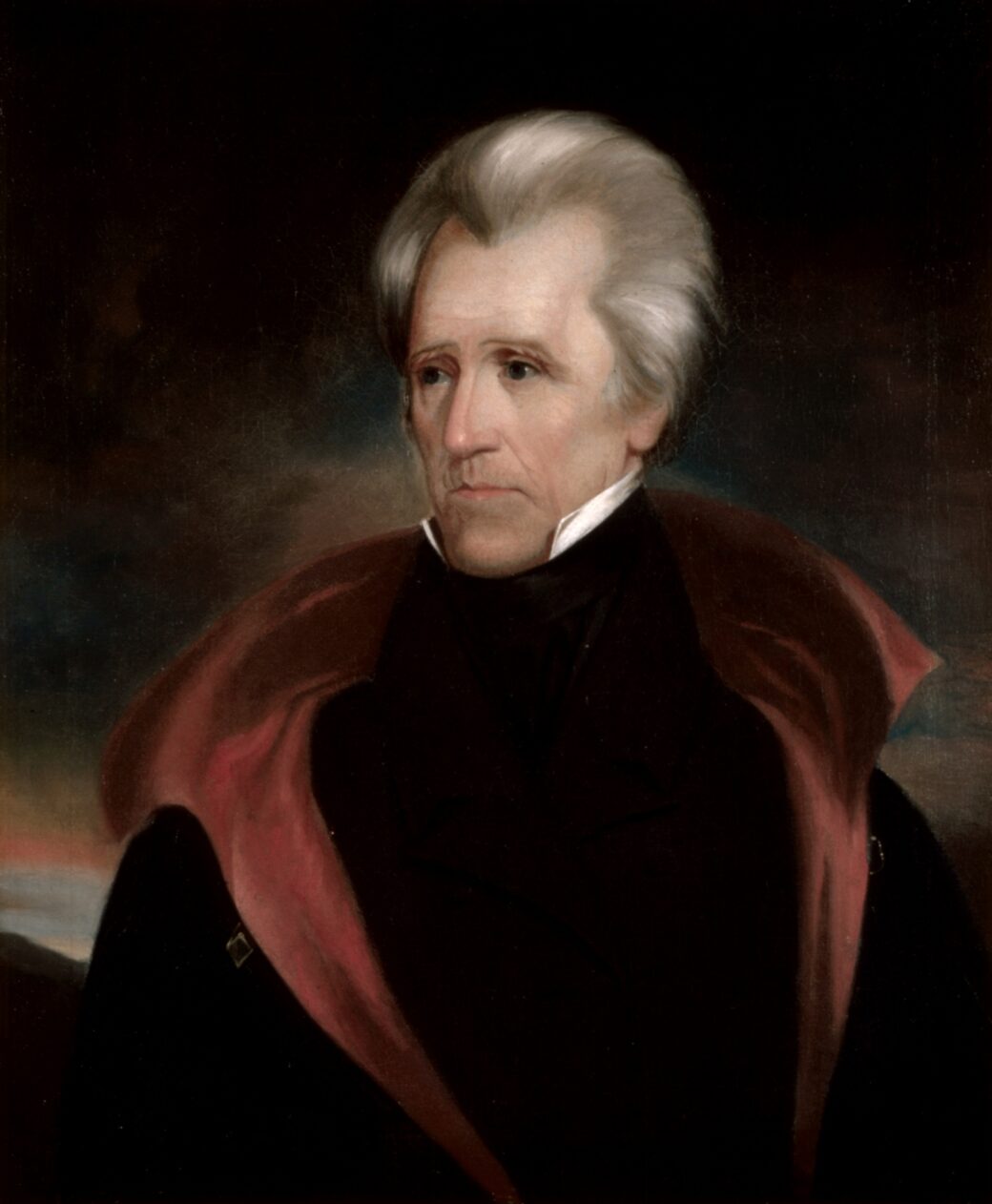
Andrew Jackson (1767–1845) was the seventh President of the United States, serving from 1829 to 1837. A founder of the Democratic Party, he was known for his populist style and strong use of executive power.
Jackson reshaped the presidency into a more powerful, populist office, using the veto, patronage, and direct appeals to voters to influence policy. He led the Bank War, asserted federal authority during the Nullification Crisis, and expanded the role of the executive branch.
His administration enacted the Indian Removal Act, leading to the forced relocation of Native American nations and the Trail of Tears, which remains a major moral and historical controversy. Historians view his legacy as influential but deeply contested for its democratic expansions alongside significant human costs.
Led U.S. forces to victory at the Battle of New Orleans (1815); Helped found the Democratic Party and promoted Jacksonian democracy; Defeated recharter of the Second Bank of the United States (Bank War); Signed the Indian Removal Act (1830), leading to forced relocations; Confronted the Nullification Crisis and asserted federal authority (1832–33); Expanded presidential power through frequent use of the veto and patronage
Key highlights and dated events associated with this presidency.
Showing 12 of 97 entries.
On December 6, 1831, President Andrew Jackson transmitted his annual message to Congress, reviewing the nation's finances and addressing tariffs, internal improvements, and Indian affairs.

Enslaved preacher Nat Turner led an armed uprising on August 21, 1831, resulting in the deaths of roughly 55–65 white people before the rebellion was suppressed.
The U.S. Supreme Court ruled that it lacked original jurisdiction to hear the Cherokee Nation's suit against the State of Georgia, describing the Cherokees as a "domestic dependent nation."
President Andrew Jackson transmitted his annual message to Congress on December 6, 1830, addressing federal finances, public lands, and Indian removal policy.
On September 27, 1830, U.S. commissioners and Choctaw leaders signed the Treaty of Dancing Rabbit Creek, under which the Choctaw ceded most of their Mississippi lands and agreed to relocate west of the Mississippi River.
A popular uprising in Paris began on July 27, 1830, challenging King Charles X and initiating the events that would topple the Bourbon monarchy.
Jackson signed the Indian Removal Act into law, authorizing the president to negotiate removal treaties with Native American tribes east of the Mississippi River.
President Andrew Jackson issued a veto message rejecting a congressional appropriation to fund construction of the Maysville, Washington, Paris, and Lexington Turnpike in Kentucky.
Senator Daniel Webster delivered his celebrated 'Second Reply to Hayne,' defending the Constitution and the permanence of the Union in a Senate debate over protectionist tariffs and states' rights.
President Andrew Jackson transmitted his first annual message to Congress, outlining his administration's priorities including federal authority, fiscal concerns, and policy toward Native American tribes.
President Andrew Jackson appointed Martin Van Buren as Secretary of State, and Van Buren took office on March 28, 1829.
Following the inauguration, a large crowd of supporters surged into the White House for an open reception, overrunning rooms and damaging furniture and china.