Senate confirms Alberto R. Gonzales as U.S. Attorney General
The U.S. Senate voted to confirm Alberto R. Gonzales to serve as Attorney General of the United States.

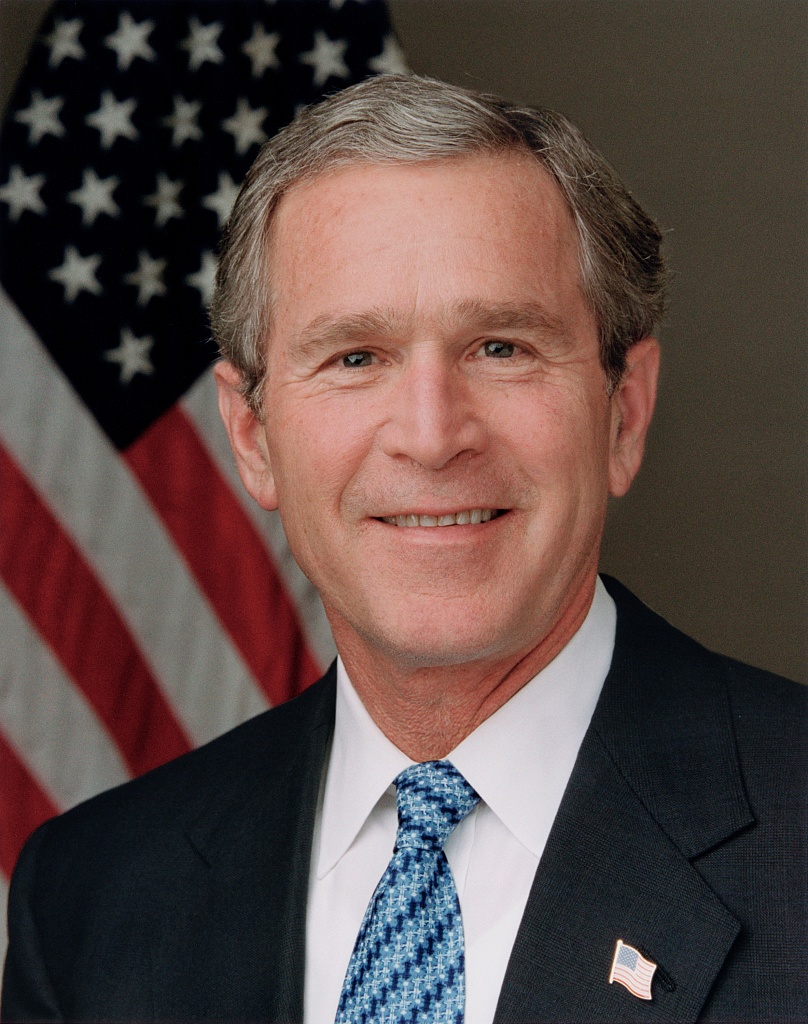
George W. Bush served as the 43rd President of the United States from January 20, 2001 to January 20, 2009. A Republican and former governor of Texas, his presidency was shaped by the response to the September 11, 2001 attacks and consequential domestic policies.
Bush's presidency is most widely remembered for the response to the September 11 attacks, the launch of the global War on Terror, and military campaigns in Afghanistan and Iraq. Decisions on intelligence, national security, and counterterrorism had long-lasting international and political effects.
On the domestic front, his administration passed major laws including the No Child Left Behind education reform and the Medicare Part D prescription drug benefit, and he appointed two Supreme Court justices. The 2008 financial crisis and emergency responses also significantly influenced assessments of his record.
Led U.S. response to 9/11 and launched the War on Terror; Ordered U.S. invasions of Afghanistan (2001) and Iraq (2003); Enacted No Child Left Behind education reform (2001); Created Medicare Part D prescription drug benefit (2003); Appointed Chief Justice John Roberts and Justice Samuel Alito; Responded to the 2008 financial crisis, including signing the TARP bailout
Key highlights and dated events associated with this presidency.
Showing 12 of 307 entries.
The U.S. Senate voted to confirm Alberto R. Gonzales to serve as Attorney General of the United States.

President Bush delivered the State of the Union to a joint session of Congress, outlining his second-term priorities including Social Security reform (an 'ownership society'), tax policy, education, and continued support for the Iraq mission.
On January 31, 2005 President Bush delivered the State of the Union Address outlining his second-term agenda, including proposals on Social Security reform, tax policy, and the Iraq War.
Iraq held nationwide parliamentary elections on January 30, 2005—the first major national vote since the 2003 U.S.-led invasion—with the Bush administration publicly praising the turnout and condemning violence aimed at disrupting the vote.
The U.S. Senate confirmed John D. Negroponte as the inaugural Director of National Intelligence following his January nomination.
Condoleezza Rice was sworn in as Secretary of State, succeeding Colin Powell in the Obama administration's predecessor—under President Bush's second term.
The U.S. Senate voted to confirm Condoleezza Rice as Secretary of State, approving President Bush’s nominee to lead American diplomacy in his second term.
President George W. Bush nominated John R. Bolton to be the U.S. Ambassador to the United Nations.
On January 20, 2005 George W. Bush was sworn in for his second term as President and delivered his second inaugural address.
On January 6, 2005 a joint session of the United States Congress met to count and officially certify the Electoral College votes from the 2004 presidential election, confirming George W. Bush's re-election.
President George W. Bush nominated Ambassador John D. Negroponte to serve as the first Director of National Intelligence, the new post created by the Intelligence Reform and Terrorism Prevention Act of 2004.
On December 28, 2004, President George W. Bush announced an initial U.S. humanitarian assistance package of $350 million to aid countries devastated by the December 26 Indian Ocean earthquake and tsunami.