
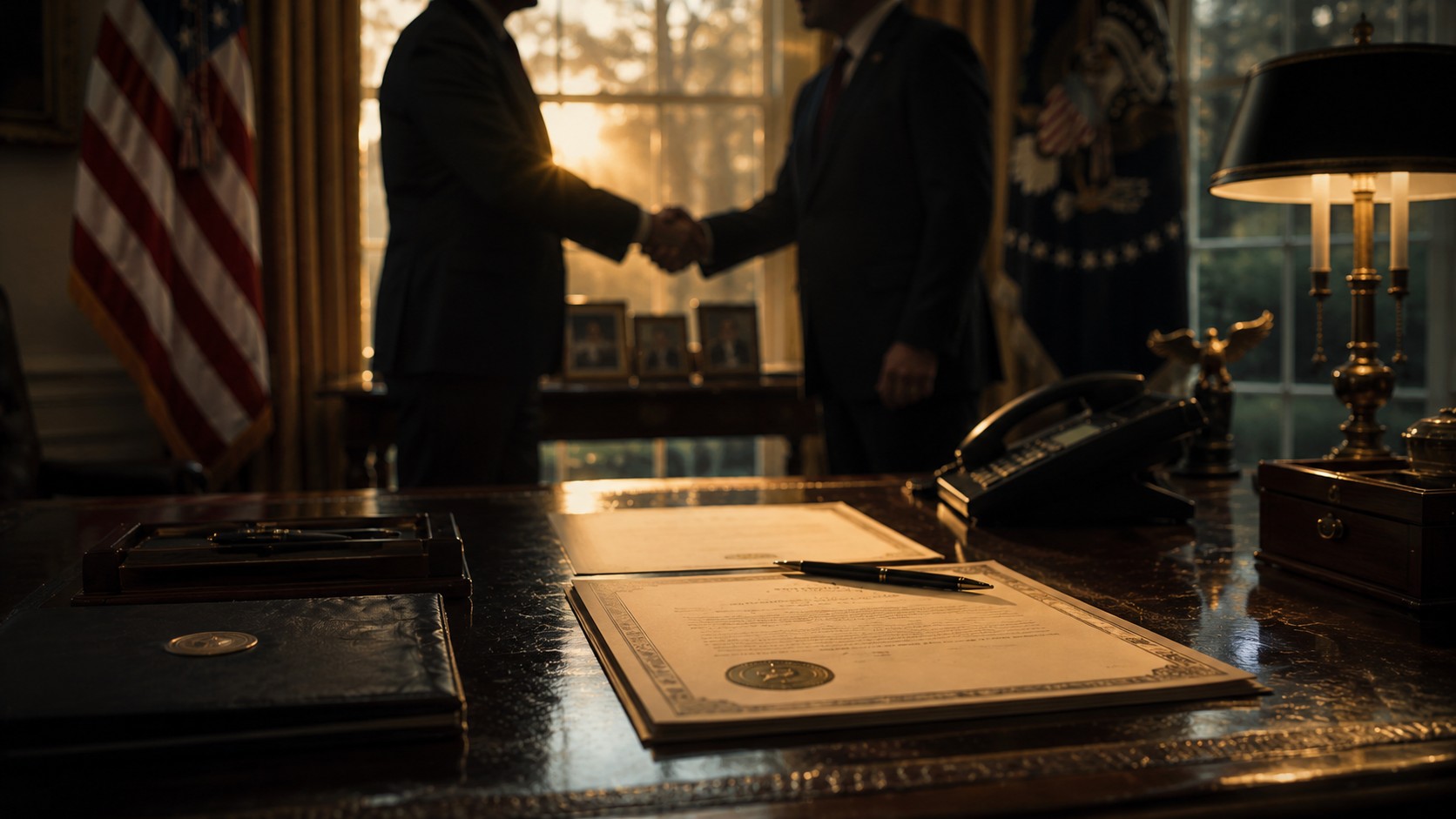
President McKinley signs the Dingley Tariff Act
President William McKinley signed the Dingley Tariff Act into law, substantially raising U.S. tariff rates.
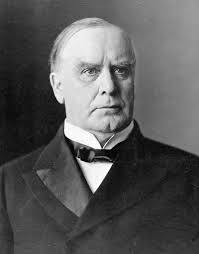
William McKinley (1843–1901) was the 25th President of the United States, serving from 1897 until his assassination in 1901. A Republican, he led the nation through the Spanish-American War and pursued pro-business economic policies including protective tariffs and the gold standard.
McKinley’s presidency marked the United States’ emergence as an international power after victory in the Spanish-American War and the acquisition of overseas territories such as Puerto Rico, Guam, the Philippines, and the annexation of Hawaii. Domestically, he promoted economic stability through the Dingley Tariff and the Gold Standard Act, aligning the federal government with business and industrial interests.
His administration accelerated American overseas expansion, a legacy that generated lasting debate over imperialism and national identity. McKinley’s assassination in 1901 brought Theodore Roosevelt to the presidency and helped usher in a more activist, progressive phase of American governance.
Led the U.S. in the Spanish-American War (1898) and negotiated the Treaty of Paris;Annexed Hawaii and oversaw acquisition of Puerto Rico, Guam and the Philippines;Enacted the Dingley Tariff to raise protective tariffs (1897);Signed the Gold Standard Act (1900) to stabilize currency;Articulated the Open Door Policy promoting equal trade access in China;Assassinated in 1901, succeeded by Theodore Roosevelt
Key highlights and dated events associated with this presidency.
Showing 3 of 99 entries.
President William McKinley signed the Dingley Tariff Act into law, substantially raising U.S. tariff rates.
On March 5, 1897, William McKinley’s principal cabinet officers were formally sworn into office, allowing his administration to begin official business after the inauguration.
William McKinley was sworn in as the 25th President and delivered his first inaugural address, laying out support for protective tariffs and a sound (gold) currency.