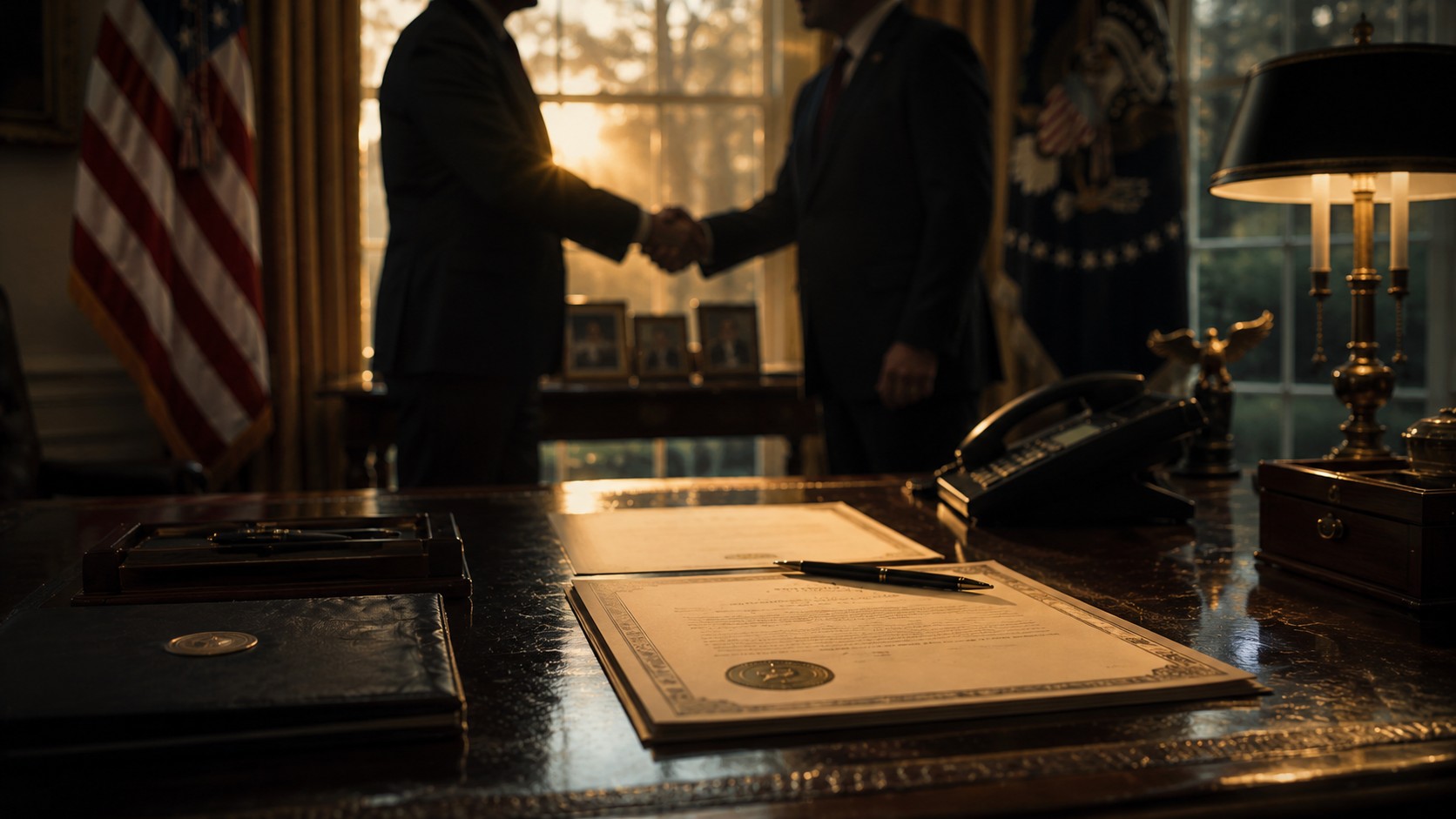
Signing of the Crude Oil Windfall Profit Tax Act
President Carter signed the Crude Oil Windfall Profit Tax Act into law, imposing a tax on unexpected profits of oil producers tied to the rise in oil prices.
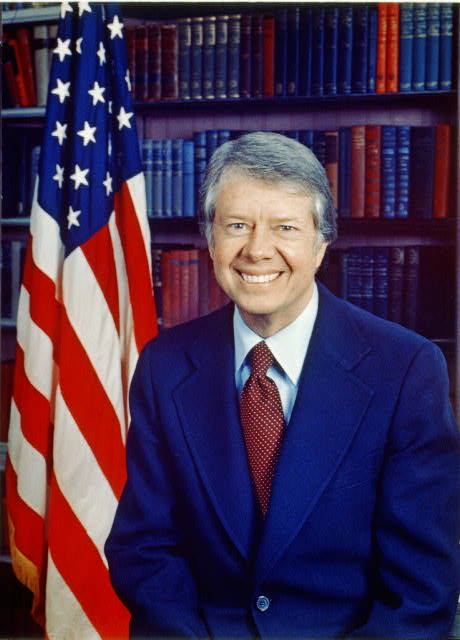
Jimmy Carter, a Democrat, served as the 39th President of the United States from January 20, 1977, to January 20, 1981. His administration emphasized human rights, energy policy, and negotiating peace in the Middle East.
Carter's presidency is remembered for diplomatic achievements such as brokering the 1978 Camp David Accords between Egypt and Israel and negotiating the 1977 Panama Canal Treaties, along with major domestic initiatives including the creation of the Departments of Energy and Education and passage of the National Energy Act.
His term was marred by economic difficulties—stagflation and an energy crisis—and by the 1979–1981 Iran hostage crisis, which eroded public confidence. After leaving office he became a prominent global humanitarian and human-rights advocate, founding the Carter Center and receiving the Nobel Peace Prize in 2002.
Brokered the 1978 Camp David Accords between Egypt and Israel; Signed the 1977 Panama Canal Treaties to transfer canal control; Established the Departments of Energy and Education and pushed the 1978 National Energy Act; Promoted a human-rights-centered foreign policy and negotiated SALT II; Faced the 1979–1981 Iran hostage crisis and led a failed rescue attempt; Advanced deregulation in transportation (airlines, trucking, rail)
Key highlights and dated events associated with this presidency.
Showing 12 of 87 entries.
President Carter signed the Crude Oil Windfall Profit Tax Act into law, imposing a tax on unexpected profits of oil producers tied to the rise in oil prices.

Electors met across the states to cast and certify their votes for Ronald Reagan and George H.W. Bush, formally confirming the outcome of the November 1980 election.
President Carter signed CERCLA into law, creating a federal program to locate, investigate, and clean up sites contaminated with hazardous substances and establishing a tax to fund cleanup.
President Jimmy Carter signed the Alaska National Interest Lands Conservation Act into law, dramatically expanding federal protection of Alaskan public lands and establishing new national parks, wildlife refuges, and wilderness areas.
On November 4, 1980, Ronald Reagan won the presidential election decisively over incumbent Jimmy Carter, and Carter conceded, offering cooperation for an orderly transition.
President Jimmy Carter and Republican nominee Ronald Reagan met in a nationally televised debate in Cleveland on foreign and domestic policy issues.
The UN Security Council unanimously adopted Resolution 479, urging Iran and Iraq to stop hostilities and seek a peaceful settlement after the outbreak of the Iran–Iraq War.
On September 22, 1980, Iraqi forces crossed the border and launched a large-scale invasion of Iran, initiating the eight-year Iran–Iraq War.
On August 14, 1980, President Jimmy Carter delivered the Democratic Party's nomination acceptance speech at Madison Square Garden in New York City, formally accepting the party's nomination for a second term.
The Democratic National Convention opened at Madison Square Garden in New York City, convening delegates to complete the party's nomination process and adopt its platform.
President Jimmy Carter nominated Ruth Bader Ginsburg to the U.S. Court of Appeals for the District of Columbia Circuit.
On June 16, 1980, the U.S. Supreme Court in Diamond v. Chakrabarty held 5–4 that a human-made, genetically engineered bacterium could be patented.