Electoral College meets and confirms Martin Van Buren's victory
State electors met on December 7, 1836, and cast Electoral College votes that secured Martin Van Buren's election to succeed Andrew Jackson.
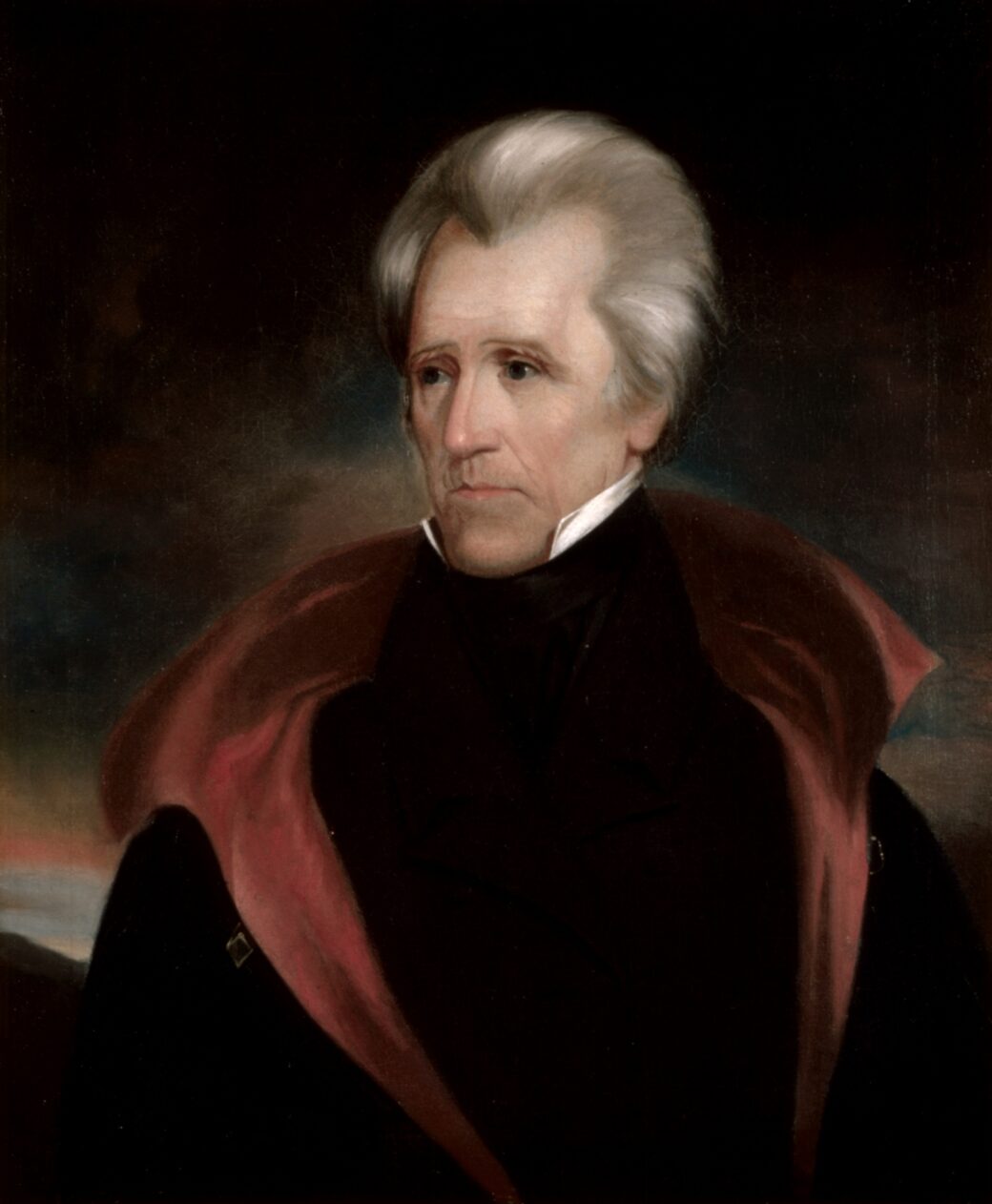
Andrew Jackson (1767–1845) was the seventh President of the United States, serving from 1829 to 1837. A founder of the Democratic Party, he was known for his populist style and strong use of executive power.
Jackson reshaped the presidency into a more powerful, populist office, using the veto, patronage, and direct appeals to voters to influence policy. He led the Bank War, asserted federal authority during the Nullification Crisis, and expanded the role of the executive branch.
His administration enacted the Indian Removal Act, leading to the forced relocation of Native American nations and the Trail of Tears, which remains a major moral and historical controversy. Historians view his legacy as influential but deeply contested for its democratic expansions alongside significant human costs.
Led U.S. forces to victory at the Battle of New Orleans (1815); Helped found the Democratic Party and promoted Jacksonian democracy; Defeated recharter of the Second Bank of the United States (Bank War); Signed the Indian Removal Act (1830), leading to forced relocations; Confronted the Nullification Crisis and asserted federal authority (1832–33); Expanded presidential power through frequent use of the veto and patronage
Key highlights and dated events associated with this presidency.
Showing 12 of 97 entries.
State electors met on December 7, 1836, and cast Electoral College votes that secured Martin Van Buren's election to succeed Andrew Jackson.

On November 21, 1836 U.S. forces under General Richard K. Call engaged Seminole and Black Seminole fighters in the Wahoo Swamp in Florida as part of the Second Seminole War.
Voting in the 1836 U.S. presidential election began on November 3, with states casting ballots over a multi-week period.
Jackson issued the Specie Circular requiring that payment for public lands be made in gold or silver (specie) rather than paper banknotes or credit.
On July 4, 1836, President Andrew Jackson signed the Distribution Act authorizing the quarterly distribution of federal surplus revenues to the states.
The House of Representatives approved a rule automatically tabling all abolitionist petitions, effectively preventing their discussion or consideration in Congress.
On May 26, 1836 the U.S. House of Representatives approved a rule automatically tabling all petitions relating to slavery without discussion or referral.
The United States Senate ratified the Treaty of New Echota, a 1835 agreement signed by a minority Cherokee delegation ceding Cherokee lands in the Southeast to the U.S. government.
Following the Texian victory at San Jacinto, Mexican President and general Antonio López de Santa Anna was captured by Texian forces on April 22, 1836.
On April 21, 1836, General Sam Houston's Texian army surprised and decisively defeated Mexican forces led by General Antonio López de Santa Anna at the Battle of San Jacinto, securing de facto Texan independence.
After the Battle of Coleto, Mexican forces executed several hundred surrendered Texian prisoners at Goliad on orders from President Santa Anna.
Col. James Fannin and approximately 300 Texian soldiers were surrounded by General Antonio López de Santa Anna's forces at Coleto Creek and surrendered on March 20, 1836.