

Ratification of the Sixteenth Amendment (Federal Income Tax)
On 1913-02-03 the requisite number of states ratified the Sixteenth Amendment, giving Congress explicit constitutional authority to levy an income tax.
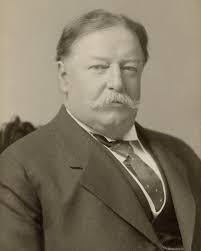
William Howard Taft (1857–1930) served as the 27th President of the United States from 1909 to 1913. A Republican jurist and administrator, he later became Chief Justice of the U.S. Supreme Court, the only person to hold both offices.
As president, Taft pursued a conservative, law‑based approach to reform: he vigorously enforced antitrust laws, supported federal conservation and the Bureau of Mines, and signed the controversial Payne‑Aldrich Tariff, which deepened splits with progressive Republicans.
After leaving the White House, Taft returned to public service as Chief Justice of the United States (1921–1930). His nine years on the Court cemented his reputation as a dedicated jurist and made him unique in American history for holding the nation’s two highest offices.
Enforced antitrust laws with numerous trust prosecutions, including actions against Standard Oil and U.S. Steel; Signed the Payne‑Aldrich Tariff, provoking a split with progressives; Established the U.S. Children's Bureau (1912); Created the Bureau of Mines and promoted federal conservation administration; Later served as Chief Justice of the U.S. Supreme Court, the only person to serve as both President and Chief Justice
Key highlights and dated events associated with this presidency.
Showing 12 of 41 entries.
On 1913-02-03 the requisite number of states ratified the Sixteenth Amendment, giving Congress explicit constitutional authority to levy an income tax.
The U.S. Electoral College convened and cast the official votes that confirmed Woodrow Wilson's victory in the 1912 presidential election.
On November 5, 1912, Democratic governor Woodrow Wilson won the presidential election, defeating incumbent Republican President William Howard Taft and former President Theodore Roosevelt (Progressive).
Vice President and Taft’s running mate James S. Sherman died on October 30, 1912, shortly before the presidential election.
Former President Theodore Roosevelt was shot by John Schrank while delivering a campaign speech in Milwaukee but completed his address before seeking medical attention.
On August 29, 1912, U.S. Marines landed at Bluefields and other Nicaraguan ports to protect American lives and property amid civil unrest and support the government of Adolfo Díaz.
On August 7, 1912, delegates at the Progressive Party convention in Chicago formally nominated Theodore Roosevelt for president and adopted the party's Progressive ("Bull Moose") platform.
After five days of contentious debate over credentials and nominations, the Republican National Convention formally adjourned on June 22, 1912.
Taft formally accepted the Republican nomination for a second term in a speech to the convention in Chicago.
Delegates at the Republican National Convention in Chicago adopted the party platform, formally endorsing the Taft administration’s positions on tariffs, antitrust enforcement, and conservation.
The convention voted to accept the credentials committee's report that refused to seat numerous delegates pledged to Theodore Roosevelt, triggering protests from Roosevelt supporters.
At the Republican National Convention in Chicago, delegates reselected James S. Sherman as William Howard Taft's vice-presidential running mate.